
Livorno is a working port city — most cruise passengers spend zero time there. The real draw sits inland: Florence, Siena, Pisa, Lucca, and San Gimignano, all within a day’s reach by bus. With typical docking windows running between four and eight hours, the margin for transport errors is thin. This guide maps out the most reliable bus-based excursion options available from the cruise terminal, with concrete timing data and practical itinerary logic to help you decide before the gangway lowers.
Why bus tours outperform self-guided travel from Livorno
The port of Livorno sits roughly 95 km west of Florence and about 22 km south of Pisa. Those distances are manageable in theory — in practice, the combination of unfamiliar train schedules, regional bus transfers, and the strict return deadline imposed by every cruise operator turns a self-planned day into a logistical obstacle course. Missing the ship is not a hypothetical: it happens on routes exactly like this one, where the last direct train back can conflict with delayed return from a city visit.
Organised excursions remove the stress of self-navigation and strict deadlines. Opting for a professional tuscany bus tour operating directly from the Livorno cruise terminal ensures your port-to-destination transfer is handled by experts who align their schedule with your ship’s docking window. These services cover five iconic cities—Florence, Pisa, Siena, Lucca, and San Gimignano—on a single flexible pass. This allows passengers to enjoy modern comforts like air conditioning and Wi-Fi while guaranteeing a return to the pier well before the gangway is raised.
Regional transport data reinforces the case for organised options. According to the Tuscany Region Mobility Directorate’s 2025 sustainable mobility plan, the regional Trenitalia network covers over 320 stations — but punctuality on regional services reaches only 80%, a figure that leaves meaningful risk on short-window excursion days.
80 %
On-time rate for regional Trenitalia services in Tuscany, per the 2025 mobility plan
An 80% punctuality rate means roughly one in five regional trains runs late. For a cruiser with a hard re-boarding deadline, that margin is uncomfortable. Dedicated excursion coaches operate on fixed itinerary logic, not rail timetables — and that distinction matters when the stakes are a missed departure.
Tuscany destinations by bus: distances, travel times, and priorities
Not all Tuscany cities are equally accessible from Livorno on a single port day. The distance and transfer logic varies significantly between destinations, and first-time visitors often underestimate how much that variation affects usable time on the ground. The overview below draws on official transport network data to give a realistic picture of what each destination requires.
According to the Azienda Mobilità e Trasporti Firenze, the city’s tram network runs from 5am to midnight with a 7-minute frequency — which means once you arrive in Florence, internal movement is genuinely efficient. The T2 tram line connects the main station area to the airport zone in 25 minutes. That level of urban mobility is a real advantage when you only have three or four hours before the return journey begins.
| City | Distance from Livorno | Estimated transfer time (coach) | Recommended minimum visit time |
|---|---|---|---|
| Florence | ~95 km | ~1h15 | 3–4 hours |
| Pisa | ~22 km | ~30 min | 2 hours |
| Siena | ~115 km | ~1h30 | 3 hours |
| Lucca | ~45 km | ~45 min | 2 hours |
| San Gimignano | ~110 km | ~1h40 | 2.5 hours |
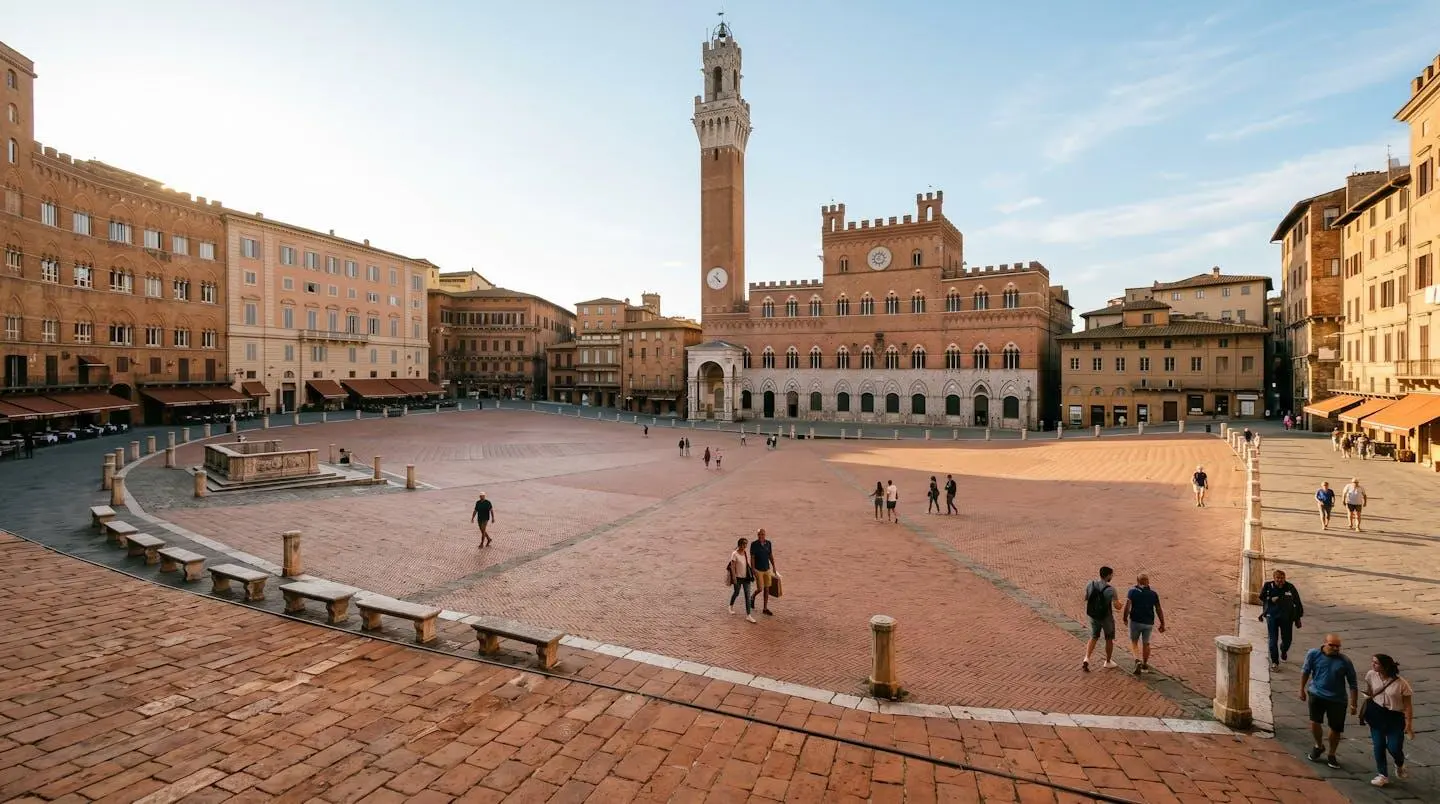
Pisa is the obvious short-haul option — its proximity makes it viable even on the tightest docking schedules. Florence demands at least a six-hour port window to feel worthwhile, given round-trip transfer time. Siena and San Gimignano reward visitors who can commit a full day; their medieval centres are compact but deserve unhurried exploration.
One practical reality that catches many first-timers: the Pisa airport registers over 5million passengers annually according to the Tuscany Tourism Observatory’s 2024 transport report, which signals a massive volume of visitor traffic converging on the Leaning Tower site at peak hours. Early morning excursion departures sidestep the worst of that congestion.
Matching your itinerary to your time at port
The single biggest planning error among cruise visitors to Livorno is choosing a destination without first confirming the actual hours available at dock. Port schedules vary by itinerary, and some Livorno calls allow as little as four hours between gangway opening and all-aboard time. The decision tree below helps align destination choice with your real available window.
- If you have 4 hours or less at dock:
Pisa is your most reliable choice. The proximity (around 30 minutes by coach) leaves two full hours on the ground before the return journey. Combine the Piazza dei Miracoli with a quick walk through the old town.
- If you have between 5 and 7 hours:
Florence becomes viable — target the Uffizi area, Ponte Vecchio, and the Duomo exterior. Lucca also works well in this window, offering a quieter, less crowded alternative with its intact Renaissance walls and cycling culture.
- If you have 8 hours or more:
Siena or San Gimignano can anchor a full-day itinerary. A multi-city pass covering two stops (for example, Pisa on the way out and Lucca on the return) is genuinely feasible without feeling rushed.
- If this is your first time in Tuscany and time is uncertain:
Prioritise Florence. The density of unmissable sites within walking distance of the central drop-off point means even a shortened visit yields strong memories. A flexible multi-day pass (valid up to 5 days) also lets you pick up additional cities on a subsequent visit.
A scenario worth preparing for: ship departure times occasionally shift forward by 30 to 60 minutes due to weather or port congestion. Organised excursions factor a built-in buffer into their return schedule; independent travellers rarely do. The difference between catching the ship and missing it has come down to exactly that buffer on routes like Livorno–Florence.
Typical scenario: family of four, 6-hour port window
Consider a family docking at Livorno with a 6-hour window — gangway open at 8am, all-aboard at 2pm. A pre-booked Tuscany bus excursion departs at 8:30am, reaches Florence by 9:45am, and holds the group until 12:30pm before returning. That yields 2h45 of ground time in Florence — enough for the Duomo square, a coffee near Santa Croce, and a focused pass through one major gallery or market. The coach returns to Livorno by 1:45pm, leaving a comfortable 15-minute margin before all-aboard. Without a booked coach, the same family would face a regional train (80% punctuality rate, per the 2025 Tuscany mobility plan), two platform changes, and no guaranteed return slot.
One additional consideration for families travelling with younger children: the on-board comfort offered by modern excursion coaches — climate control, USB charging, and an integrated AI guide available in over 50 languages — transforms transfer time into part of the experience rather than dead time. For a 1h15 outbound journey, that matters more than it might seem on paper.

Those travelling with a specific concern about combining transport and travel for stress-free journeys will find that the intercity bus model — fixed itinerary, guaranteed return, no self-navigation — resolves the core anxiety of shore excursions entirely.
Your pre-departure checklist for Livorno shore excursions
With the destination and transport format confirmed, the remaining variable is preparation quality. What follows are the practical verifications that separate a smooth excursion from a stressful one — drawn from the logistical realities of Livorno port operations and Tuscany transport patterns.
- Confirm your exact all-aboard time with ship staff — not the printed schedule, but the actual operational deadline for your specific docking day
- Download the Tootbus app and activate your pass offline before disembarkation — port Wi-Fi coverage is inconsistent at the Livorno terminal
- Match your destination choice against the decision tree above: 4 hours → Pisa, 5–7 hours → Florence or Lucca, 8+ hours → Siena or multi-city
- Pre-book timed entry for the Uffizi Gallery or Leaning Tower if Florence or Pisa is on the itinerary — walk-up queues routinely run 45 to 90 minutes at peak season
- Plan your return departure at least 30 minutes earlier than the theoretical minimum — this buffer accounts for coach boarding time and minor port access delays
The transport question is the first thing to resolve, but it rarely needs to be complicated. A flexible multi-city pass covering up to five Tuscan cities over 1 to 5 days — with guaranteed coach transfers between them — handles the logistics in a single decision. What remains is choosing which city deserves the hours you have available, and showing up ready to use them.
For those who want to go deeper into the stress management side of international port visits, the topic of reducing travel stress in new destinations covers the broader preparation framework that applies well beyond Tuscany.
Can you visit both Florence and Pisa in a single port day from Livorno?
It depends on your docking window. With 8 or more hours at port, a Pisa stop on the outbound leg combined with 2.5 to 3 hours in Florence is achievable on an organised coach tour. With fewer than 7 hours, the combination tends to feel rushed and risks the return deadline. Choosing one city and experiencing it properly is generally the stronger call.
Is Siena worth the travel time for a single port day?
Siena requires roughly 1h30 each way by coach, which means you need at least 8 hours at dock to make a meaningful visit. The city’s medieval centre is extraordinarily well-preserved and significantly less crowded than Florence — many experienced Tuscany travellers rate it above Florence for atmosphere. If the time window allows it, the investment is well justified.
What languages does the on-board guide support?
The Tootbus integrated AI guide (Tootie) supports over 50 languages, accessible through the Tootbus app. This is particularly useful on intercity transfers, where the guide can help plan your time in the next destination before you arrive.