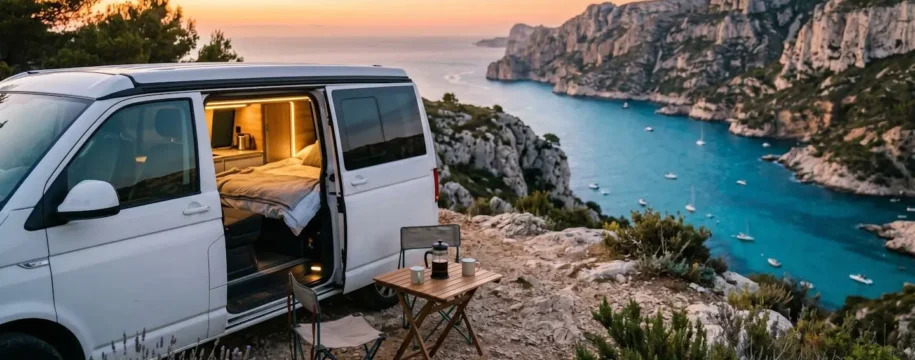
Picture waking to Atlantic breakers crashing below your bedroom window, brewing coffee as sunrise paints the horizon amber, then deciding over breakfast to chase better weather south. No check-out times. No frantic packing. No wrestling with hotel reception about early departures. This is the campervan proposition: route autonomy paired with practical infrastructure to make spontaneous decisions stick.
The European campervan market tells its own story about shifting travel priorities. According to 2024 registration figures published by the ECF, motorhome demand jumped 9.6% year-on-year, with France and the UK posting particularly strong growth. That surge reflects more than trend-chasing—it signals a fundamental reassessment of what holidays should deliver.
Traditional packages offer predictability. Campervan travel offers something structurally different: the ability to treat your itinerary as a hypothesis rather than a contract, testing routes against real conditions and personal energy levels as you go.
Your campervan freedom essentials
- Change plans when weather shifts or discoveries beckon, without penalties or rigid schedules
- Consolidate accommodation and transport into one cost, with self-catering capability slashing daily meal budgets
- Wake in coastal coves, mountain valleys, or lavender fields instead of tourist-district hotels
- Collect professionally prepared vehicles with comprehensive insurance and 24/7 assistance already built in
Waking up wherever inspiration strikes: the essence of campervan freedom
Consider a typical scenario: a couple planning a week exploring Brittany books a coastal cottage, only to discover upon arrival that June fog has settled over the peninsula. In a hotel-based arrangement, they’re committed—sunk costs and non-refundable bookings. In a campervan, they check the forecast over breakfast, notice sunshine 200 kilometres south in the Loire Valley, and arrive by lunchtime to blue skies.
This flexibility fundamentally alters the relationship between traveller and destination. Hotels anchor you to a single geography, forcing daily return trips that constrain exploration radius. Campervans dissolve that constraint. When the Mediterranean coastal road reveals an unmarked viewpoint at sunset, there’s no calculation about driving back to base. You simply pull over and claim that evening as your own.
First-time campervan renters consistently cite freedom to change plans as their primary motivation, outweighing cost considerations or outdoor lifestyle aspirations. That preference reveals an important truth: the most compelling advantage remains the psychological liberation from rigid schedules. No pre-booked restaurant reservations dictating your daily rhythm. No checkout deadlines interrupting lazy mornings. Just the simple proposition that your time belongs entirely to you.
The practical advantages that make van life surprisingly accessible
Beyond the emotional case lies a practical architecture that makes spontaneity financially viable. The cost structure differs fundamentally from traditional holiday models: rather than separate line items for accommodation, transport, and meal venues, you’re managing a single consolidated budget where combined accommodation and transport costs replace multiple vendor relationships.
Self-catering capability shifts the economic equation substantially. Families accustomed to restaurant meals three times daily face eye-watering totals in tourist areas—easily £120-150 for a party of four. Preparing breakfast in your own kitchenette, assembling picnic lunches from local markets, and cooking dinner whilst parked near coastal trails transforms that daily burn rate.
To clarify these trade-offs, the following comparison maps key decision criteria across three common holiday models. Each approach delivers distinct advantages depending on priorities and travel style.
| Criterion | Campervan Rental | Hotel + Car Hire | All-Inclusive Resort |
|---|---|---|---|
| Total cost structure | Single consolidated payment covering transport, sleeping, and cooking facilities | Separate hotel nights, vehicle hire, parking fees, and restaurant meals compound quickly | Upfront cost high; limited geographic range once committed |
| Route flexibility | Complete freedom to pivot destinations based on weather or discovery | Constrained by pre-booked hotel locations; changing accommodation incurs penalties | Fixed single location; excursions are add-on costs |
| Nature immersion | Wake in coastal coves, mountain valleys, vineyards—location is your choice each night | Limited to hotel district; nature requires dedicated travel time | Manicured resort grounds; authentic landscape requires leaving the complex |
| Spontaneity level | High: extend stays in favourite locations or move on immediately if uninspired | Low: locked into pre-paid accommodation blocks | Very low: week-long commitment to single property |
The rental model solves the most significant barrier preventing travellers from experimenting with campervan holidays: the preparation burden. Professional rental preparation sidesteps that complexity, delivering vehicles with fresh linens, fully stocked kitchenettes, verified safety systems, and comprehensive insurance already configured.
For international travellers arriving in France, services like campervan hire at Roissy position vehicles at convenient airport hubs, with comprehensive insurance packages and round-the-clock assistance built in from the moment you collect the keys.
UK driving licences remain valid for vehicle hire in France. All UK vehicle insurance provides minimum third-party cover to drive in the EU as standard, eliminating the need for international driving permits or green cards.
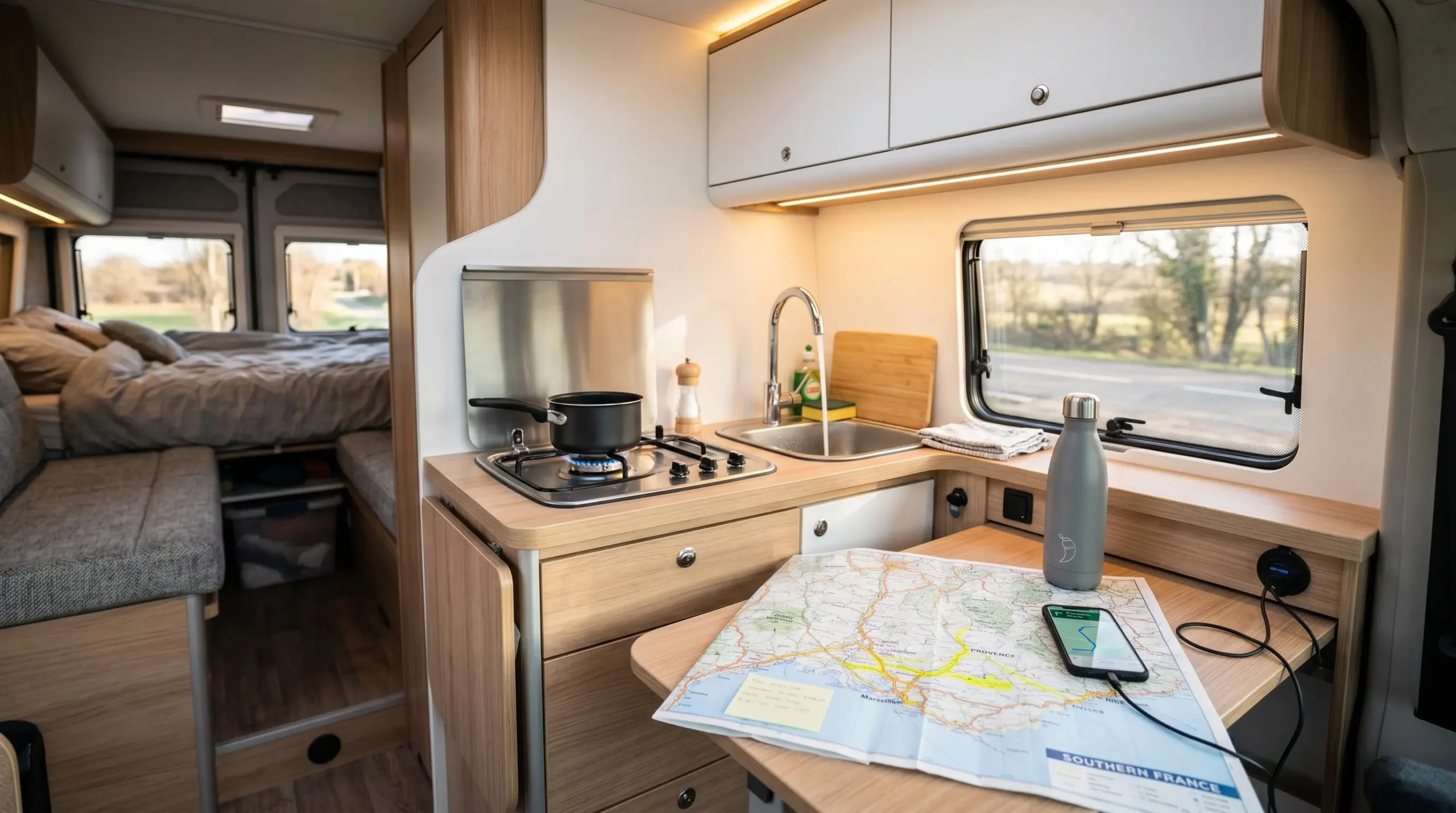
Contemporary rental fleets feature purpose-built models with efficient sleeping configurations, proper ventilation systems, reliable heating for cooler months, and intelligent storage solutions. Compact designs like the Volkswagen California or Ford Nugget balance interior comfort with the ability to navigate medieval village centres and slot into standard parking spaces.
- If you’re travelling as a couple or with one child:
Compact campervans (2-3 berths) like the VW California deliver agile handling, easier parking in coastal villages, and lower fuel consumption whilst providing complete living amenities.
- If you’re a family of four prioritising interior space:
Larger motorhomes (4-5 berths) offer separate sleeping areas, more generous storage, and standing-height interiors—ideal for week-long trips where the vehicle becomes your primary living space.
- If you’re a first-time driver concerned about vehicle size:
Automatic transmission models with rear-view cameras and parking sensors reduce the learning curve substantially, letting you focus on navigation and discovery rather than mechanical anxiety.
- If spontaneous routing is your priority:
Choose rental packages with unlimited mileage and flexible drop-off locations, enabling genuine freedom to follow weather patterns or extend stays in unexpectedly captivating regions.
Crafting routes that respond to weather, mood, and discovery
Route planning in a campervan context operates on different principles than conventional itinerary construction. Fixed accommodation chains you to predetermined stops; vehicle-based travel transforms routes into living documents you revise daily based on conditions and discoveries. Experienced campervan travellers frequently report that their best memories stem from unplanned detours—the ceramic workshop glimpsed from a country road, the local market that warranted an extra night, the coastal trail discovered through conversation with fellow travellers.
France’s geography rewards this flexible approach magnificently. The French Riviera offers concentrated culture within compact distances; Provence delivers endless combinations of hilltop villages and lavender routes; the Loire Valley stretches château visits along river valleys; Atlantic coastal routes provide consistent ocean access; Alpine passages combine dramatic elevation changes with thermal spa towns. These dynamics illustrate the core appeal of self-drive exploration across multi-destination journeys.
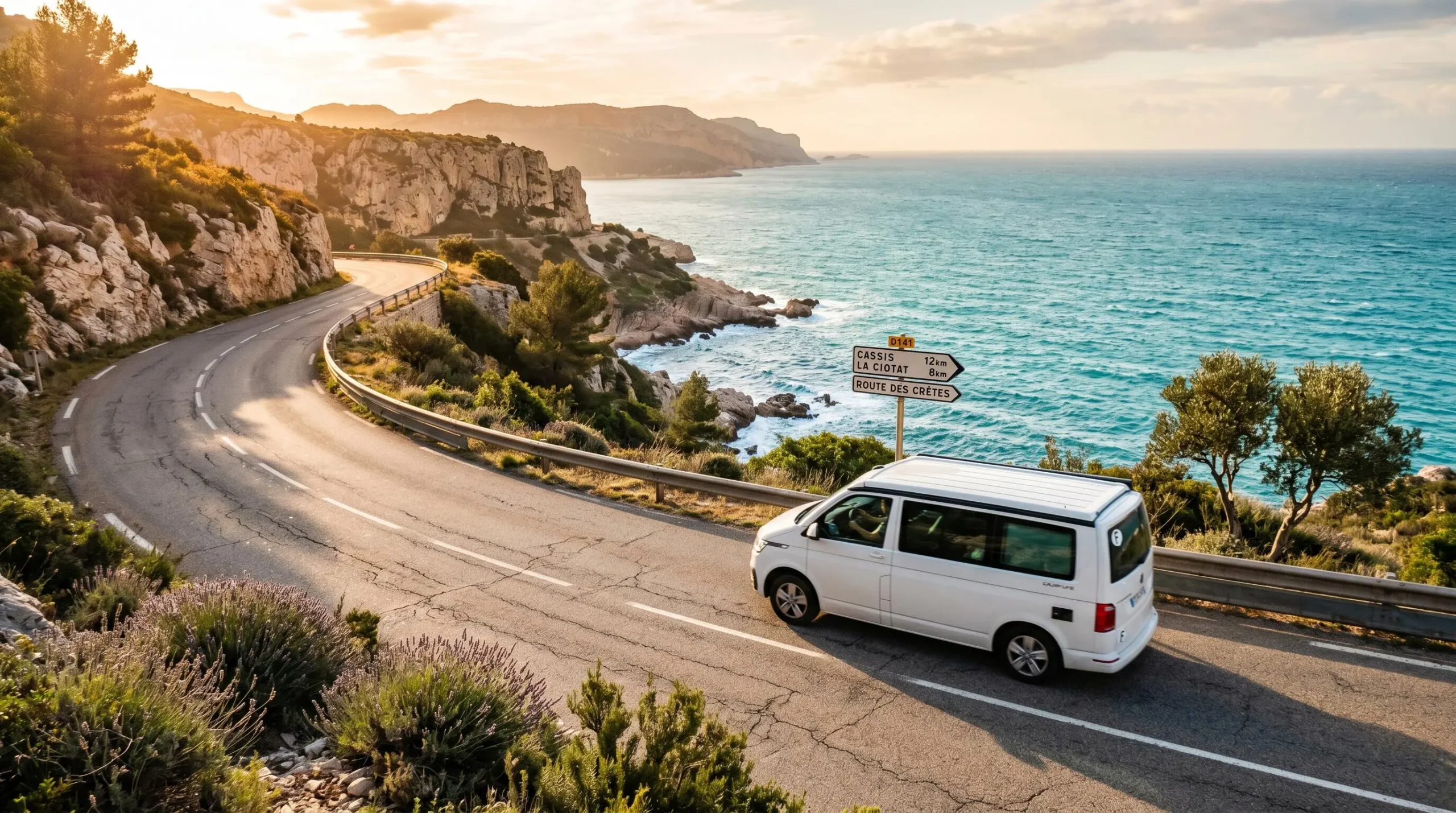
Imagine a family departing from Paris with plans to explore the Alps, only to discover unseasonably cold weather. By mid-morning, they’ve consulted forecasts, identified sunshine in Provence 400 kilometres south, and adjusted course. By evening they’re parked near Gordes, watching sunset paint ochre cliffs whilst planning the next day’s exploration. That scenario—impossible in a hotel-booking framework without substantial financial penalties—represents spontaneous discovery at its most liberating.
Common campervan questions for first-time travellers
Is campervan travel actually comfortable enough for a proper holiday?
Modern rental campervans feature proper mattresses, climate control systems, effective ventilation, and thoughtful storage eliminating scattered belongings. Compact doesn’t mean uncomfortable—it means efficiently designed space where everything has a designated place. You won’t have hotel-scale bathrooms, but you gain something hotels cannot provide: the ability to position your bedroom wherever landscape or mood dictates.
Can I really save money compared to hotels?
The economics depend on your baseline and travel style. For families of four comparing against mid-range hotels plus restaurant meals, the mathematics shift substantially: separate hotel rooms, daily breakfast charges, lunches, dinners, and vehicle hire compound rapidly. Campervans consolidate accommodation and transport into a single cost, whilst self-catering can reduce daily food expenditure by 60-70%. The financial advantage grows with trip duration and party size.
Where am I allowed to park overnight in France?
Parking regulations require understanding an important distinction. As the FFCC (French Camping and Caravanning Federation) official guidance clarifies, simply parking a campervan on public roads is entirely legal. However, deploying outdoor equipment such as awnings or tables constitutes illegal wild camping and invites fines. France maintains an extensive network of designated aires de camping-car—purpose-built overnight parking areas with water, waste disposal, and sometimes electrical hookups, available for modest fees or occasionally free. Research aires along your intended route and respect local signage.
- Verify your driving licence validity for France and confirm your existing vehicle insurance provides EU third-party cover
- Choose your primary region based on seasonal conditions: Mediterranean coast for reliable sunshine, Atlantic routes for dramatic scenery, Alpine areas for elevation diversity
- Prioritise rental services offering genuine cancellation flexibility—look for modification windows extending 48 hours post-booking or 30 days before departure
- Download aires de camping-car location apps before departure to identify overnight parking networks across your intended route
The often-overlooked benefit is this: campervan holidays don’t demand perfect planning because the format itself forgives mistakes. Chose the wrong base town? Drive somewhere better tomorrow. Underestimated how much you’d love a particular region? Extend your stay and compress time elsewhere. That structural forgiveness transforms holidays from high-stakes investments into adventures where course corrections cost nothing but fuel and curiosity.