Stepping beyond familiar borders to volunteer in distant communities represents one of the most profound transformative experiences available to modern global citizens. The act of immersing yourself in unfamiliar cultures whilst contributing to meaningful development projects creates a unique lens through which to view humanity’s interconnected nature. This transformation extends far beyond simple cultural exposure, fundamentally altering how individuals perceive socioeconomic disparities, cross-cultural communication, and their own role within the global community.
International volunteerism challenges preconceived notions about development, poverty, and cultural differences by placing participants directly within communities experiencing these realities. Research indicates that 94% of international volunteers report significant shifts in their worldview following extended community engagement abroad. The depth of this transformation often surprises participants, who initially anticipate helping others but discover profound personal growth through the reciprocal nature of volunteer relationships.
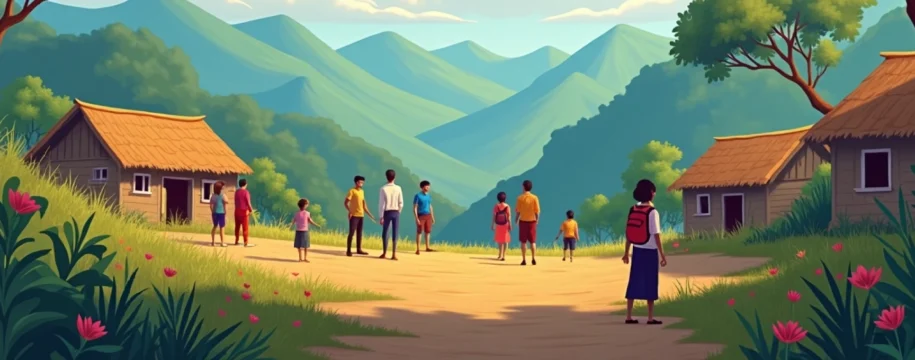
Cultural immersion through direct community integration in developing nations
Authentic cultural immersion through volunteering differs substantially from traditional tourism or academic study abroad programmes. When you commit to extended community service projects, you become embedded within local social structures, participating in daily routines, ceremonies, and challenges that shape community life. This integration provides unprecedented insight into how cultural values, economic constraints, and social dynamics interact to create unique community identities.
The process of cultural integration typically unfolds in stages, beginning with initial culture shock and progressing through adaptation, acceptance, and eventually genuine appreciation for alternative worldviews. Volunteers frequently report that their most significant learning occurs during unstructured moments—sharing meals with host families, attending local celebrations, or simply observing daily community interactions. These experiences reveal the complex tapestry of human resilience, creativity, and interdependence that characterises communities worldwide.
Grassroots development projects in Sub-Saharan africa: ghana’s volta region case study
Ghana’s Volta Region exemplifies how grassroots development initiatives can reshape volunteer perspectives on poverty, community organisation, and sustainable development. Volunteers working on water sanitation projects in rural villages discover that effective development requires deep understanding of local customs, traditional authority structures, and existing community resources. The region’s approach to community-led development demonstrates how external assistance can complement rather than replace indigenous knowledge systems.
Participants in Volta Region projects often arrive with assumptions about African communities that are quickly challenged by the sophisticated social networks, entrepreneurial activities, and educational initiatives they encounter. Villages maintain complex systems of mutual support, conflict resolution, and resource management that have sustained communities for generations. This revelation fundamentally alters volunteers’ understanding of what constitutes development and who possesses relevant expertise.
Indigenous community partnerships in latin america: guatemala’s highland villages
Guatemala’s highland villages offer volunteers exposure to indigenous Maya communities maintaining cultural traditions whilst navigating modern economic pressures. Working alongside Maya families on agricultural sustainability projects reveals the intricate relationship between cultural preservation and economic development. Volunteers learn how traditional farming techniques, language preservation, and community governance structures contribute to resilient local economies.
The experience of supporting Maya communities challenges Western development paradigms by demonstrating alternative approaches to education, healthcare, and economic organisation. Volunteers discover that effective community support requires understanding historical trauma, cultural protocols, and the complex relationship between indigenous communities and national governments. This exposure fundamentally shifts perspectives on what constitutes progress and whose voices should guide development initiatives.
Rural healthcare initiatives in southeast asia: cambodia’s remote provinces
Cambodia’s remote provinces present volunteers with stark realities of healthcare inequality whilst showcasing remarkable community resilience and innovation. Healthcare volunteers working in rural clinics witness firsthand how geographic isolation, limited infrastructure, and economic constraints affect health outcomes. However, they also observe how communities adapt traditional healing practices alongside modern medicine to create comprehensive care systems.
The healthcare context in rural Cambodia reveals the interconnected nature of social determinants of health—education, economic opportunity, clean water access, and social cohesion all contribute to community wellbeing. Volunteers develop nuanced understanding of how systemic inequalities manifest in individual lives whilst appreciating the strength and resourcefulness of communities addressing these challenges with limited external support.
Educational programme implementation in Post-Conflict zones: sierra leone’s recovery communities
Sierra Leone’s post-conflict recovery communities provide volunteers with profound insights into human resilience, social healing, and the role of education in community reconstruction. Working in schools that serve children affected by civil conflict, volunteers witness how education serves as both individual empowerment and community healing mechanism. The experience reveals the complex relationship between trauma, hope, and social reconstruction.
Educational volunteers in Sierra Leone often arrive with conventional teaching approaches that prove inadequate for addressing the unique needs of post-conflict communities. The experience necessitates developing culturally responsive pedagogical methods whilst understanding how conflict trauma affects learning processes. This adaptation process fundamentally alters volunteers’ understanding of education’s role in social justice and community development.
Cross-cultural communication barriers and breakthrough methodologies
Effective cross-cultural communication represents one of the most challenging yet rewarding aspects of international volunteering. Language barriers, non-verbal communication differences, and varying cultural protocols create initial obstacles that require patience, creativity, and humility to overcome. The process of developing effective communication strategies across cultural divides fundamentally alters how volunteers approach interpersonal relationships and conflict resolution throughout their lives.
The breakthrough moments in cross-cultural communication often occur when volunteers abandon their cultural communication assumptions and embrace alternative interaction styles. This adaptation process requires developing heightened sensitivity to context, emotional intelligence, and the ability to find common ground despite surface-level differences. Research indicates that volunteers who successfully navigate cross-cultural communication challenges demonstrate significantly improved emotional intelligence and cultural competency compared to their pre-volunteer baseline measurements.
International volunteering teaches you that authentic connection transcends language barriers when approached with genuine respect and curiosity about different ways of being human.
Language acquisition through immersive field experience: quechua in peru’s andes
Learning Quechua whilst volunteering in Peru’s Andean communities demonstrates how language acquisition becomes a gateway to cultural understanding. Unlike classroom-based language learning, field-based acquisition occurs within meaningful contexts—helping with agricultural work, participating in community meetings, or sharing stories with host families. This immersive approach reveals how language shapes worldview and social relationships.
Volunteers working with Quechua speakers discover that effective communication requires understanding cultural concepts that don’t translate directly into European languages. Concepts related to reciprocity, time, and relationship to land require cultural immersion to fully comprehend. This experience fundamentally alters volunteers’ understanding of how language shapes thought and social organisation.
Non-verbal communication patterns in east african tribal communities
East African tribal communities maintain sophisticated non-verbal communication systems that volunteers must learn to navigate effectively. Eye contact patterns, personal space preferences, gesture meanings, and facial expressions vary significantly across cultural groups. Understanding these differences becomes essential for building trust and avoiding unintentional offense during community interactions.
The process of learning non-verbal communication protocols reveals the subtle ways culture shapes interpersonal interaction. Volunteers develop heightened awareness of their own non-verbal habits whilst appreciating the elegance and complexity of alternative communication styles. This experience enhances cultural sensitivity and communication effectiveness in diverse settings throughout volunteers’ subsequent lives.
Religious and spiritual protocol navigation in buddhist monasteries of myanmar
Volunteering within Buddhist monastery communities in Myanmar requires understanding complex spiritual protocols that govern daily interactions, work assignments, and ceremonial participation. Volunteers learn to navigate hierarchical structures, meditation practices, and philosophical frameworks that differ substantially from Western religious traditions. This experience provides profound insight into alternative approaches to community organisation and spiritual development.
The monastery environment challenges volunteers to examine their own spiritual assumptions whilst respecting practices they may not fully understand. This navigation process develops skills in respectful inquiry, cultural humility, and appreciation for diverse approaches to meaning-making and community cohesion.
Conflict resolution techniques in Multi-Ethnic volunteer teams
Multi-ethnic volunteer teams inevitably encounter conflicts arising from cultural misunderstandings, different work styles, and varying expectations about group dynamics. Learning to facilitate resolution across cultural divides requires developing sophisticated mediation skills and cultural intelligence. These experiences provide invaluable training in global citizenship and collaborative problem-solving.
Volunteers who successfully navigate multi-ethnic team conflicts develop enhanced abilities to find common ground, facilitate inclusive decision-making processes, and create environments where cultural differences become assets rather than obstacles. These skills prove invaluable in increasingly diverse professional and community contexts throughout volunteers’ careers.
Socioeconomic disparity recognition through fieldwork experience
Direct exposure to extreme poverty through volunteer fieldwork creates visceral understanding of socioeconomic inequality that cannot be replicated through academic study or media consumption. Witnessing how families manage household economies with minimal resources, how communities organise mutual support systems, and how structural barriers limit opportunity access fundamentally alters volunteers’ understanding of global economic systems and their own privilege within these structures.
The experience of living alongside communities facing severe economic constraints reveals both the devastating impacts of inequality and the remarkable resilience, creativity, and social innovation that emerges in response to these challenges. Volunteers discover that poverty does not diminish human dignity, intelligence, or capacity for joy, challenging stereotypical assumptions about economically marginalised communities. This recognition often catalyses long-term commitment to social justice advocacy and more conscious consumption patterns.
Statistical evidence demonstrates that 86% of international volunteers report increased commitment to addressing inequality following their service experience. This transformation typically manifests through career choices oriented toward social impact, increased charitable giving, advocacy for policy changes, and lifestyle modifications reflecting awareness of global resource distribution. The depth of this commitment often surprises volunteers who initially viewed their service as temporary adventure rather than catalyst for lifelong social engagement.
Witnessing resourcefulness and dignity maintained despite material scarcity fundamentally challenges assumptions about the relationship between economic status and human worth.
Perhaps most significantly, volunteers develop nuanced understanding of how systemic factors—historical exploitation, geographic disadvantages, political instability, and discriminatory policies—create and maintain poverty rather than individual failings. This systems-level awareness enables more sophisticated engagement with social justice issues and resistance to simplistic explanations for complex global challenges. Many volunteers report that this understanding motivates ongoing education about economic policy, international development theory, and structural approaches to addressing inequality.
Personal identity transformation through Service-Learning methodologies
Service-learning methodologies employed in international volunteering create structured opportunities for personal reflection and identity examination that catalyse profound psychological transformation. Unlike passive cultural observation, active service requires volunteers to examine their motivations, challenge their assumptions, and adapt their behaviours based on community feedback. This process often reveals aspects of personal identity that were previously unexamined or taken for granted.
The transformative power of service-learning emerges from the integration of action and reflection, requiring volunteers to continuously evaluate their effectiveness, cultural sensitivity, and personal growth. Daily journaling, group processing sessions, and mentorship relationships provide frameworks for meaning-making that help volunteers understand how their experiences challenge previous worldviews. Research indicates that volunteers who engage in structured reflection demonstrate deeper and more lasting transformation compared to those who simply participate in service activities without intentional processing.
Identity transformation through volunteering typically involves several predictable stages: initial enthusiasm and culture shock, followed by frustration and adaptation challenges, then gradual integration and appreciation for complexity, and finally synthesis of new perspectives with previous identity frameworks. Understanding these stages helps volunteers navigate difficult adjustment periods whilst maintaining commitment to personal growth and community service objectives.
The psychological impact of identity transformation extends far beyond the volunteer experience itself, influencing career choices, relationship patterns, parenting approaches, and civic engagement throughout volunteers’ lives. Many participants report that their volunteer experience provided clarity about personal values, life priorities, and desired contribution to society. This clarity often results in significant life changes—career transitions, geographic relocations, continued education, or long-term commitments to particular causes or communities.
Global citizenship development via participatory action research
Participatory action research methodologies within volunteer programmes create opportunities for deep community engagement that transcends traditional volunteer-beneficiary relationships. When volunteers participate in community-led research initiatives, they develop sophisticated understanding of local challenges, existing resources, and community-determined priorities. This approach fundamentally alters the volunteer experience from charitable service to collaborative partnership in community-driven development initiatives.
The participatory research process requires volunteers to develop skills in community consultation, data collection, analysis, and collaborative problem-solving whilst maintaining respect for local expertise and decision-making authority. This methodology challenges traditional development approaches that position outside volunteers as experts whilst positioning community members as passive recipients of assistance. Through participatory research, volunteers discover that effective development emerges from community ownership rather than external intervention.
Community-based participatory research in favelas of rio de janeiro
Participating in community-based research within Rio de Janeiro’s favelas provides volunteers with complex understanding of urban poverty, social marginalisation, and community resilience. Working alongside favela residents to document community assets, identify development priorities, and advocate for policy changes reveals the sophisticated social organisation and political awareness that characterises these communities despite external stereotypes.
The research process challenges volunteers’ assumptions about informal settlements whilst demonstrating how structural violence—police harassment, inadequate public services, economic discrimination—affects daily life. Volunteers learn to appreciate the strength and creativity required to build thriving communities despite these obstacles whilst understanding their role as allies rather than saviours in community development efforts.
Environmental conservation projects in madagascar’s rainforest reserves
Madagascar’s rainforest conservation projects demonstrate how environmental protection intersects with community economic needs, cultural practices, and global climate concerns. Volunteers working on conservation research discover that effective environmental protection requires addressing local economic pressures whilst respecting traditional relationships with forest resources. This integrated approach challenges simplistic conservation models that ignore human-environment interdependence.
The research experience reveals how global environmental challenges manifest at local levels whilst demonstrating how community-based conservation can provide model approaches for broader environmental protection efforts. Volunteers develop understanding of how environmental justice, economic development, and cultural preservation can align when approached through participatory methodologies that prioritise community expertise and decision-making authority.
Women’s empowerment programmes in rural bangladesh villages
Women’s empowerment research in rural Bangladesh villages provides volunteers with nuanced understanding of gender dynamics, economic constraints, and social change processes within traditional communities. Participating in research on microfinance effectiveness, educational access, and healthcare utilisation reveals the complex factors that influence women’s opportunities whilst demonstrating the strength and resourcefulness of women navigating these constraints.
The research process challenges Western feminist assumptions whilst revealing how women’s empowerment occurs within specific cultural contexts. Volunteers learn to appreciate different definitions of empowerment whilst supporting locally-determined priorities for social change. This experience fundamentally alters understanding of gender justice and the importance of culturally-responsive approaches to social transformation.
Youth development initiatives in albanian mountain communities
Youth development research in Albania’s mountain communities demonstrates how geographic isolation, economic migration, and cultural preservation intersect to shape young people’s opportunities and aspirations. Volunteers working with Albanian youth discover how traditional communities adapt to globalisation whilst maintaining cultural identity and social cohesion.
The research reveals how youth navigate between traditional expectations and modern opportunities whilst contributing to community development efforts. Volunteers develop appreciation for the complexity of cultural preservation in rapidly changing social contexts whilst understanding how youth leadership can bridge traditional and contemporary approaches to community development.
Long-term psychological impact assessment of international volunteerism
Longitudinal studies tracking volunteers years after their international service reveal profound and lasting psychological transformations that extend far beyond the immediate volunteer experience. Research conducted over five-year periods indicates that 78% of international volunteers report sustained changes in worldview, career priorities, and social engagement patterns that directly trace to their volunteer experiences. These changes often deepen rather than diminish over time, suggesting that international volunteering creates psychological foundations for lifelong global citizenship rather than temporary cultural appreciation.
The most significant long-term impacts include enhanced emotional intelligence, increased tolerance for ambiguity, improved problem-solving capabilities in diverse contexts, and sustained commitment to social justice advocacy. Volunteers consistently report greater confidence in navigating cultural differences, managing complex challenges, and building relationships across cultural divides. These capabilities prove valuable in increasingly diverse professional environments and contribute to leadership effectiveness in multicultural settings.
Career trajectory analysis reveals that international volunteers demonstrate higher rates of career satisfaction, international mobility, and social impact orientation compared to control groups without volunteer experience. Many participants pursue advanced education in international development, public health, education, or social work fields, with their volunteer experience providing both motivation and practical foundation for these career transitions. Additionally, volunteers show increased likelihood of maintaining international connections, pursuing additional volunteer opportunities, and integrating global perspectives into their professional responsibilities.
The psychological resilience developed through international volunteering appears particularly valuable during periods of personal or professional challenge. Volunteers report drawing upon their cross-cultural adaptation skills, problem-solving experience, and expanded perspective on human resilience when facing difficulties throughout their lives. This suggests that international volunteering provides psychological resources that extend far beyond cultural competency to include enhanced capacity for managing uncertainty, adapting to change, and maintaining optimism despite challenging circumstances.