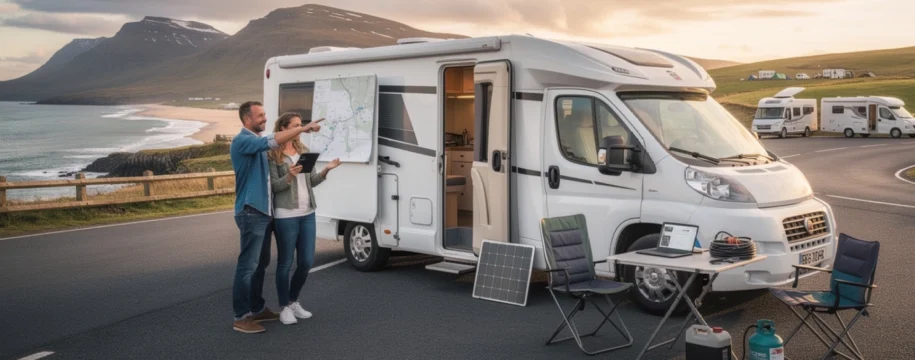
# Why is renting a mobile home a great option for flexible travel?
The landscape of British travel has transformed dramatically over recent years, with mobile home rentals emerging as one of the most compelling alternatives to traditional holiday arrangements. Rather than committing to fixed hotel bookings or purchasing an expensive motorhome outright, travellers are discovering the remarkable freedom that comes with hiring a fully-equipped vehicle for specific journeys. This approach combines the spontaneity of road travel with the comfort of having your accommodation travel alongside you, eliminating the logistical headaches that often accompany multi-destination trips.
The appeal extends far beyond simple convenience. When you rent a mobile home, you’re essentially unlocking a different philosophy of travel—one where your itinerary remains fluid, your accommodation costs become predictable, and the open road beckons without the burden of vehicle ownership responsibilities. From the rugged beauty of the Scottish Highlands to Cornwall’s dramatic coastline, the UK offers extraordinary diversity for mobile home adventures, and rental options have evolved to meet virtually every traveller’s needs and budget constraints.
Mobile home rental models: Peer-to-Peer platforms vs traditional dealership hire
The mobile home rental market has diversified considerably, presenting travellers with fundamentally different approaches to securing their vehicle. Understanding these distinct models helps you select the service that aligns with your priorities, whether that’s vehicle variety, insurance comprehensiveness, or pricing flexibility. Each rental framework carries unique advantages and considerations that merit careful evaluation before committing to a booking.
Rvshare and outdoorsy: accessing Owner-Listed motorhomes across multiple regions
Peer-to-peer platforms have revolutionised the mobile home rental landscape by connecting travellers directly with private vehicle owners. RVshare and Outdoorsy function similarly to accommodation-sharing services, featuring thousands of privately-owned motorhomes, campervans, and caravans available for hire. This model typically offers more competitive pricing than traditional dealerships, with daily rates often 20-30% lower due to reduced overhead costs. The vehicle selection spans an impressive range, from compact campervans suitable for couples to luxury Class A motorhomes accommodating entire families.
The personalised nature of peer-to-peer rentals means you’ll often receive detailed vehicle orientations from owners who genuinely understand their motorhomes’ quirks and features. Many owners provide additional amenities—camping chairs, outdoor grills, or even pre-stocked kitchen supplies—creating a more curated experience than standardised fleet vehicles. However, availability can fluctuate significantly based on owner schedules, and vehicle condition may vary more than with commercial fleets. Booking well in advance becomes particularly important during peak travel seasons when the most desirable units secure reservations months ahead.
Cruise america and apollo RV: standardised fleet options for guaranteed availability
Traditional rental companies maintain large, professionally-managed fleets with standardised specifications and regular replacement cycles. Cruise America, one of the largest motorhome rental networks, operates across multiple locations with consistent vehicle classes, making it straightforward to understand exactly what you’re booking. Apollo RV follows a similar model, offering newer vehicles (typically under three years old) with predictable layouts and equipment packages. This standardisation eliminates much of the uncertainty associated with peer-to-peer rentals.
The reliability factor weighs heavily in favour of established dealerships. Their vehicles undergo rigorous maintenance schedules, and comprehensive roadside assistance programmes provide peace of mind throughout your journey. Should mechanical issues arise, these companies maintain support networks capable of arranging repairs or replacement vehicles swiftly. The trade-off for this reliability comes in higher daily rates—expect to pay £100-180 per day for mid-range motorhomes during peak season, compared to £70-130 through peer-to-peer platforms. Additionally, traditional rentals often impose stricter mileage allowances and geographical restrictions that may limit your routing flexibility.
Motorhome republic: aggregated comparison tools for Cross-Provider rate analysis
Comparison platforms like Motorhome Republic streamline the rental research process by aggregating inventory from multiple providers into searchable databases. Rather than visiting individual rental company websites, you can evaluate dozens of options simultaneously, filtering by vehicle type, passenger capacity, pricing, and pickup location. These aggregators don
t’t own vehicles themselves; instead, they act as intermediaries between you and a global network of rental brands, from large international fleets to smaller regional specialists.
For travellers seeking flexible travel with a tight budget, this aggregated view is invaluable. You can quickly compare daily rental rates, mileage policies, insurance inclusions, and customer reviews side by side, rather than trying to decode different pricing structures in isolation. Motorhome Republic also negotiates bulk rates with suppliers, which can result in discounted packages or added extras such as free additional drivers or reduced one-way fees. The key is to use these tools not just to find the lowest price, but to identify the best overall value once fuel costs, campsite fees, and optional extras are factored in.
Insurance and liability coverage structures in peer-to-peer mobile home rentals
When you book through a peer-to-peer mobile home rental platform, insurance and liability arrangements are often more complex than with traditional dealerships. Platforms like RVshare and Outdoorsy typically provide a primary rental policy that sits on top of the owner’s existing insurance, covering collision damage, theft, and third-party liability up to a specified limit. This cover is usually mandatory and built into the daily rate, though excesses (deductibles) can be relatively high compared with standard car hire.
You will often have the option to purchase supplemental protection—such as reduced excess, roadside assistance upgrades, or trip interruption cover—at the checkout stage. It’s crucial to read policy wording carefully: some plans exclude damage to awnings, windscreens, or tyres, and off-road use is almost always prohibited. Unlike dealership hires, where a single company manages both the vehicle and the policy, peer-to-peer rentals involve three parties (platform, owner, renter), so resolving claims can take longer. Before confirming a booking, you should clarify who to contact in the event of an incident, what documentation is required, and whether your own travel insurance or credit card benefits can provide secondary cover.
Dynamic itinerary planning: adapting routes without fixed accommodation bookings
One of the strongest arguments for renting a mobile home for flexible travel is the ability to adjust your plans on the fly. Without rigid hotel reservations dictating where you must be each night, you can respond in real time to weather changes, local recommendations, or simple changes in mood. Feel like staying an extra day near Glencoe because the light is perfect for hiking? Prefer to abandon a rainy coastal stop in favour of a sunnier inland route? With your accommodation on wheels, such decisions become logistical tweaks rather than costly disruptions.
This dynamic itinerary approach does still require a basic understanding of camping regulations, campsite networks, and practical limits on daily driving distances. Rather than planning exact overnight stops weeks in advance, many mobile home travellers create “route frameworks” with several optional stopping points per region. You maintain a sense of direction—perhaps a clockwise loop of the North Coast 500 or a meander down through the Lake District and into Wales—while staying free to choose each night’s stop based on what you discover along the way.
Wild camping legislation: navigating scotland’s land reform act vs english bylaw restrictions
Wild camping is often romanticised as the ultimate expression of freedom travel, but the legal picture in the UK is nuanced, especially when it comes to motorhomes. In Scotland, the Land Reform (Scotland) Act 2003 grants broad access rights to land for non-motorised campers on foot, but these rights do not automatically extend to vehicles. Overnighting in a motorhome still requires either explicit landowner permission or the use of designated parking areas where local authorities permit it. Many rural communities welcome respectful overnight stops, but some popular sites have introduced restrictions due to overuse.
In England and Wales, the legal situation is generally tighter. Bylaws, national park rules, and local council regulations often prohibit sleeping in vehicles outside authorised areas, even if daytime parking is allowed. This doesn’t mean spontaneous travel is impossible, but it does mean you should plan within the framework of permitted overnight spots—such as certified locations, pub stopovers with permission, or informal aires created by local councils. A practical rule of thumb is to assume wild camping in a motorhome is not allowed unless signage or explicit guidance suggests otherwise and always to leave no trace, keep noise down, and avoid extending awnings or furniture that make a stop look like a semi-permanent camp.
Caravan club sites and camping and caravanning club networks for spontaneous stopovers
For travellers who want flexibility without flirting with legal grey areas, membership-based campsite networks are a powerful resource. The Caravan and Motorhome Club and the Camping and Caravanning Club manage hundreds of club sites and certificated locations (CLs/CSs) across the UK, many of which welcome same-day or short-notice bookings outside peak bank holiday weekends. These sites typically offer hardstanding pitches, electric hook-ups, fresh water, and waste disposal—everything you need to reset your mobile home’s onboard systems.
Because these networks cover both flagship holiday parks and smaller five-van sites on farms or estates, you can choose the level of facilities and atmosphere that suits your trip. Booking systems have become increasingly digital, allowing you to check availability and secure a pitch from your phone as you approach an area. This means you can drive until early evening, decide whether you want a countryside CL or a coastal full-facility site, and make a reservation within minutes—preserving the spirit of spontaneous mobile home travel while staying fully compliant with local regulations.
Park4night and campercontact: crowdsourced overnight parking location databases
Digital tools have transformed how mobile home travellers discover overnight stops, especially when travelling without a fixed route. Apps such as Park4Night and Campercontact host crowdsourced databases of thousands of locations where motorhomes have stayed, ranging from formal campsites and service areas to farm stays, pub car parks, and authorised roadside aires. Each listing typically includes user reviews, GPS coordinates, photographs, and notes on facilities such as water taps, grey-water drains, and chemical toilet disposal points.
Used responsibly, these platforms help you identify realistic options within your driving radius at the end of each day. You can filter for free spots, locations suitable for larger vehicles, or places that allow late arrivals. However, because entries are user-generated, conditions on the ground can change quickly—councils may introduce new restrictions or landowners may revoke previous permissions. It’s wise to read the latest comments, respect any updated signage, and always have a backup option in case your preferred stop is full or unavailable. Think of these apps as a flexible toolkit rather than a guarantee, supporting your adaptive itinerary rather than dictating it.
Seasonal route modifications: adjusting travel plans for NC500 weather patterns
When your accommodation travels with you, changing your route in response to seasonal weather becomes much easier. The North Coast 500 (NC500), for example, offers a spectacular circuit around the northern Highlands, but road conditions, daylight hours, and campsite availability vary dramatically between January and July. In shoulder seasons, you might decide to shorten daily driving distances to account for wet roads and earlier sunsets, concentrating more time around sheltered west-coast lochs rather than exposed northern headlands.
During periods of heavy rain or high winds, you can pivot inland towards more protected glens, or swap remote wild scenery for small towns with good facilities and indoor attractions. In contrast, during a spell of fine summer weather, your mobile home allows you to extend your stay on remote beaches or plan detours to islands that require ferry crossings, such as Skye or Lewis and Harris. Because you are not tied to non-refundable hotel bookings, adjusting your NC500 travel plan to match the conditions becomes a matter of re-routing on your sat nav rather than renegotiating your whole holiday budget.
Onboard utility systems: self-contained water, power, and waste management
The true flexibility of mobile home travel depends heavily on the vehicle’s onboard utility systems. Being able to store water, generate power, and manage waste autonomously allows you to spend nights away from fully serviced campsites, widening your choice of locations and reducing nightly costs. When you rent a mobile home, understanding these systems doesn’t require engineering expertise, but a basic grasp of capacities and usage patterns will help you plan more confidently and avoid inconvenient shortages.
Most modern rental motorhomes in the UK come equipped with fresh and waste water tanks, 12V electrical systems, gas-powered heating and cooking, and a cassette toilet. While these utilities make the vehicle feel like a compact apartment, they are still finite resources. As a rule of thumb, two adults using onboard facilities sensibly can stay self-sufficient for two to three days before needing to refill water and empty waste tanks. If you intend to wild-park occasionally or use basic CL sites without full services, budgeting your utility usage becomes as important as managing your fuel and driving time.
Freshwater tank capacities and refilling strategies at motorway service stations
Typical freshwater tank capacities in rental motorhomes range from 70 to 120 litres, depending on the vehicle’s size and layout. This water supplies your kitchen tap, bathroom sink, and shower, as well as sometimes flushing the toilet, so consumption can add up quickly if you take long showers or leave taps running. Many experienced travellers adopt “navy shower” techniques—wetting down, switching off the water while soaping, then rinsing—to preserve capacity while still enjoying a daily wash.
Refilling strategies depend on your route. Most full-service campsites and many CLs provide potable water taps; you simply connect a hose or use a portable container to top up your tank. Some motorway service stations and fuel forecourts also offer water points for a small fee, although you should always check signage to ensure the supply is drinking quality. When planning a flexible journey, it’s helpful to mark likely refill locations every 150–200 miles on your map or app. That way, even if you change your overnight destination at the last minute, you’ll rarely be more than a day away from a reliable water source.
Solar panel installations and lithium battery banks for off-grid energy independence
Many newer rental mobile homes now feature roof-mounted solar panels feeding into leisure batteries, significantly improving your off-grid capabilities. A typical 100–150W panel can keep lights, water pumps, USB outlets, and basic electronics running indefinitely during bright summer days, provided your power use remains modest. In some higher-spec or “eco” rentals, lithium battery banks replace traditional lead-acid batteries, offering deeper discharge capacity, faster charging, and lighter weight—all of which support longer periods away from electric hook-up.
However, even with solar and lithium technology, there are limits. High-consumption devices such as microwaves, hairdryers, and electric kettles often require mains hook-up or a powerful inverter, which may not be included in every rental. A simple way to think about off-grid mobile home power is to treat 12V systems like a large phone battery: ideal for lighting, charging devices, and running pumps, but not designed for sustained high-wattage use. If off-grid independence is central to your travel style, you should request vehicle specifications before booking and ask the rental provider for typical daily autonomy figures based on the season and expected usage.
Cassette toilet systems: chemical disposal points at UK caravan club facilities
Cassette toilets are standard in most European motorhomes and are designed for ease of use and straightforward emptying. The toilet bowl inside the habitation area sits above a removable tank—usually holding 15–20 litres—that is accessed from an exterior hatch. When the tank approaches capacity, an indicator light signals that it’s time to empty, which you should do at dedicated chemical disposal points rather than standard public toilets or drains.
Caravan and Motorhome Club and Camping and Caravanning Club sites almost always provide clearly marked Elsan or chemical disposal stations where you can safely empty and rinse the cassette. Many independent campsites and some marinas or service areas also offer this facility. On a flexible route, it makes sense to plan a stay at a serviced site every few days to reset your toilet system and grey-water tank, even if you spend intervening nights at more basic locations. Adding a suitable chemical solution to the cassette after each emptying helps control odours and break down waste—your rental provider will usually supply or sell these products and can show you exactly how much to use.
Gas locker configurations: propane vs butane for heating and cooking appliances
Most rental mobile homes use bottled gas to power hobs, ovens, and often the heating and hot water systems. Cylinders are stored in a dedicated gas locker, with regulators and pipework configured to supply the appliances safely. In the UK, propane is generally preferred for year-round touring because it performs better at lower temperatures, making it ideal for Scottish Highland trips or off-season journeys. Butane is more commonly used for summer-only applications, as it can struggle to vaporise efficiently in colder weather.
As a renter, you won’t usually be expected to change gas regulators or switch between bottle types; instead, the hire company will set up the system and either include one or two full cylinders or operate a “gas used” fee structure. It’s wise to ask how much gas is included and how you can monitor remaining levels—some vehicles have gauge indicators, while others rely on weight or simple usage estimates. If you anticipate extended cooking or winter heating, you may want to request an extra cylinder at pick-up. Think of gas as your mobile home’s equivalent of domestic central heating fuel: invisible when everything works, but fundamental to comfort when temperatures drop.
Cost-efficiency analysis: daily rental rates vs accumulated hotel and transport expenses
At first glance, daily mobile home rental rates—often £90–£180 in high season for a mid-range motorhome—can appear steep when compared to a budget hotel room. However, a fair cost-efficiency analysis must account for the fact that a rental motorhome combines several expense categories: accommodation, local transport, some self-catering capability, and, in some cases, even entertainment if you enjoy simply sitting in scenic spots. When you factor in what you would otherwise pay for multiple hotel nights, restaurant meals, and local transport (rail, buses, or car hire), the total cost of a mobile home holiday can compare favourably, especially for families or groups.
Consider a simple comparison: two adults and two children staying in a mid-range hotel might pay £150–£200 per night in popular UK destinations during school holidays, plus fuel or train fares and the cost of eating out for most meals. A family-style motorhome at £140 per day, with campsite fees of £25–£40 per night and supermarket-based self-catering, can quickly become more economical over a week or more. Additionally, you avoid the “dead cost” of separate car rental, particularly in rural areas where public transport options are limited. The longer the trip and the more people sharing the mobile home, the more likely it is that renting a motorhome becomes not only a flexible but also a financially sensible travel option.
Vehicle classification and licence requirements: navigating UK driving regulations for motorhomes
Understanding how mobile homes are classified for licensing and road regulations is essential before you commit to a rental. In the UK, most rental motorhomes fall under the category of “motor caravan” and, crucially, have a maximum authorised mass (MAM) of up to 3,500kg. If this is the case, holders of a standard Category B car licence can drive them, provided they meet medical fitness requirements. This weight limit is one reason many rental fleets avoid heavier “A-class” or large tag-axle vehicles, which would require a C1 entitlement.
If you passed your driving test before 1 January 1997, your licence likely includes C1, allowing you to drive vehicles up to 7,500kg MAM, including some larger motorhomes. Those who passed after that date typically only have Category B, so must ensure the rental vehicle’s plated weight does not exceed 3,500kg. It is worth checking your driving licence photocard for entitlements and expiry dates well before your trip. Rental companies will normally verify eligibility at booking and pick-up, but it remains your legal responsibility to ensure you are properly licensed for the specific motorhome you are hiring.
Other regulatory considerations include speed limits and tolls. In the UK, motorhomes under 3,050kg unladen weight generally follow car speed limits, while heavier vehicles may face lower limits on single and dual carriageways. In some European countries, different vignettes or toll categories apply depending on weight and height, which can impact your total trip cost if you intend to cross the Channel. Insurance policies may also specify age limits—often a minimum of 25 and maximum of 70 or 75 for drivers—so younger or older travellers should check whether additional surcharges or restrictions apply. Taking an hour to familiarise yourself with these details can prevent unwelcome surprises and ensure your flexible travel remains fully compliant.
Seasonal flexibility: extending scottish highlands trips or abbreviating coastal cornwall routes
Seasonality is one of the main reasons travellers choose mobile home rentals for flexible holidays. Weather patterns, daylight hours, and visitor numbers change markedly between winter and summer, and your ability to extend or shorten a journey in response can make the difference between an average trip and an unforgettable one. Unlike package tours or fixed hotel itineraries, a mobile home holiday lets you stay longer where conditions are ideal and move on quickly when they are not, without incurring heavy cancellation penalties.
Take the Scottish Highlands as an example. You might plan a seven-day loop, only to find that you’ve fallen in love with a quiet lochside spot or discovered a network of hiking trails you want to explore in more depth. If your rental period allows, you can simply slow your pace, adding extra nights in the region and trimming less compelling stops later in the route. Campsites often have more availability outside the core summer weeks, making such extensions feasible at short notice. Your only real constraint is the return date agreed with your rental provider, which you may even be able to adjust for a fee if the vehicle isn’t already booked for the next hire.
By contrast, coastal Cornwall in mid-August can become intensely crowded, with traffic queues and busy beaches reducing the appeal of lingering. If you arrive to find conditions not to your taste—whether that’s weather-related or simply a matter of volume of visitors—you can choose to abbreviate your time there and redirect your journey to quieter inland areas or less popular coastlines in Devon or Wales. Because your accommodation is always with you, the decision to pivot need not involve renegotiating hotel stays or losing pre-paid nights. In this way, renting a mobile home gives you a built-in “escape valve” from unfavourable conditions, turning the unpredictable nature of British travel into an asset rather than a liability.