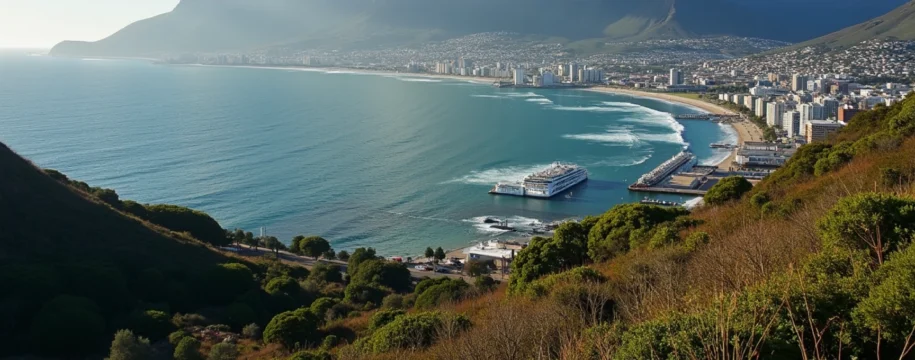
Cape Town stands as one of the world’s most captivating destinations, where dramatic landscapes meet vibrant culture in an extraordinary symphony of experiences. Nestled between towering mountains and pristine coastlines, this South African metropolis offers adventurers an unparalleled blend of natural wonders, rich heritage, and world-class amenities. From UNESCO World Heritage sites to cutting-edge culinary scenes, Cape Town delivers experiences that satisfy every type of traveller. The city’s unique position at the confluence of two oceans creates a microclimate that supports remarkable biodiversity, whilst its complex history has shaped a multicultural society that welcomes visitors with warmth and authenticity. Whether you’re seeking adrenaline-pumping outdoor activities, contemplative cultural experiences, or simply the pleasure of exceptional wines and cuisine, Cape Town provides the perfect backdrop for your next great adventure.
Table mountain national park: UNESCO world heritage adventure activities
Table Mountain National Park represents one of the most biodiverse urban national parks globally, encompassing over 25,000 hectares of pristine wilderness within metropolitan Cape Town. This UNESCO World Heritage site protects the Cape Floral Kingdom, the smallest yet richest of the world’s six floral kingdoms, containing more plant species per square kilometre than the Amazon rainforest. The park’s centrepiece, Table Mountain itself, rises majestically to 1,085 metres above sea level, creating a dramatic backdrop that has become synonymous with Cape Town’s identity.
The mountain’s unique flat-topped silhouette results from ancient geological processes spanning over 500 million years, creating sandstone formations that support an extraordinary variety of endemic species. Visitors can explore this natural wonder through numerous activities ranging from gentle nature walks to challenging technical climbs, each offering distinct perspectives on the mountain’s remarkable ecosystems and stunning vistas.
Platteklip gorge hiking route technical assessment
The Platteklip Gorge route serves as the most direct and popular hiking trail to Table Mountain’s summit, offering adventurers a challenging yet rewarding ascent through the mountain’s dramatic eastern face. This technically demanding route covers approximately 2.5 kilometres with an elevation gain of 760 metres, typically requiring 1.5 to 3 hours depending on fitness levels and weather conditions.
The trail begins near the lower cable station and follows a series of stone steps and rocky scrambles through the gorge’s narrow confines. Hikers encounter diverse vegetation zones as they ascend, from coastal fynbos at the base to montane shrublands near the summit. The route demands proper preparation, including sturdy hiking boots, adequate water supplies, and sun protection, as the exposed terrain offers little shade during the ascent.
Kirstenbosch botanical gardens endemic fynbos exploration
Kirstenbosch National Botanical Garden represents one of the world’s most celebrated botanical institutions, showcasing the extraordinary diversity of South African flora across 528 hectares of cultivated gardens and natural fynbos. Established in 1913, these gardens protect and display over 7,000 species, many of which exist nowhere else on Earth. The iconic Tree Canopy Walkway, known as the Boomslang , curves gracefully through the forest canopy, offering visitors an elevated perspective on the garden’s remarkable ecosystems.
The gardens serve as a living laboratory for conservation research, with specialized collections including the Protea Garden, Cycad Amphitheatre, and Medicinal Garden. Seasonal highlights include spectacular wildflower displays during spring months and the famous summer sunset concerts that combine world-class performances with breathtaking natural settings. Educational programmes and guided walks enhance visitors’ understanding of fynbos ecology and the critical conservation challenges facing this unique biome.
Cape point two oceans maritime navigation experience
Cape Point marks the dramatic southwestern extremity of the African continent, where the Atlantic and Indian Oceans converge in a spectacular display of natural forces. This rugged promontory, protected within Table Mountain National Park, offers visitors the unique experience of standing at one of the world’s most significant maritime landmarks. The historic lighthouse, operational since 1859, serves as a beacon for ships navigating these treacherous waters known to sailors as the “Cape of Storms.”
The Flying Dutchman Funicular provides convenient access to the lighthouse viewpoint, whilst numerous hiking trails allow for more adventurous exploration of the reserve’s diverse landscapes. Visitors can observe the remarkable meeting of ocean currents, witness seasonal whale migrations, and explore the rich maritime history through interpretive displays and the preserved remains of ancient shipwrecks scattered along the coastline.
Lion’s head summit night photography expeditions
Lion’s Head offers photographers and adventure enthusiasts one of Cape Town’s most rewarding summit experiences, particularly during full moon expeditions that have become legendary among locals and visitors alike. This distinctive peak, rising 669 metres above sea level, provides 360-degree panoramic views encompassing Table Mountain, the Atlantic seaboard, and the sprawling city bowl illuminated by countless lights.
The circular hiking route typically takes 1.5 to 2 hours to complete, featuring sections that require basic scrambling skills and the use of chains for safety. Night ascents during full moon periods create magical experiences as the mountain’s granite surfaces shimmer under natural moonlight, whilst the city’s lights create a spectacular urban tapestry below. Professional photography workshops frequently utilize this location for teaching night photography techniques and long-exposure captures of the urban landscape.
V&A waterfront maritime heritage and modern entertainment complex
The Victoria & Alfred Waterfront stands as one of the Southern Hemisphere’s most successful mixed-use developments, seamlessly blending maritime heritage with contemporary entertainment, shopping, and cultural attractions. Named after Queen Victoria and Prince Alfred, who initiated harbour construction in 1860, this working waterfront maintains its operational status whilst serving over 24 million visitors annually. The complex spans 123 hectares of prime waterfront real estate, featuring over 450 retail outlets, world-class restaurants, luxury accommodations, and significant cultural institutions.
The development’s success stems from its authentic preservation of maritime character whilst incorporating modern amenities that cater to diverse visitor interests. Historic harbour buildings have been sensitively restored and repurposed, creating atmospheric venues for dining, shopping, and entertainment. The constant movement of fishing boats, luxury yachts, and passenger ferries maintains the waterfront’s authentic maritime atmosphere, whilst street performers, craft markets, and cultural events ensure a vibrant social environment throughout the day and evening.
Zeitz museum of contemporary african art cultural immersion
The Zeitz Museum of Contemporary African Art represents Africa’s largest contemporary art museum, housed within the dramatically transformed former grain silo complex that dominated Cape Town’s harbour skyline for decades. British architect Thomas Heatherwick’s innovative design carved eleven floors of gallery space from the concrete silos, creating cathedral-like interior spaces that complement the monumental scale of contemporary African artworks.
The museum’s collection spans painting, sculpture, photography, film, and new media, featuring works by established and emerging artists from across the African continent and diaspora. Rotating exhibitions explore themes of identity, migration, urbanization, and social justice, whilst educational programmes and artist residencies foster dialogue between local and international creative communities. The building’s rooftop sculpture garden offers spectacular views whilst providing additional exhibition space for large-scale installations.
Two oceans aquarium marine biodiversity research centre
The Two Oceans Aquarium serves as both a premier tourist attraction and a vital marine research facility, showcasing the remarkable biodiversity of South African waters where the Atlantic and Indian Oceans meet. The aquarium houses over 3,000 marine animals representing 300 species, many endemic to the region’s unique marine ecosystems. The iconic predator exhibit features one of the world’s largest viewing windows, allowing visitors to observe ragged-tooth sharks, rays, and various fish species in a 2-million-litre tank.
Beyond entertainment, the facility conducts crucial conservation research, including breeding programmes for endangered species and rehabilitation services for injured marine animals. Interactive exhibits educate visitors about marine ecology, climate change impacts, and sustainable fishing practices, whilst behind-the-scenes tours provide insights into marine husbandry and research methodologies. The facility’s commitment to conservation extends to its operations, utilizing renewable energy sources and implementing waste reduction strategies.
Robben island UNESCO world heritage political history tours
Robben Island stands as one of South Africa’s most significant historical sites, serving as a UNESCO World Heritage monument to the struggle against apartheid and the triumph of democracy. Located 7 kilometres offshore from Cape Town, this 574-hectare island operated as a political prison for nearly four decades, housing thousands of political prisoners including Nelson Mandela, who spent 18 of his 27 imprisonment years here.
Guided tours, led by former political prisoners, provide powerful personal testimonies of life under apartheid and the resilience of those who fought for freedom. Visitors explore Mandela’s former cell, the limestone quarry where prisoners performed hard labour, and the recreational areas where political discussions and education continued despite harsh conditions. The island’s broader history encompasses periods as a leper colony, mental institution, and military base, creating a complex narrative of exclusion, resistance, and ultimately, reconciliation.
Cape wheel observation platform urban geography analysis
The Cape Wheel provides visitors with an elevated perspective on Cape Town’s unique urban geography, rising 40 metres above the V&A Waterfront to offer panoramic views of the city’s remarkable setting between mountain and sea. This observation attraction allows for detailed analysis of Cape Town’s spatial development, from the historic city bowl nestled beneath Table Mountain to the sprawling townships extending across the Cape Flats.
From this vantage point, visitors can observe the city’s distinct geographical zones, including the Atlantic seaboard’s luxury residential areas, the industrial harbour facilities, and the diverse architectural styles that reflect Cape Town’s complex cultural heritage. The 15-minute rotation provides opportunities to photograph the city from multiple angles whilst guides explain the relationship between topography, climate, and urban development patterns that have shaped this remarkable metropolis.
Western cape wine route Terroir-Driven viticulture experiences
The Western Cape wine routes encompass some of the world’s most spectacular viticultural landscapes, where Mediterranean climate conditions, diverse soil types, and centuries of winemaking tradition converge to produce exceptional wines. The region’s wine industry dates back to 1659 when the first vines were planted by Dutch settlers, evolving into a sophisticated industry that now produces over 1 billion litres annually across more than 100,000 hectares of vineyards.
The concept of terroir drives viticultural practices throughout the region, with winemakers carefully matching grape varieties to specific microclimates and soil conditions. Ocean influences moderate temperatures and provide cooling breezes, whilst mountain slopes offer diverse elevations and aspects that create numerous microclimates within relatively small areas. This diversity enables the production of everything from crisp Sauvignon Blanc and elegant Chardonnay to bold Cabernet Sauvignon and the uniquely South African Pinotage.
Stellenbosch wine estate methodé cap classique production
Stellenbosch represents the heart of South African premium wine production, home to some of the country’s most prestigious estates and innovative winemaking techniques. The region’s focus on Méthode Cap Classique production has elevated South African sparkling wines to international recognition, utilizing traditional champagne methods adapted to local conditions and grape varieties.
Leading estates such as Graham Beck, Villiera, and Boschendal have perfected the art of traditional method sparkling wine production, utilizing predominantly Chardonnay and Pinot Noir grapes grown in cool-climate vineyard sites. The production process involves secondary fermentation in bottle, extended lees aging, and hand riddling techniques that create complex, elegant wines capable of competing with the world’s finest champagnes. Cellar tours and tastings provide insights into the meticulous processes required to produce these premium sparkling wines.
Franschhoek valley french huguenot viticultural heritage
Franschhoek Valley preserves the viticultural legacy of French Huguenot settlers who arrived in the late 17th century, bringing sophisticated winemaking knowledge that continues to influence the region’s approach to viticulture. This picturesque valley, surrounded by dramatic mountain peaks, maintains its French character through architecture, cuisine, and winemaking philosophies that emphasize elegance and finesse over power.
The valley’s unique microclimate, characterized by warm days and cool nights, proves ideal for producing refined wines that showcase varietal character and terroir expression. Estates such as La Motte, Rickety Bridge, and Glenwood focus on small-batch production using traditional techniques, often incorporating organic and biodynamic practices. The famous Franschhoek Wine Tram provides a unique touring experience, connecting multiple estates whilst offering commentary on the valley’s rich viticultural heritage.
Constantia wine region historical dessert wine legacy
Constantia holds the distinction of being South Africa’s oldest wine-producing region, with viticultural history spanning over 350 years since the establishment of the original Constantia estate by Governor Simon van der Stel in 1685. The region achieved international fame for its legendary dessert wine, Constantia, which graced the tables of European royalty and was celebrated by writers including Charles Dickens and Jane Austen.
Modern Constantia maintains its premium status through the production of exceptional cool-climate wines, benefiting from Atlantic Ocean influences that moderate temperatures and extend growing seasons. Klein Constantia estate continues the tradition of dessert wine production with their renowned Vin de Constance, a Muscat de Frontignan-based wine that recreates the legendary Constantia wines of the 18th and 19th centuries. The region’s proximity to Cape Town makes it easily accessible for visitors seeking to experience this living wine heritage.
Paarl mountain chenin blanc cultivar specialisation
Paarl region has established itself as the spiritual home of Chenin Blanc in South Africa, with many estates dedicating significant resources to elevating this versatile cultivar to world-class status. The region’s diverse terroir, ranging from decomposed granite slopes to clay-rich valley floors, provides ideal conditions for producing Chenin Blanc expressions that range from crisp, mineral-driven styles to rich, complex wines with extended aging potential.
Pioneer producers such as Ken Forrester Wines and Fairview Estate have demonstrated Chenin Blanc’s remarkable versatility, crafting everything from fresh, food-friendly styles to noble late harvest dessert wines and even bottle-fermented sparkling wines. The Old Vine Project, headquartered in Paarl, works to preserve and celebrate South Africa’s heritage Chenin Blanc vineyards, some of which contain vines over 100 years old that produce wines of exceptional complexity and character.
Chapman’s peak drive coastal engineering marvel exploration
Chapman’s Peak Drive represents one of the world’s most spectacular coastal roads, carved into the near-vertical cliffs between Hout Bay and Noordhoek through remarkable engineering achievement. Completed in 1922, this 9-kilometre route required innovative construction techniques to create a roadway that follows the natural contours of the Chapman’s Peak cliff face, 600 metres above the Atlantic Ocean. The drive features 114 curves and bends, each offering unique perspectives on the dramatic coastline and mountain landscapes.
The engineering challenges of maintaining this cliff-side route became apparent during the 1990s when rockfall incidents led to extended closures and comprehensive safety upgrades. Modern rock netting, catch fences, and continuous monitoring systems now protect travellers whilst preserving the road’s scenic character. The route serves as both a functional transport link and a premier tourist attraction, featured in numerous international films and consistently ranked among the world’s most beautiful drives.
Environmental considerations play a crucial role in the road’s ongoing management, with strict speed limits and vehicle restrictions designed to minimize impact on the surrounding fynbos vegetation and wildlife corridors.
The delicate balance between accessibility and conservation requires constant vigilance to preserve this natural wonder for future generations.
Viewpoints along the route provide opportunities for photography and contemplation, whilst the nearby Shipwreck Museum at Olifantsbos offers insights into the treacherous maritime history of these waters.
Bo-kaap cultural quarter cape malay heritage architecture
The Bo-Kaap cultural quarter preserves one of Cape Town’s oldest residential areas, where brightly coloured Victorian and Georgian houses cascade down the slopes of Signal Hill in a vibrant display of Cape Malay heritage. This historic neighbourhood, originally known as the Malay Quarter, developed during the 18th and 19th centuries as home to freed slaves, political exiles, and artisans who brought Islamic culture, architectural traditions, and culinary influences from Southeast Asia to the Cape Colony.
The district’s distinctive architectural character reflects the adaptation of European building styles to local conditions and cultural preferences, with
flat-roofed houses featuring ornate Victorian gingerbread trim, decorative shutters, and distinctive doorways that reflect both European and Eastern architectural influences. The iconic cobblestone streets of Wale Street and Rose Street showcase the best-preserved examples of this unique architectural fusion, where traditional Islamic geometric patterns merge with colonial building techniques.
The neighbourhood’s cultural significance extends far beyond its photogenic facades, encompassing active mosques, traditional spice shops, and family-run restaurants that serve authentic Cape Malay cuisine. The Auwal Mosque, established in 1794, stands as the oldest mosque in South Africa and continues to serve as a spiritual centre for the local Muslim community. Cooking classes and cultural tours provide visitors with immersive experiences in Cape Malay culinary traditions, featuring dishes such as bobotie, sosaties, and koeksisters that blend Indonesian, Malay, and African flavours with Dutch colonial influences.
Hermanus walker bay southern right whale migration patterns
Hermanus stands as the world’s premier land-based whale watching destination, where the annual migration of Southern Right Whales creates one of nature’s most spectacular marine wildlife experiences. Located 120 kilometres southeast of Cape Town along Walker Bay, this charming coastal town offers unparalleled opportunities to observe these magnificent mammals from clifftop vantage points during their breeding season from June to December.
The Southern Right Whale migration follows ancient oceanic pathways, with these gentle giants travelling over 5,000 kilometres from Antarctic feeding grounds to the warmer coastal waters of South Africa for mating and calving. Walker Bay’s protected waters and nutrient-rich kelp forests provide ideal nursery conditions, where mothers give birth to calves and remain in the bay for several months before returning to polar waters. The whales’ curious nature often brings them close to shore, allowing for remarkable observations of complex behaviours including breaching, tail-slapping, and intimate mother-calf interactions.
Professional whale watching guides enhance the experience by identifying individual whales through distinctive callosity patterns and explaining the intricate social structures and communication methods of these highly intelligent marine mammals. The town’s famous Whale Crier, armed with a kelp horn, announces whale sightings from various clifftop positions, maintaining a tradition that began in 1992 to help visitors locate the best viewing opportunities. The annual Hermanus Whale Festival, held in late September, celebrates this natural phenomenon with educational programmes, research presentations, and cultural events that highlight the importance of marine conservation.
The convergence of scientific research, conservation efforts, and sustainable tourism in Hermanus demonstrates how communities can benefit economically whilst protecting critical marine ecosystems for future generations.
Beyond whale watching, Hermanus offers additional marine experiences including shark cage diving expeditions, coastal hiking trails through pristine fynbos vegetation, and visits to local wine estates that overlook the bay. The town’s commitment to environmental protection includes strict regulations on boat-based whale watching activities and ongoing research programmes that monitor whale populations and their response to climate change impacts on Southern Ocean ecosystems.