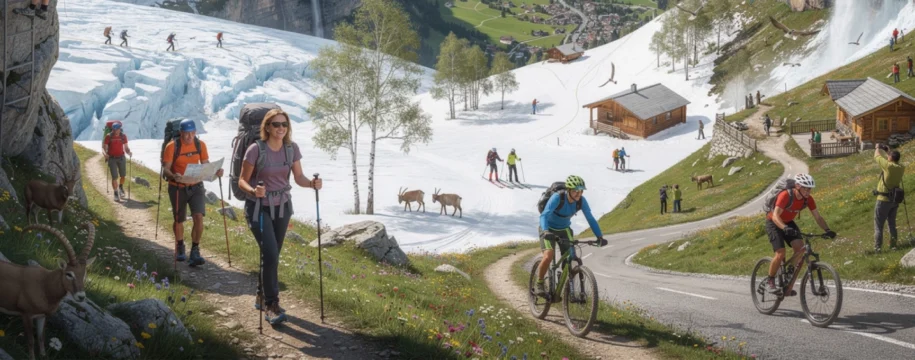
Mountain regions across Europe offer an extraordinary playground for adventurers, nature enthusiasts, and thrill-seekers alike. From the towering peaks of the Alps to the rugged highlands of Scotland, these elevated landscapes provide countless opportunities for both physical challenge and spiritual rejuvenation. Whether you’re drawn to the pristine wilderness of winter slopes or the verdant hiking trails of summer, mountain destinations cater to every skill level and interest.
The diversity of mountain activities has expanded dramatically in recent years, transforming these regions from seasonal ski resorts into year-round adventure hubs. Modern mountain tourism encompasses everything from traditional alpine pursuits to cutting-edge extreme sports, cultural immersion experiences, and wildlife observation opportunities. This evolution has made mountain destinations increasingly accessible to families, solo travellers, and groups seeking memorable experiences in some of Europe’s most spectacular natural settings.
Alpine hiking and trekking adventures across european mountain ranges
Alpine hiking represents the quintessential mountain experience, offering unparalleled access to dramatic landscapes and pristine wilderness areas. European mountain ranges provide some of the world’s most celebrated trekking routes, with well-maintained trail systems that accommodate both day hikers and multi-week expedition enthusiasts. The infrastructure supporting alpine hiking has evolved significantly, featuring comprehensive waymarking systems, mountain huts, and emergency services that ensure safety whilst preserving the authentic wilderness experience.
Trail difficulty varies considerably across different mountain ranges, from gentle valley walks suitable for families to challenging high-altitude routes requiring technical mountaineering skills. The European hiking season typically extends from May through October, though timing varies significantly based on elevation and geographic location. Weather conditions can change rapidly in mountain environments, making proper preparation and equipment essential for any hiking endeavour.
Multi-day haute route expeditions through mont blanc massif
The Haute Route represents Europe’s most prestigious alpine trekking circuit, connecting Chamonix in France with Zermatt in Switzerland through 180 kilometres of spectacular high-altitude terrain. This legendary route typically requires 10-12 days to complete, traversing glaciated passes, remote valleys, and offering close encounters with some of the continent’s highest peaks. Experienced hikers consider the Haute Route the ultimate test of endurance and alpine skills.
The route demands excellent physical fitness and previous high-altitude hiking experience, as daily elevations often exceed 3,000 metres. Accommodation options include traditional mountain huts and luxury alpine lodges, allowing hikers to choose their preferred level of comfort. Weather windows are crucial for successful completion, with July through September offering the most reliable conditions.
Technical via ferrata routes in the dolomites and austrian alps
Via ferrata routes provide an exhilarating introduction to vertical mountain terrain, combining hiking with elements of rock climbing through fixed cable systems and iron rungs. The Dolomites region of northern Italy boasts over 40 via ferrata routes, ranging from beginner-friendly paths to expert-level challenges that scale sheer cliff faces. These engineered routes democratise access to dramatic mountain terrain that would otherwise require advanced climbing skills.
Modern via ferrata equipment includes specialised harnesses, energy-absorbing lanyards, and helmets designed specifically for this activity. Route grading systems help participants select appropriate challenges, with K1-K5 classifications indicating increasing difficulty levels. Professional guides offer instruction and safety oversight, making via ferrata accessible to adventurous beginners whilst providing thrilling challenges for experienced climbers.
Summit ascents of ben nevis and snowdonia’s fourteen peaks
Britain’s highest peaks offer unique mountaineering challenges distinct from continental European ranges. Ben Nevis, Scotland’s highest mountain at 1,345 metres, provides year-round climbing opportunities with conditions ranging from summer scrambling to winter ice climbing. The mountain’s unpredictable weather and technical terrain demand respect and proper preparation, despite its relatively modest elevation.
Snowdonia’s fourteen peaks over 3,000 feet present an appealing challenge for peak baggers and endurance athletes. The Welsh 3000s challenge involves summiting all fourteen peaks within 24 hours, covering approximately 30 kilometres with significant elevation gain. This epic undertaking requires careful route planning, navigation skills, and exceptional physical conditioning
Weather conditions in both regions can change rapidly, with fog, high winds, and heavy rain transforming straightforward trails into serious mountaineering challenges. For this reason, carrying appropriate navigation tools, layered clothing, and emergency equipment is essential, even during apparently benign summer conditions. Many visitors choose to join guided groups for their first attempts, benefiting from local knowledge of safe routes, escape options, and realistic timing.
Glacier walking experiences on vatnajökull and mer de glace
Glacier walking offers a rare opportunity to explore dynamic ice landscapes shaped over thousands of years. In Europe, two of the most accessible sites for guided glacier hikes are Iceland’s vast Vatnajökull and France’s historic Mer de Glace above Chamonix. Equipped with crampons, helmets, and ice axes, you can traverse crevasse fields, explore ice caves, and observe the visible impacts of climate change on these fragile environments.
On Vatnajökull, Europe’s largest ice cap, guided tours typically depart from Skaftafell or Jökulsárlón, ranging from short introductory walks to full-day expeditions. Mer de Glace, once accessible by simple paths, now requires ladders and stairways due to rapid glacial retreat, underlining the urgency of preserving alpine ecosystems. In both locations, certified mountain guides provide technical equipment, safety briefings, and interpretation on glacial geology, making glacier walking both an adventure and an educational experience.
Winter sports and snow-based recreation activities
When winter blankets Europe’s mountain ranges in snow, these regions transform into world-class arenas for winter sports and snow-based recreation. Modern ski resorts now offer far more than traditional downhill skiing, with activities tailored to everyone from expert freeriders to families discovering snow for the first time. As climate patterns shift, many destinations are diversifying their winter offerings to include Nordic skiing, snowshoeing, and non-ski experiences that remain viable throughout the season.
Planning a winter mountain holiday now involves choosing between adrenaline-fuelled off-piste descents, tranquil cross-country trails, or immersive snowshoe expeditions through pristine forests. Safety remains paramount in snowy environments, particularly when venturing away from groomed slopes, where avalanche risk and changing weather can present serious hazards. By combining professional instruction, appropriate equipment, and up-to-date local information, you can enjoy winter mountain activities with confidence and respect for the environment.
Off-piste skiing in chamonix valley and st. anton am arlberg
Off-piste skiing, also known as freeride skiing, offers some of the most exciting winter experiences in the mountains. The Chamonix Valley in France and St. Anton am Arlberg in Austria are considered European benchmarks for this discipline, attracting expert skiers from around the world. Here, lift-accessed couloirs, high alpine bowls, and long powder runs provide terrain that far surpasses anything found on groomed pistes.
However, this freedom comes with increased responsibility. Off-piste environments are uncontrolled, and avalanche risk is a constant factor, particularly after fresh snowfall or rapid temperature changes. Anyone heading beyond marked slopes should carry an avalanche transceiver, probe, and shovel, and know how to use them under pressure. Joining a certified mountain guide or local ski instructor for your first off-piste days is strongly recommended; they can help you read the terrain, understand the snowpack, and choose lines appropriate to your skill level.
Cross-country nordic skiing through lapland’s wilderness trails
In contrast to the steep gradients of alpine resorts, cross-country Nordic skiing in Lapland emphasises endurance, rhythm, and immersion in vast winter landscapes. Finland, Sweden, and Norway maintain thousands of kilometres of groomed trails crossing frozen lakes, boreal forests, and gently rolling fells. Many routes start directly from village centres, making Nordic skiing one of the most accessible winter sports for beginners.
Classic technique involves a gliding diagonal stride within parallel tracks, while skate skiing uses a V-shaped motion similar to ice skating on wider, groomed lanes. Lapland’s extensive trail networks are typically well-signposted, with shelters and cabins offering rest stops along longer itineraries. Multi-day tours, sometimes supported by luggage transfers or snowmobile assistance, allow you to ski between remote huts and lodges, experiencing the silence of the Arctic wilderness and, with luck, the spectacle of the Northern Lights.
Snowshoeing expeditions in pyrenees national park
Snowshoeing has emerged as one of the most inclusive winter mountain activities, requiring minimal technical skill while offering access to untouched snowfields and quiet forest paths. In Pyrenees National Park, snowshoe itineraries range from gentle valley walks to demanding full-day ascents to high viewpoints. Wide, lightweight snowshoes distribute your weight across the snow, allowing you to walk where you would otherwise sink knee-deep.
Guided snowshoe excursions often incorporate wildlife tracking, winter ecology, and photography, transforming a simple hike into a nature immersion. You might follow chamois footprints across a slope or identify bird calls echoing from frozen ridges. Because snowshoeing generates significant body heat at relatively low speeds, layering and moisture management are essential to staying comfortable. As with all mountain activities, checking avalanche forecasts and weather bulletins before departure remains critical, particularly on steeper or more exposed routes.
Ice climbing on hardangerjøkulen and scottish highlands frozen waterfalls
For those seeking vertical winter challenges, ice climbing offers a unique blend of technical precision and raw exposure. Norway’s Hardangerjøkulen glacier region and the frozen waterfalls of the Scottish Highlands, such as those in Glen Coe and on Ben Nevis, are renowned training grounds. Climbers use specialised equipment—ice axes, crampons, and dynamic ropes—to ascend frozen cascades, glacial seracs, and steep snow gullies.
Ice conditions are highly variable, shaped by temperature fluctuations, wind, and sun exposure, so routes can change character dramatically over a single season. Beginners typically start on low-angle ice or top-roped climbs under instructor supervision, learning how to place ice screws, assess ice quality, and move efficiently. Because objective hazards such as falling ice and sudden thaws are ever-present, climbing with qualified guides and following local conditions reports is key to enjoying this demanding winter sport safely.
Mountain biking and cycling disciplines in elevated terrain
When the snow melts, ski slopes and mountain roads transform into a paradise for cyclists. Elevated terrain offers everything from technical singletrack descents to iconic road climbs that feature in major cycling tours. Whether you prefer the adrenaline of downhill mountain biking or the steady rhythm of long-distance touring, European mountain ranges provide terrain to match every cycling discipline.
Bike parks in destinations such as Åre, Les Gets, and the Portes du Soleil area offer lift-accessed downhill trails with graded difficulty levels, berms, jumps, and technical features. Cross-country and trail riders can explore extensive networks of waymarked paths that wind through forests and across alpine meadows, often linking multiple valleys in a single day. For road cyclists, legendary ascents like Alpe d’Huez, Stelvio Pass, and the Col du Tourmalet provide benchmarks for fitness and determination, much like a marathon does for runners.
Successful mountain biking in high-altitude environments demands more than technical skill; bike setup, tyre choice, and braking technique all influence safety and enjoyment on steep gradients. E-bikes have also revolutionised access, enabling mixed-ability groups to tackle routes that would previously have been too demanding for less experienced riders. Regardless of your chosen style, wearing protective equipment, carrying basic repair tools, and checking local trail etiquette—especially where paths are shared with hikers—helps ensure a positive experience for everyone on the mountain.
Wildlife observation and natural history exploration
Beyond sports and adrenaline, mountain regions are living laboratories of biodiversity and natural history. From the bearded vultures of the Alps to the brown bears of the Carpathians, Europe’s highlands shelter species that have disappeared from many lowland areas. For travellers interested in wildlife observation and ecology, a trip to the mountains can feel like stepping into a documentary, with each valley revealing new geological and biological stories.
National parks such as the Vanoise, Ecrins, Pyrenees, and Hohe Tauern offer guided naturalist walks led by rangers and biologists. These excursions focus on identifying alpine flora, understanding glacial landforms, and spotting emblematic animals such as marmots, ibex, chamois, and golden eagles. Early morning and dusk are prime times for observation, when many species are most active and human disturbance is minimal.
To enhance your wildlife experiences while minimising impact, binoculars and telephoto lenses are invaluable, allowing you to keep a respectful distance from sensitive species. Staying on marked paths protects fragile alpine vegetation, which can take decades to recover from trampling. Increasingly, mountain destinations highlight responsible wildlife tourism, encouraging visitors to avoid feeding animals, reduce noise, and choose small-group tours that prioritise conservation. In this way, we can enjoy close encounters with mountain ecosystems without compromising their long-term health.
Adventure tourism and extreme mountain sports
For some travellers, mountain holidays are defined by the pursuit of high-intensity adventure activities that push both physical and mental limits. Over the past two decades, adventure tourism has expanded beyond traditional mountaineering to include canyoning, paragliding, and even base jumping. These extreme sports often require specialised instruction, rigorous safety systems, and a willingness to step far outside your comfort zone.
Mountain environments are naturally suited to these pursuits, offering vertical cliffs for paragliding launches, narrow gorges for canyoning, and towering walls for advanced climbing. At the same time, reputable operators now emphasise risk management, environmental stewardship, and progressive learning curves. If you have ever wondered what it feels like to fly, descend a waterfall, or participate in a rescue scenario, structured adventure tourism products allow you to do so under professional supervision.
Paragliding launch sites at interlaken and annecy
Paragliding is perhaps the purest way to experience the sensation of flight in the mountains, with no rigid structure between you and the air currents. Interlaken in Switzerland and Lake Annecy in France rank among Europe’s most celebrated paragliding hubs, thanks to reliable thermals, established launch sites, and exceptional aerial views. Tandem flights are available to complete beginners, who fly with certified pilots after a short briefing.
From Interlaken, typical flights launch from Harder Kulm or Beatenberg, offering sweeping panoramas of the Eiger, Mönch, and Jungfrau as you glide above lakes Thun and Brienz. Annecy’s Col de la Forclaz and Planfait launch sites provide a different but equally breathtaking perspective, with colourful wings dotting the sky above turquoise waters. While the idea of running off a mountainside may seem daunting, strict weather criteria, pre-flight safety checks, and modern equipment significantly reduce risk. As with all airborne sports, trusting your pilot, listening carefully to instructions, and disclosing any health issues beforehand are essential.
Mountain rescue training courses in scottish cairngorms
Mountain rescue teams across Europe operate in some of the harshest conditions, and their expertise is increasingly shared with the public through training courses. In the Scottish Cairngorms, where rapid weather changes and whiteouts are common, several organisations offer mountain safety and rescue skills programmes aimed at serious walkers, climbers, and outdoor professionals. Instead of waiting for help if something goes wrong, you learn how to prevent incidents and respond effectively when they occur.
Typical mountain rescue training covers navigation in low visibility, avalanche awareness, use of emergency shelters, and basic casualty care. Practical exercises may include simulated searches, stretcher carries, and communication with rescue services, providing a realistic sense of the challenges involved. These courses not only improve your personal safety; they also deepen your appreciation for the volunteers and professionals who respond to real emergencies. Think of them as the mountain equivalent of an advanced driving course: you hope you never need the skills in a crisis, but you are far better prepared if you do.
Canyoning adventures through verdon gorge and swiss alpine ravines
Canyoning combines elements of hiking, climbing, swimming, and abseiling to follow the natural course of a river through narrow gorges and waterfalls. France’s Verdon Gorge, often described as Europe’s Grand Canyon, is a flagship destination for this sport, offering routes suitable for families as well as technical descents for experts. In Switzerland, regions such as Ticino and the Bernese Oberland host crystal-clear alpine ravines where canyoning has become a signature summer activity.
Outings usually begin with a detailed safety briefing and equipment check, including helmets, wetsuits, harnesses, and specialised canyoning shoes. Under guide supervision, you slide down natural rock toboggans, jump into deep pools, and rappel beside or directly through waterfalls. Water levels and weather conditions dictate which canyons are safe on any given day, so flexibility in planning is important. For many participants, canyoning offers a powerful reminder of how water has sculpted mountain landscapes over millennia, carving intricate passages through seemingly solid rock.
Base jumping locations at lauterbrunnen valley
At the far extreme of mountain adventure lies base jumping, in which participants leap from fixed objects—such as cliffs or bridges—using specially designed parachutes. Switzerland’s Lauterbrunnen Valley, with its near-vertical limestone walls and consistent flight paths, has become one of the world’s most iconic base jumping locations. However, this activity carries significantly higher risk than most other mountain sports and is only suitable for highly trained, experienced skydivers.
Due to the technical demands and consequences of errors, base jumping is not typically offered as a commercial experience for beginners in the way that tandem paragliding is. Instead, it sits at the apex of a progression that usually begins with skydiving and wingsuit flying before transitioning to fixed-object jumps. Local regulations, landing zone access, and weather conditions all influence whether jumps can take place on a given day. For most mountain visitors, watching colourful canopies open against the backdrop of towering cliffs is thrill enough, serving as a dramatic reminder of both human daring and the importance of respecting objective risk.
Cultural immersion and traditional mountain heritage experiences
Mountains are not just physical landscapes; they are also cultural worlds shaped by centuries of human adaptation to altitude, climate, and isolation. From stone-built alpine villages to transhumance festivals celebrating seasonal livestock movements, traditional mountain life offers rich opportunities for cultural immersion. As tourism has grown, many communities have sought to preserve and share their heritage, inviting visitors to participate in local customs rather than simply observe from a distance.
One way to explore mountain culture is through regional gastronomy. In the Alps alone, you can sample dishes such as raclette, fondue, polenta, and tartiflette, each reflecting local agricultural practices and climate. Farm visits and cheese-making workshops reveal the work behind these specialities, from high-altitude pastures to ageing cellars. Markets in towns like Chamonix, Cortina d’Ampezzo, or Innsbruck showcase smoked meats, herbal liqueurs, and artisanal crafts that make meaningful, locally rooted souvenirs.
Architectural heritage provides another lens into mountain life. Historic chapels perched on promontories, fortified farmhouses, and wooden chalets with intricately carved balconies all tell stories of resilience and adaptation. Many regions maintain open-air museums where traditional buildings have been preserved or reconstructed, complete with period tools and demonstrations of crafts such as woodcarving, weaving, and bell-making. Staying in family-run guesthouses or mountain refuges, rather than anonymous hotels, further enhances your connection with local traditions and stories.
Finally, cultural festivals and events bring mountain heritage vividly to life. Transhumance celebrations, where decorated cattle or sheep are led through villages at the beginning or end of the grazing season, are particularly photogenic. Music and dance festivals, from Tyrolean folk evenings to Celtic gatherings in the Scottish Highlands, invite you to experience living traditions first hand. By engaging respectfully—with curiosity, patience, and support for locally owned businesses—you help sustain mountain communities and ensure that their unique ways of life remain vibrant for future generations of travellers to discover.