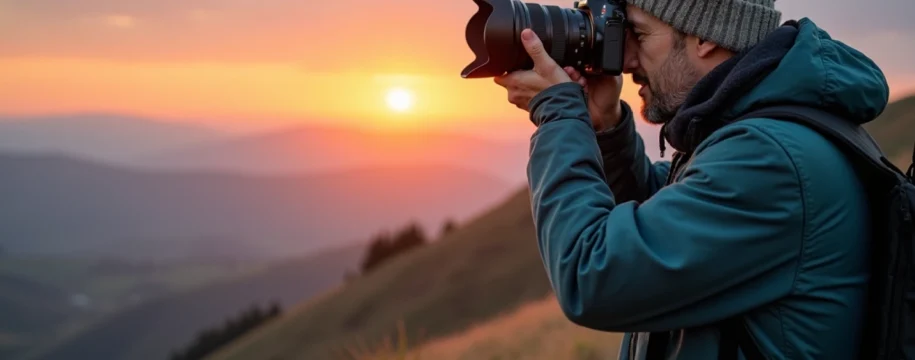
Photography-focused travel represents a unique intersection where wanderlust meets artistic expression, demanding meticulous planning that goes far beyond traditional holiday arrangements. Professional travel photographers understand that capturing extraordinary images requires more than simply arriving at a destination with a camera in hand. The difference between snapshot tourism and meaningful photographic documentation lies in the preparation, technical expertise, and strategic approach taken before departure.
Modern travel photography has evolved into a sophisticated discipline that demands comprehensive understanding of equipment selection, location research, and cultural sensitivity. Whether you’re planning to capture the ethereal light of Patagonian glaciers or document vibrant street scenes in Southeast Asian markets, successful photographic expeditions require careful consideration of technical specifications, logistical challenges, and creative opportunities. The investment in proper planning invariably translates into superior image quality and more meaningful photographic narratives.
Essential camera equipment and technical specifications for travel photography
Equipment selection forms the foundation of any successful photography-focused journey, with decisions made months before departure directly impacting the quality of captured images. The modern photographer faces an abundance of choices across camera systems, lens configurations, and supporting accessories, making informed decision-making crucial for expedition success.
Full-frame vs crop sensor performance in varying light conditions
The debate between full-frame and crop sensor cameras extends beyond simple specifications to practical considerations of weight, battery life, and image quality across diverse shooting conditions. Full-frame sensors excel in low-light situations commonly encountered during golden hour photography, providing superior dynamic range and reduced noise at elevated ISO settings. The larger sensor area captures approximately 2.25 times more light than APS-C counterparts, translating into cleaner images when photographing Northern Lights displays or dimly lit architectural interiors.
Crop sensor cameras offer distinct advantages for wildlife photography expeditions, where the 1.5x or 1.6x focal length multiplication effectively extends telephoto reach without additional weight penalties. This multiplication factor transforms a 300mm lens into a 450mm or 480mm equivalent, providing crucial advantages when photographing safari subjects or distant mountain peaks. Modern crop sensor technology has largely eliminated historical disadvantages, with cameras like the Fujifilm X-T5 delivering exceptional image quality whilst maintaining compact form factors ideal for extended hiking expeditions.
Mirrorless camera systems: sony α7r V and canon EOS R6 mark II comparison
Contemporary mirrorless systems have revolutionised travel photography through dramatic size and weight reductions whilst maintaining professional image quality standards. The Sony α7R V exemplifies high-resolution capability with its 61-megapixel sensor, delivering extraordinary detail for landscape photography and architectural documentation. Its advanced image stabilisation system provides up to 8 stops of compensation, enabling handheld shooting in challenging low-light conditions where tripod deployment may be restricted.
Canon’s EOS R6 Mark II represents a balanced approach prioritising versatility over ultimate resolution, featuring a 24-megapixel sensor optimised for superior low-light performance and rapid autofocus acquisition. The camera’s dual-pixel autofocus system tracks subjects with remarkable precision, proving invaluable for street photography and wildlife encounters where spontaneous moments demand immediate technical response. Battery life considerations favour the Canon system, with the LP-E6NH cells providing approximately 760 shots compared to Sony’s 530-shot capacity, reducing the need for extensive battery backup systems during remote expeditions.
Lens selection strategy: prime vs zoom focal length coverage
Lens selection represents perhaps the most critical equipment decision, directly influencing creative possibilities and logistical considerations throughout the journey. Prime lenses offer superior optical quality and wider maximum apertures, enabling enhanced background separation and superior low-light performance. A carefully selected trio comprising 24mm, 50mm, and 85mm focal lengths provides comprehensive coverage for most travel photography scenarios, from sweeping landscapes to intimate portraits.
Zoom lenses sacrifice some optical performance for practical versatility, with modern designs approaching prime lens quality whilst offering crucial flexibility in dynamic shooting situations. The 24-70mm f/2.8 focal range has become synonymous with professional travel photography, providing essential coverage for architectural interiors, group portraits, and street photography without frequent lens changes. Weight-conscious photographers might consider the 24-105mm f/4 alternative, sacrificing one stop of maximum aperture for extended telephoto reach and reduced overall system weight.
Tripod stability and carbon fibre construction for landscape photography
Tripod selection demands careful balance between stability, weight, and packability, with carbon fibre construction offering the optimal compromise for serious travel photographers. High-quality carbon fibre tripods weigh approximately 40% less than aluminium equivalents whilst providing superior vibration dampening characteristics crucial for long exposure photography. The Gitzo Mountaineer series exemplifies professional-grade construction, with leg sections maintaining rigidity under challenging wind conditions commonly encountered at elevated locations.
Height considerations prove particularly important for landscape photography, where maximum extended height should accommodate comfortable composition without excessive back strain during extended shooting sessions. Tripods offering 150cm minimum height enable proper composition with longer focal length lenses, whilst folded lengths under 60cm facilitate airline carry-on compliance and comfortable backpack integration during hiking approaches.
Neutral density filter systems: lee filters vs breakthrough photography
Neutral density filtration enables creative control over exposure duration, transforming rushing waterfalls into silky cascades and reducing crowded scenes to ghostly environments through selective motion blur. The Lee Filters system pioneered modular square filter design, offering comprehensive gradient options and precise light reduction across 1-15 stop ranges. Their resin construction provides excellent optical clarity whilst maintaining durability during challenging environmental conditions.
Breakthrough Photography’s X4 series represents cutting-edge filter technology, utilising multi-resistant coating (MRC) technology that virtually eliminates colour casts associated with traditional neutral density filters. The German-manufactured glass construction provides superior scratch resistance compared to resin alternatives, justifying higher initial investment through extended operational lifespan. The colour-neutral characteristics prove particularly beneficial for video applications, where precise colour reproduction becomes critically important.
Pre-departure location research and shot planning methodology
Comprehensive location research transforms random travel photography into purposeful image creation, enabling photographers to maximise limited time at each destination through strategic planning and informed decision-making. Modern digital tools provide unprecedented access to location intelligence, weather patterns, and photographic opportunities that would have required extensive local knowledge in previous eras.
Golden hour calculator applications: PhotoPills and sun surveyor analysis
Precise light timing calculations form the cornerstone of successful landscape photography, with applications like PhotoPills providing comprehensive solar position data for any global location and date. The application’s augmented reality functionality enables on-location verification of planned compositions, overlaying sun and moon paths onto live camera views for precise timing verification. Night photography planning benefits from detailed Milky Way positioning data, enabling photographers to align galactic cores with foreground elements months before arrival.
Sun Surveyor offers complementary functionality through its map-based interface, enabling broad location scouting across multiple potential shooting positions. The application excels at identifying optimal sunrise and sunset viewing angles for specific landscape features, crucial information for destinations where geographic constraints limit viable shooting positions. Integration with Google Earth imagery provides additional context for elevation changes and potential foreground obstacles that might affect planned compositions.
Topographic map integration with photography apps for composition planning
Elevation data proves crucial for landscape photographers seeking commanding viewpoints and understanding terrain challenges associated with accessing remote locations. Modern smartphone applications integrate topographic information with photographic planning tools, enabling comprehensive expedition planning from comfortable home environments. The Gaia GPS platform provides detailed terrain mapping with offline capability, ensuring navigation accuracy even in areas with limited cellular coverage.
Contour line interpretation reveals potential shooting positions offering elevated perspectives over target landscapes, whilst also identifying challenging approaches that might require additional time allocation or specialised hiking equipment. Photographers planning alpine expeditions benefit from snow depth forecasting integration, enabling realistic assessment of location accessibility during winter months when many iconic viewpoints become inaccessible without mountaineering expertise.
Weather pattern prediction using windy.com and AccuWeather professional tools
Weather forecasting accuracy has improved dramatically through satellite technology and computational modelling, enabling photographers to time expeditions around optimal atmospheric conditions. Windy.com provides exceptional detail for wind patterns, precipitation probability, and cloud coverage forecasts up to 10 days in advance, crucial information for planning drone photography sessions or high-altitude shooting locations where weather changes rapidly.
AccuWeather’s professional-grade forecasting tools offer hourly precipitation predictions and visibility assessments particularly valuable for photographers targeting specific atmospheric conditions. The platform’s lightning detection capabilities prove essential for safety planning during storm photography expeditions, whilst humidity forecasting helps predict fog formation opportunities in coastal and mountainous regions. Advanced users benefit from ensemble forecasting models that indicate prediction confidence levels, enabling more informed risk assessment for critical shooting opportunities.
Professional travel photographers understand that exceptional images result from the intersection of thorough preparation, technical expertise, and serendipitous moments that can only be capitalised upon through proper planning.
Cultural photography permissions and local regulation compliance
Respectful photography practice demands comprehensive understanding of local customs, legal requirements, and cultural sensitivities that vary dramatically across international destinations. Many countries maintain strict regulations regarding photography of government buildings, military installations, and religious sites, with violations potentially resulting in equipment confiscation or legal consequences. Research should include identification of restricted areas, required permits for commercial photography, and appropriate protocols for photographing local populations.
Social media’s global reach has intensified privacy concerns among many cultures, making verbal consent increasingly important even for street photography that was historically considered acceptable. Indigenous communities often maintain specific protocols regarding image capture, with some requesting compensation or prohibiting photography altogether. Professional photographers frequently carry translation applications and model release forms in local languages, ensuring clear communication and legal compliance when creating images intended for commercial use.
Advanced composition techniques for iconic travel destinations
Moving beyond fundamental compositional guidelines requires understanding how environmental factors, cultural context, and technical limitations interact to create compelling travel imagery. Advanced composition techniques transform familiar destinations into fresh visual narratives, distinguishing professional work from countless tourist snapshots of identical subjects.
Layered composition techniques prove particularly effective for complex travel scenes, utilising foreground, middle ground, and background elements to create visual depth that draws viewers into the frame. This approach works exceptionally well for urban environments where architectural elements can frame distant landmarks, or natural settings where rock formations or vegetation provide leading lines toward mountain peaks or coastal features. The key lies in identifying visual relationships between disparate elements that create unified compositions despite potentially chaotic environments.
Colour harmony considerations become crucial when photographing vibrant international destinations where intense hues might overwhelm untrained compositional sensibilities. Complementary colour schemes utilising opposite spectrum positions create dynamic tension, whilst analogous colour palettes provide serene, harmonious results. Understanding local colour preferences helps photographers align their artistic vision with cultural aesthetic traditions, creating images that resonate authentically with their geographic origins.
Temporal composition strategies involve returning to promising locations during different time periods, seasons, or weather conditions to explore varying photographic possibilities. A single architectural subject might yield dramatically different results when photographed during blue hour versus harsh midday sun, or when seasonal vegetation changes alter the surrounding environment. This approach requires extended location access but often produces the most compelling imagery by revealing hidden character within familiar subjects.
Human scale integration transforms landscape photography by providing viewers with relatable size references that enhance emotional connection to expansive natural scenes. Strategic positioning of people within compositions requires careful attention to clothing colours, positioning, and timing to ensure human elements enhance rather than distract from primary subjects. Silhouette techniques prove particularly effective for maintaining anonymity whilst providing scale reference, creating universal appeal that transcends specific cultural associations.
The most compelling travel photography emerges when technical proficiency combines with cultural sensitivity and creative vision, producing images that transcend mere documentation to become artistic interpretation.
Post-processing workflow optimisation for travel imagery
Efficient post-processing workflows become essential when managing thousands of images captured during extended travel photography expeditions. Professional photographers develop systematic approaches that maintain consistency across large image collections whilst accommodating creative variations that distinguish exceptional work from routine processing.
File organisation strategies begin during image capture through disciplined folder structures and metadata application that facilitates rapid retrieval months or years later. Location-based folder hierarchies combined with keyword tagging enable efficient sorting by geographic region, subject matter, or technical criteria. Adobe Lightroom’s collection system provides powerful organisational tools that maintain file integrity whilst enabling multiple categorisation systems for different usage requirements, whether for portfolio development, client delivery, or stock photography submission.
Batch processing techniques dramatically reduce time investment whilst maintaining creative control over individual images. Custom preset development enables consistent treatment of similar lighting conditions or photographic styles, whilst smart preview generation facilitates rapid culling processes that eliminate obviously unsuccessful captures. The synchronisation functionality allows simultaneous adjustment application across multiple images, particularly valuable for bracketed exposures or sequences shot under consistent lighting conditions.
Colour calibration assumes critical importance when processing images intended for multiple output platforms, from social media sharing to professional printing applications. Monitor calibration using hardware solutions ensures accurate colour representation during editing processes, whilst soft-proofing capabilities predict appearance across different output devices. Understanding colour space implications for various distribution channels prevents disappointment when vibrant monitor displays translate poorly to print media or social media compression algorithms.
Cloud storage integration enables secure backup solutions whilst facilitating collaborative workflows and remote access capabilities essential for location-independent photographers. Services like Adobe Creative Cloud provide seamless synchronisation between desktop editing applications and mobile preview capabilities, enabling client communications and social media sharing without compromising master file integrity. Redundant backup strategies protect irreplaceable travel imagery through automated cloud synchronisation combined with local storage redundancy.
Logistics and safety protocols for remote photography expeditions
Remote location photography demands comprehensive safety planning that addresses communication protocols, emergency procedures, and equipment protection strategies often overlooked during routine travel photography. Professional expedition planning considers worst-case scenarios whilst maintaining focus on photographic objectives that justify associated risks and expenses.
Communication infrastructure becomes critically important when venturing beyond cellular coverage areas, with satellite communication devices providing essential safety nets for solo photographers or small expedition groups. Personal locator beacons enable emergency response coordination even from completely remote locations, whilst satellite messaging devices maintain contact with support networks during extended expeditions. Weather radio capabilities provide crucial updates about changing conditions that might affect planned shooting schedules or evacuation requirements.
Equipment protection strategies extend beyond simple weather resistance to consider theft prevention, customs regulations, and insurance documentation requirements for valuable photographic gear. Comprehensive equipment insurance should cover international travel scenarios, including coverage for items damaged during adventure activities or stolen from accommodations. Detailed equipment inventories with serial numbers and purchase documentation facilitate insurance claims and customs declarations when crossing international borders with significant equipment values.
Medical preparation considerations include altitude sickness prevention for high-elevation destinations, tropical disease prophylaxis for jungle expeditions, and cold weather injury prevention for polar regions. Photographers often underestimate physical demands associated with carrying heavy equipment over challenging terrain, making physical conditioning an essential component of expedition preparation. First aid training specific to remote locations provides crucial capabilities when professional medical assistance remains hours or days away from expedition locations.
Risk assessment protocols evaluate potential hazards specific to each destination and photographic objective, from wildlife encounters during safari photography to avalanche risks in mountainous regions. Professional expedition leaders maintain detailed risk registers that identify potential hazards, mitigation strategies, and emergency response procedures specific to each location and activity. Regular safety briefings ensure all expedition members understand protocols and maintain situational awareness throughout the journey.
Successful remote photography expeditions balance creative ambitions with realistic safety protocols, recognising that the most spectacular images are worthless if photographers cannot return safely to share them.
Digital asset management and cloud storage solutions for extended travel
Extended travel photography generates enormous data volumes that demand sophisticated management systems capable of handling thousands of RAW files whilst maintaining organisational clarity and backup redundancy. Professional photographers develop comprehensive asset management workflows that prevent data loss whilst enabling efficient image retrieval and client delivery from remote locations.
Storage capacity planning considers not only current expedition requirements but also future expansion needs and backup redundancy requirements. Modern mirrorless cameras generate 50-100MB RAW files, meaning a single productive shooting day might produce 10-20GB of image data requiring immediate backup and organisation. Portable SSD drives offer excellent capacity-to-weight ratios for travel applications, whilst ruggedised external drives provide additional security for irreplaceable expedition imagery. The RAID configuration capabilities of some portable storage systems provide automatic redundancy that protects against single drive failures during extended expeditions.
Cloud storage solutions enable automatic backup processes that protect expedition imagery without requiring manual intervention or remembering backup procedures after exhausting shooting days. Adobe Creative Cloud, Google Drive, and Dropbox offer varying advantages for photography workflows, with Adobe providing seamless integration with Lightroom catalogues whilst Google offers unlimited storage options for certain account types. Upload scheduling capabilities utilise available bandwidth during off-peak hours, ensuring backup completion without interfering with location research or client communication requirements.
Metadata standards ensure long-term accessibility and searchability of expedition archives that might contain tens of thousands of images across multiple destinations and time periods. Comprehensive keyword hierarchies enable rapid filtering by geographic location, subject matter
, technical specifications, or temporal categories. Professional metadata application includes copyright information, creator details, and usage rights that protect intellectual property whilst facilitating proper attribution in commercial applications.
Version control systems become essential when collaborating with editors, clients, or publication teams who might require access to different processing versions or cropping variations. Lightroom’s snapshot functionality preserves multiple processing interpretations without duplicating master files, whilst virtual copy systems enable infinite creative variations without storage penalties. These capabilities prove particularly valuable when submitting images to multiple stock photography platforms that might require different aspect ratios, colour treatments, or technical specifications.
Mobile device integration enables field culling and basic processing capabilities that reduce post-expedition workloads whilst maintaining creative momentum during active shooting periods. iPad Pro devices offer sufficient processing power for Lightroom mobile applications, enabling initial image selection and basic adjustments during travel downtime. This workflow reduces the overwhelming nature of returning home to thousands of unprocessed images whilst maintaining enthusiasm for creative development processes.
Automated backup verification protocols ensure successful cloud synchronisation completion before deleting local copies from portable storage devices. Many photographers have experienced the devastating discovery that presumed cloud backups failed due to connectivity interruptions or account limitations, resulting in irreplaceable image loss. Checksum verification tools confirm successful file transfers whilst automated notification systems alert photographers to backup failures requiring immediate attention.
Archive organisation strategies should anticipate future access requirements and potential technology changes that might affect long-term file accessibility. Open file format selection ensures compatibility across evolving software platforms, whilst hierarchical folder structures remain intuitive even when viewed through different operating systems or applications years later. Professional archives often maintain multiple organisational systems simultaneously, enabling access through chronological, geographic, or thematic approaches depending on specific retrieval requirements.
Effective digital asset management transforms overwhelming image collections into accessible creative libraries that continue providing value long after expedition completion, enabling photographers to discover forgotten gems and develop new creative projects from existing archives.