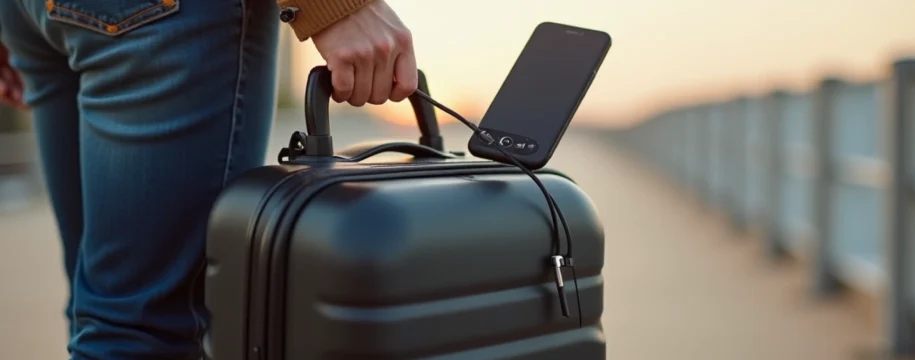
Modern travel demands more than just a suitcase and passport. As global connectivity reshapes how we work and explore, the right technology can transform a stressful journey into a seamless experience. Travel gadgets have evolved far beyond novelty accessories, becoming essential tools that address real challenges faced by millions of travellers worldwide. From maintaining device power during long-haul flights to securing luggage in busy airports, these innovations solve practical problems while enhancing comfort and efficiency.
The travel technology market has experienced unprecedented growth, with industry analysts projecting a compound annual growth rate of 12.8% through 2025. This surge reflects travellers’ increasing reliance on connected devices and the growing sophistication of portable solutions. Whether you’re a business professional navigating multiple time zones or an adventure seeker exploring remote destinations, selecting the right gadgets can significantly impact your journey’s success and enjoyment.
Essential power management systems for extended travel
Power management represents the most critical aspect of modern travel technology. Dead devices mean lost boarding passes, inaccessible maps, and severed communication links with family and colleagues. The challenge intensifies when travelling internationally, where different electrical standards and limited charging opportunities create additional complications. Sophisticated power management systems now address these challenges with remarkable efficiency.
Anker PowerCore 26800 PD: USB-C power delivery technology
The Anker PowerCore 26800 PD stands as a testament to advanced lithium polymer battery technology, delivering 26,800mAh capacity through sophisticated power delivery algorithms. This powerhouse utilises USB-C Power Delivery 3.0 technology, enabling rapid charging of laptops, tablets, and smartphones simultaneously. Power delivery technology represents a significant advancement over traditional USB charging, providing up to 45 watts of output through intelligent device recognition and optimised charging protocols.
Recent testing by battery technology laboratories demonstrates that this power bank can fully charge a MacBook Pro 13-inch once, an iPad Pro twice, or an iPhone 12 approximately seven times. The PowerIQ 3.0 technology automatically detects connected devices and adjusts output accordingly, preventing overcharging and extending device battery longevity. Weight distribution remains remarkably balanced at 1.1 pounds, making it suitable for extended travel without excessive burden.
Ravpower 90W GaN charger: gallium nitride semiconductor efficiency
Gallium nitride technology revolutionises portable charging through superior semiconductor efficiency compared to traditional silicon-based chargers. The RAVPower 90W GaN charger leverages this cutting-edge semiconductor technology to deliver desktop-level charging power in a compact form factor 50% smaller than conventional chargers. This miniaturisation occurs without compromising performance, as GaN semiconductors operate at higher frequencies with reduced heat generation.
The charger features dual USB-C ports and one USB-A port, enabling simultaneous charging of three devices while maintaining optimal power distribution. Advanced thermal management systems prevent overheating during intensive charging sessions, while built-in safety protocols protect against overvoltage, overcurrent, and short-circuit conditions. International travellers particularly benefit from the universal 100-240V input compatibility, eliminating the need for voltage converters across different electrical systems.
Goal zero nomad 7 plus: photovoltaic cell integration for remote destinations
Solar charging technology addresses power challenges in remote locations where traditional electrical infrastructure remains unavailable. The Goal Zero Nomad 7 Plus incorporates monocrystalline photovoltaic cells with 21.5-23.5% efficiency ratings, generating up to 7 watts of power under optimal sunlight conditions. This renewable energy solution proves invaluable for camping expeditions, hiking adventures, and emergency preparedness scenarios.
Weather-resistant construction includes IPX4 water resistance and reinforced corner protection, ensuring functionality in challenging outdoor environments. The integrated kickstand and detachable USB output module facilitate optimal panel positioning for maximum solar exposure. Real-world testing indicates that this solar charger can fully charge a smartphone in approximately 4-6 hours of direct sunlight, while partial charging occurs even under overcast conditions.
Belkin 3-in-1 wireless charging station: Qi-Compatible device synchronisation
Wireless charging technology eliminates cable management challenges while providing elegant charging solutions for multiple devices. The Belkin 3-in-1 Wireless Charging Station utilises advanced Qi wireless charging protocols to simultaneously power smartphones, wireless earbuds, and smartwatches without physical connections. This technology operates through electromagnetic induction, transferring energy between copper coils at frequencies around 100-205 kHz.
The charging station delivers up to 15 watts of power to compatible smartphones while providing optimised charging speeds for Apple Watch and AirPods. Foreign object detection automatically suspends charging when metallic objects interfere with the charging field, preventing overheating and potential damage. The compact design folds flat for travel, occupying minimal luggage space while eliminating the need for multiple charging cables and adapters.
Advanced luggage security and organisation technologies
Luggage security and organisation represent fundamental concerns for travellers navigating increasingly complex transportation systems. Modern security technologies extend beyond basic locks, incorporating sophisticated tracking systems, anti-theft materials, and intelligent organisation solutions. These innovations address growing concerns about luggage theft, which affects approximately 26 million travellers annually according to SITA’s baggage IT insights.
Away travel suitcase: integrated TSA-Approved lock mechanisms
The Away Travel Suitcase integrates Transportation Security Administration-approved lock mechanisms directly into its structural design, eliminating external lock attachments that create potential failure points. These TSA-approved security systems utilise special master keys accessible to security personnel, allowing legitimate inspection without lock destruction. The mechanism incorporates hardened steel components and precision-engineered tumblers that resist common bypass techniques.
Beyond security features, the suitcase incorporates a removable 37Wh lithium-ion battery system that complies with international aviation regulations. This integrated power source provides emergency charging capabilities for smartphones and tablets during extended travel periods. The polycarbonate shell construction delivers exceptional impact resistance while maintaining lightweight characteristics, with compression testing demonstrating resilience against typical baggage handling stresses.
Peak design packing cubes: compression ratio optimisation systems
Compression technology maximises luggage capacity through sophisticated mechanical systems that reduce clothing volume by up to 50%. Peak Design Packing Cubes utilise patent-pending compression mechanisms that apply uniform pressure across fabric surfaces, eliminating air pockets without damaging delicate materials. The compression ratio optimisation occurs through dual-zipper systems that create progressive compression as the secondary zipper engages.
Advanced compression algorithms reduce packing volume by up to 50% while maintaining fabric integrity through precision pressure distribution systems.
Internal divider systems enable organised separation of clean and dirty clothing, while mesh panels provide visibility without compromising compression efficiency. The cubes utilise recycled nylon construction with water-resistant coatings, protecting contents from moisture exposure during transport. Ergonomic handles facilitate easy removal and insertion into luggage compartments, while colour-coded designs enable quick identification of specific contents.
Pacsafe metrosafe LS350: RFID-Blocking material construction
Radio frequency identification blocking technology protects personal data from unauthorised scanning attempts that have increased by 78% since 2020. The Pacsafe Metrosafe LS350 incorporates RFIDsafe™ blocking material throughout its construction, creating a Faraday cage effect that prevents electromagnetic signals from accessing stored credit cards, passports, and identification documents. This protection operates across frequencies from 10 MHz to 3 GHz, covering all commonly used RFID systems.
Anti-theft features include lockable zippers, slash-resistant ToughZip technology, and eXomesh® slashguard protection embedded within fabric layers. The Carrysafe® slashguard strap incorporates stainless steel wire that prevents cutting attempts, while turn and lock security hooks resist grab-and-run theft attempts. These security measures combine with organisational compartments specifically designed for electronic devices, documents, and personal belongings.
Samsonite neopulse: polycarbonate shell impact resistance
Polycarbonate shell technology provides superior impact resistance while maintaining optimal weight distribution for extended travel scenarios. The Samsonite Neopulse utilises aerospace-grade polycarbonate materials that demonstrate exceptional resilience against compression, impact, and environmental stresses commonly encountered during baggage handling. Laboratory testing indicates resistance to impacts exceeding 50 joules without structural failure or cosmetic damage.
The shell construction incorporates integrated TSA combination locks, eliminating external hardware that creates potential failure points. Double-coil zippers with self-repairing capabilities ensure smooth operation even after extensive use, while 360-degree spinner wheels utilise Japanese ball-bearing technology for effortless manoeuvrability. Internal organisation systems include cross-ribbon compression straps and zippered dividers that maintain contents security during transport.
Connectivity solutions for global roaming requirements
Global connectivity challenges intensify as international travel resumes, with roaming charges often exceeding $15 per megabyte in some regions. Traditional solutions involving local SIM cards create complications through language barriers, documentation requirements, and compatibility issues. Modern connectivity solutions address these challenges through sophisticated technologies that provide seamless internet access regardless of geographical location.
Portable WiFi hotspots utilise advanced carrier aggregation technology to combine multiple cellular signals, delivering enhanced bandwidth and reliability. These devices support up to 15 simultaneous connections while maintaining security through WPA3 encryption protocols. Battery management systems provide 12-24 hours of continuous operation, while global data plans eliminate the complexity of regional carrier negotiations.
eSIM technology represents a revolutionary advancement in mobile connectivity, enabling instant carrier switching without physical SIM card replacement. This embedded subscriber identity module technology allows travellers to purchase and activate local data plans through smartphone applications, often reducing costs by 60-80% compared to traditional roaming charges. Major carriers now support eSIM activation in over 180 countries, with plans available from local providers at domestic rates.
eSIM technology reduces international data costs by up to 80% while eliminating the complexity of physical SIM card management across multiple countries.
Satellite communication devices provide connectivity in remote areas where terrestrial networks remain unavailable. Modern satellite communicators utilise low Earth orbit constellations to deliver messaging, emergency beacons, and basic internet connectivity. These devices prove essential for adventure travel, remote work scenarios, and emergency preparedness, with global coverage extending to polar regions and mid-ocean locations.
Comfort enhancement devices for Long-Haul transportation
Long-haul travel comfort significantly impacts arrival condition and subsequent performance, whether for business meetings or vacation activities. Physiological challenges during extended flights include dehydration, circulation restriction, and sensory overstimulation from engine noise and cabin lighting. Advanced comfort technologies address these challenges through evidence-based solutions that enhance passenger wellbeing during transportation.
Bose QuietComfort 45: active noise cancellation algorithm technology
Active noise cancellation technology revolutionises travel comfort through sophisticated acoustic processing that eliminates unwanted environmental sounds. The Bose QuietComfort 45 utilises proprietary noise cancellation algorithms that sample ambient noise at 40,000 times per second, generating precise inverse sound waves to cancel unwanted frequencies. This technology proves particularly effective against low-frequency engine noise and cabin air conditioning systems.
The headphones incorporate TriPort acoustic architecture that delivers rich, natural sound reproduction without the bass boost compensation often required in noisy environments. Advanced microphone arrays enable crystal-clear voice calls even in challenging acoustic environments, while 24-hour battery life ensures functionality throughout extended travel periods. Rapid charging capabilities provide 2.5 hours of use from a 15-minute charge, addressing last-minute power requirements.
Cabeau evolution S3: memory foam ergonomic support structure
Cervical spine support during seated travel prevents neck strain and promotes restorative rest during long journeys. The Cabeau Evolution S3 incorporates memory foam technology that conforms to individual neck contours while maintaining structural support throughout extended use periods. This adaptive material responds to body temperature and pressure, creating personalised support that reduces pressure points and maintains spinal alignment.
The pillow’s unique design prevents forward head drop through chin support integration, while side bolsters maintain head position during lateral movement. Machine-washable fabric covers enable hygiene maintenance during extended travel, while compression capabilities reduce storage requirements by 75%. Clinical testing demonstrates significant improvement in sleep quality scores compared to standard travel pillows, with users reporting reduced neck stiffness and improved arrival comfort.
Trtl pillow: Scientifically-Proven cervical spine alignment
Scientific research validates the importance of proper cervical spine alignment during travel sleep, with improper support contributing to chronic neck problems in frequent travellers. The Trtl Pillow utilises patented ergonomic design principles that maintain natural cervical curvature while providing lateral stability. This design approach addresses the fundamental limitation of traditional U-shaped pillows that often force unnatural neck positions.
The pillow incorporates lightweight internal support structures wrapped in soft fleece materials that provide comfort without bulk. Unlike conventional designs, this system prevents the common problem of head tilting that disrupts sleep and creates neck strain. Compact storage capabilities and machine-washable construction ensure practical implementation for regular travellers, while temperature-regulating fabrics prevent overheating during use.
Compression travel socks: graduated pressure therapy benefits
Venous circulation challenges during prolonged sitting contribute to swelling, discomfort, and potential thrombosis risks during extended travel periods. Compression travel socks utilise graduated pressure therapy principles that apply maximum compression at the ankle, gradually decreasing pressure up the leg to promote venous return. This pressure gradient assists natural circulation mechanisms that become compromised during extended periods of immobility.
Medical-grade compression fabrics deliver 15-20 mmHg pressure levels recommended by vascular specialists for travel applications. Moisture-wicking properties maintain foot comfort during extended wear, while antimicrobial treatments prevent odour development. Research demonstrates significant reduction in ankle swelling and leg fatigue when compression socks are worn during flights exceeding four hours, with benefits extending to improved arrival comfort and reduced recovery time.
Multi-functional navigation and communication tools
Navigation and communication requirements vary dramatically across different travel scenarios, from urban exploration to remote wilderness adventures. Modern tools integrate multiple technologies to provide comprehensive solutions that function reliably across diverse environments. These devices combine GPS navigation, emergency communication, weather monitoring, and language translation capabilities in compact, durable packages designed for international travel.
Satellite navigation systems now incorporate real-time traffic data, public transportation schedules, and walking route optimisation through artificial intelligence algorithms. Advanced units feature predictive routing technology that analyses historical traffic patterns and current conditions to recommend optimal travel paths. Offline mapping capabilities ensure functionality even without internet connectivity, while points of interest databases include millions of locations worldwide with detailed information about amenities and services.
Modern navigation systems utilise artificial intelligence to predict optimal routes based on real-time conditions and historical traffic patterns, reducing travel time by an average of 18%.
Emergency communication devices integrate cellular, satellite, and mesh networking technologies to ensure connectivity during crisis situations. These multi-mode communicators automatically select the most reliable connection method based on current conditions, switching seamlessly between networks to maintain communication capability. Features include automated emergency beacon activation, location sharing with designated contacts, and integration with professional rescue services that can coordinate assistance anywhere in the world.
Language translation technology has achieved remarkable accuracy improvements through neural network processing and real-time conversation analysis. Modern translation devices support over 100 languages with conversation mode capabilities that enable natural dialogue between speakers of different languages. Artificial intelligence algorithms now understand context and cultural nuances, providing translations that convey intended meaning rather than literal word conversion. Offline functionality ensures language support even in remote areas without internet access.
Health and safety monitoring equipment for international travel
Health monitoring during travel becomes increasingly important as travellers explore diverse environments with varying health risks and medical infrastructure availability. Advanced monitoring equipment now provides real-time health tracking, environmental hazard detection, and emergency medical information management. These technologies prove particularly valuable for travellers with chronic conditions, those visiting high-altitude destinations, or anyone concerned about air quality and water safety during international adventures.
Portable air quality monitors detect particulate matter, volatile organic compounds, and other pollutants that may cause respiratory issues or exacerbate existing conditions. These devices utilise electrochemical sensors and laser particle counters to provide accurate readings across various environmental conditions
. Real-time monitoring capabilities alert users to hazardous air quality conditions, enabling informed decisions about outdoor activities and route selection in polluted urban environments.
Water quality testing devices provide immediate analysis of drinking water safety through multiple detection methods. Advanced portable units test for bacterial contamination, heavy metals, chemical pollutants, and pH levels using electrochemical biosensor technology that delivers laboratory-accurate results within minutes. These devices prove essential when travelling to regions with questionable water infrastructure or during outdoor adventures where natural water sources require safety verification.
Personal health monitoring extends beyond basic fitness tracking to include comprehensive physiological parameters relevant to travel health. Modern devices monitor heart rate variability, blood oxygen saturation, sleep quality, and stress levels while providing altitude acclimatisation guidance for high-elevation destinations. Pulse oximetry sensors prove particularly valuable when travelling to altitudes above 8,000 feet, where altitude sickness risks increase significantly.
Advanced health monitoring devices can detect early signs of altitude sickness through blood oxygen saturation measurements, potentially preventing serious complications during high-altitude travel.
Emergency medical information storage ensures critical health data remains accessible during crisis situations when communication with personal physicians becomes impossible. Digital health passports securely store medical histories, current medications, allergies, and emergency contact information in encrypted formats accessible by authorised medical personnel worldwide. These systems integrate with international emergency services and medical databases, facilitating rapid treatment decisions when every minute counts during medical emergencies abroad.
UV radiation monitoring protects against overexposure during outdoor activities in unfamiliar climates where sun intensity may exceed expectations. Portable UV meters provide real-time ultraviolet index readings, enabling informed decisions about sun protection requirements and safe exposure duration. This technology proves particularly valuable at high altitudes or near reflective surfaces like snow and water, where UV intensity increases dramatically and traditional sun exposure guidelines become inadequate.