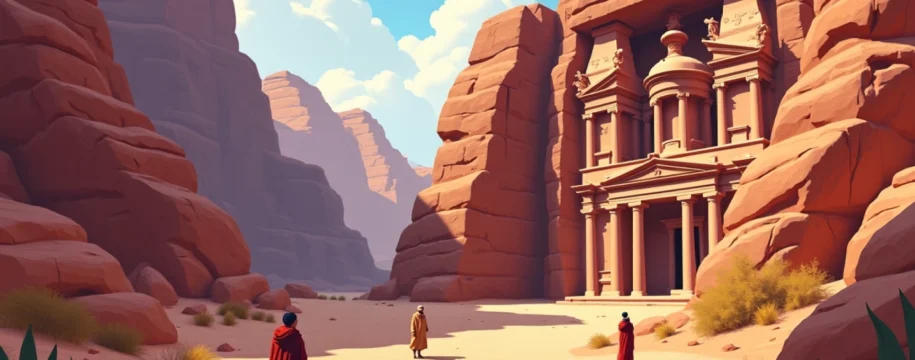
Jordan stands as one of the Middle East’s most captivating destinations, where ancient civilisations have carved their legacy into rose-red sandstone cliffs and vast desert landscapes stretch endlessly beneath star-studded skies. This remarkable kingdom offers travellers an extraordinary journey through millennia of human history, from the sophisticated water management systems of the Nabataeans to the timeless traditions of Bedouin nomads who still navigate the desert by the stars.
The convergence of archaeological magnificence and natural splendour creates an unparalleled travel experience that has attracted over 5.3 million visitors annually in recent years. From the intricate façades of Petra’s Treasury to the otherworldly rock formations of Wadi Rum, Jordan’s treasures represent some of humanity’s greatest achievements in architecture, engineering, and environmental adaptation.
Ancient nabataean architecture and archaeological significance of petra
Petra represents one of archaeology’s most significant achievements, showcasing the remarkable ingenuity of the Nabataean civilisation that flourished between the 4th century BCE and 1st century CE. This ancient trading hub controlled lucrative frankincense and spice routes, generating immense wealth that funded the creation of architectural marvels carved directly into living rock. The site encompasses over 800 individual monuments, though only approximately 15% have been thoroughly excavated and documented by archaeological teams.
The Nabataeans demonstrated extraordinary mastery in hydraulic engineering, creating an elaborate water collection and storage system that enabled a thriving metropolis in an arid environment. Archaeological evidence suggests the city supported a population of up to 30,000 inhabitants at its peak, sustained entirely through ingenious water management techniques that captured and channelled every precious drop of rainfall.
Treasury (Al-Khazneh) hellenistic façade construction techniques
The Treasury stands as Petra’s most iconic monument, rising 43 metres from the canyon floor with intricate Hellenistic architectural details that demonstrate the cultural sophistication of Nabataean craftsmen. Recent archaeological analysis reveals that the façade was carved from top to bottom using scaffolding systems anchored in precisely cut holes that remain visible today. The construction process required removing approximately 1,000 cubic metres of sandstone, with artisans working entirely by hand using iron tools and bronze chisels.
Detailed examination of the Treasury’s decorative elements reveals influences from Egyptian, Assyrian, and Hellenistic architectural traditions, reflecting Petra’s role as a cosmopolitan trading centre. The urn crowning the façade, long rumoured to contain treasure, actually serves as a sophisticated rainwater collection device that channels precipitation into hidden cisterns within the rock face.
Monastery (Ad-Deir) Rock-Cut engineering and hydraulic systems
The Monastery represents the pinnacle of Nabataean rock-cutting expertise, with its massive 47-metre-wide façade demonstrating advanced understanding of structural engineering and geological stability. Archaeological surveys indicate that craftsmen removed over 2,500 cubic metres of sandstone to create this architectural masterpiece, following natural rock fractures to minimise structural stress whilst maintaining decorative precision.
Sophisticated drainage channels carved into the monument’s interior walls prevent water damage whilst directing runoff to underground cisterns. The hydraulic system includes over 200 metres of carved channels that can collect and store approximately 500,000 litres of water annually, showcasing the Nabataeans’ mastery of desert survival techniques.
Royal tombs complex burial chamber classifications
The Royal Tombs complex consists of four major monuments—the Urn Tomb, Silk Tomb, Corinthian Tomb, and Palace Tomb—each representing distinct architectural phases in Nabataean development. Archaeological classification systems identify over 40 different tomb types throughout Petra, ranging from simple shaft graves to elaborate multi-chamber complexes with sophisticated ventilation systems.
Recent excavations in the Royal Tombs have revealed evidence of secondary burial practices and elaborate funeral goods including silk textiles, precious metals, and incense burners imported from India and China. Carbon dating analysis indicates continuous use of these burial chambers spanning over 400 years, with some tombs containing remains of up to 20 individuals representing multiple generations of wealthy merchant families.
Siq gorge natural formation and ancient water management infrastructure
The Siq represents a natural geological phenomenon enhanced by Nabataean engineering, where tectonic activity created a narrow gorge that the ancient inhabitants transformed into a sophisticated water management corridor. This 1.2-kilometre passageway features over 50 carved niches containing religious symbols and water collection points that demonstrate the Nabataeans’ integration of practical infrastructure with spiritual beliefs.
Archaeological analysis reveals that the Siq’s floor conceals an elaborate system of ceramic pipes and stone channels capable of delivering 10,000 litres of water per hour to the city centre. These conduits, crafted with remarkable precision, maintain consistent gradients over their entire length whilst incorporating settling tanks and filtration chambers that ensured clean water supplies throughout the ancient metropolis.
Great temple archaeological excavations and nabataean urban planning
The Great Temple complex spans over 7,000 square metres, representing one of the most significant ongoing archaeological projects in Jordan. Excavations conducted since 1993 have revealed a sophisticated urban planning approach that integrated religious, commercial, and administrative functions within a single architectural complex. The structure features over 120 columns supporting multiple levels connected by grand staircases and featuring advanced acoustical design principles.
Recent discoveries include a small theatre within the temple complex capable of seating 600 spectators, suggesting the building served multiple community functions beyond purely religious ceremonies. Artefact analysis indicates the temple remained active until the 5th century CE, with successive renovations reflecting changing architectural styles and religious practices over nearly 800 years of continuous use.
Wadi rum protected area geological formations and desert ecosystem
Wadi Rum encompasses 74,000 hectares of spectacular desert landscape characterised by dramatic sandstone mountains rising from vast sandy valleys, creating what T.E. Lawrence famously described as “vast, echoing and God-like”. This UNESCO World Heritage site preserves one of the world’s most significant desert ecosystems whilst showcasing geological formations that span over 540 million years of Earth’s history.
The protected area supports remarkable biodiversity despite its arid climate, with recent ecological surveys documenting over 2,000 plant species, 120 bird species, and 45 mammal species adapted to extreme desert conditions. Conservation efforts focus on preserving fragile desert ecosystems whilst accommodating sustainable tourism that provides economic benefits to local Bedouin communities.
Sandstone massifs and granite intrusions geological survey
Wadi Rum’s distinctive landscape results from complex geological processes involving both sedimentary sandstone formations and igneous granite intrusions dating back 540 million years. The region’s characteristic red colouration derives from iron oxide minerals within the sandstone matrix, whilst vertical cliff faces reaching heights of 600 metres showcase dramatic examples of differential erosion patterns.
Geological mapping reveals that granite intrusions create the area’s highest peaks, including Jebel Rum at 1,734 metres elevation, where magmatic activity has produced unique mineral compositions including feldspar, quartz, and mica formations. These geological variations create diverse climbing opportunities whilst providing habitat niches that support specialised flora and fauna communities.
Khazali canyon slot formation and flash flood geomorphology
Khazali Canyon represents one of Jordan’s most spectacular slot canyons, carved through centuries of flash flood activity that has created narrow passages barely two metres wide whilst maintaining depths exceeding 100 metres. The canyon’s walls preserve ancient Nabataean inscriptions and rock art spanning over 2,000 years, protected from weathering by the confined environment.
Geomorphological analysis indicates that flash floods occur approximately every 5-7 years, carrying debris loads that continue sculpting the canyon’s interior whilst creating temporary oases that support unique vegetation communities. These flood events transport an estimated 50,000 cubic metres of sediment annually, continuously reshaping the canyon’s morphology whilst preserving its essential character.
Jebel umm ishrin climbing routes and rock face analysis
Jebel Umm Ishrin offers some of Jordan’s most challenging rock climbing opportunities, with over 300 established routes ranging from beginner-friendly scrambles to technical multi-pitch climbs requiring advanced mountaineering skills. The mountain’s sandstone faces provide excellent friction climbing whilst granite sections offer traditional crack climbing experiences comparable to renowned international climbing destinations.
Rock quality analysis reveals that the sandstone formations provide reliable holds with minimal rockfall hazards, making the area suitable for both sport climbing and traditional climbing approaches. Climbing route development follows strict environmental guidelines to minimise impact on archaeological sites and wildlife habitats whilst preserving the pristine character of this remarkable climbing environment.
Lawrence’s spring oasis hydrology and desert water sources
Lawrence’s Spring represents one of Wadi Rum’s most reliable water sources, producing approximately 50 litres per hour through natural artesian pressure created by underground aquifers recharged by distant mountain ranges. Hydrological studies indicate that this spring system has provided continuous water supplies for over 4,000 years, supporting successive waves of human habitation including Nabataean, Roman, and Bedouin communities.
The spring’s oasis environment supports unique plant communities including date palms, oleander, and various endemic species found nowhere else in the region. Water chemistry analysis reveals high mineral content including beneficial trace elements that have contributed to the spring’s reputation for therapeutic properties amongst local Bedouin populations.
UNESCO world heritage sites conservation strategies
Both Petra and Wadi Rum achieved UNESCO World Heritage status through rigorous evaluation processes that recognised their outstanding universal value to humanity. Petra received designation in 1985 as a cultural site, whilst Wadi Rum gained mixed cultural and natural heritage status in 2011, reflecting the area’s combination of archaeological significance and ecological importance. These designations trigger international conservation obligations whilst providing access to specialised expertise and funding opportunities.
Conservation strategies address multiple challenges including visitor impact management, environmental degradation, and the need to balance heritage preservation with economic development for local communities. Current initiatives involve comprehensive monitoring programmes that track everything from structural stability in ancient monuments to wildlife population dynamics in desert ecosystems.
Jordan’s approach to heritage conservation demonstrates how traditional knowledge systems can complement modern scientific methods, creating sustainable solutions that benefit both cultural preservation and community development.
Recent conservation successes include the implementation of visitor capacity limits at Petra, which have reduced crowding whilst improving visitor experience quality. Digital documentation projects use advanced 3D scanning technology to create permanent records of architectural details, providing crucial baseline data for future conservation work whilst enabling virtual access for researchers worldwide.
Bedouin cultural heritage and traditional desert navigation
The Bedouin peoples of Jordan represent one of the world’s most successful desert-adapted cultures, with traditional knowledge systems developed over centuries of nomadic life in harsh environments. Contemporary Bedouin communities maintain strong connections to ancestral lands whilst adapting to modern economic opportunities, particularly in tourism sectors that value their expertise in desert navigation and survival techniques.
Cultural preservation efforts focus on documenting traditional practices whilst ensuring their transmission to younger generations who increasingly pursue education and employment opportunities in urban centres. This cultural adaptation process reflects the dynamic nature of Bedouin society whilst highlighting the continued relevance of traditional knowledge in contemporary contexts.
Zalabia tribe settlement patterns and goat hair tent architecture
The Zalabia tribe represents one of Wadi Rum’s most prominent Bedouin communities, with settlement patterns that reflect sophisticated understanding of desert ecology and resource management. Traditional encampments follow seasonal migration routes that optimise access to grazing areas whilst minimising environmental impact through rotational land use practices developed over generations of desert habitation.
Goat hair tent construction demonstrates remarkable adaptation to desert conditions, with woven fabric that expands during rain to provide waterproof shelter whilst contracting in dry conditions to allow cooling airflow. These structures can be assembled by experienced teams in under 30 minutes whilst providing comfortable accommodation for extended families including livestock protection areas and food preparation spaces.
Traditional camel husbandry practices and desert survival techniques
Bedouin camel husbandry represents centuries of selective breeding and management practices that have produced animals uniquely adapted to Arabian desert conditions. Traditional knowledge encompasses everything from optimal feeding strategies using desert vegetation to medical treatments derived from native plants, with practices that ensure camel herds remain healthy during extended desert journeys.
Desert survival techniques include sophisticated methods for locating water sources, predicting weather patterns, and navigation using celestial observations that remain more reliable than modern GPS technology in extreme conditions. These skills enable Bedouin guides to lead tourists safely through challenging desert terrain whilst sharing knowledge that connects visitors to thousands of years of human adaptation to arid environments.
Ancient trade route mapping and frankincense trail archaeology
Archaeological evidence reveals that Bedouin ancestors controlled extensive trade networks connecting the Arabian Peninsula with Mediterranean markets, facilitating commerce in frankincense, myrrh, and precious metals that generated immense wealth for tribal confederations. Route mapping using traditional landmarks and water sources created reliable pathways that remained in use for over 1,500 years.
The frankincense trail through Jordan represents one of history’s most lucrative trade routes, with recent archaeological discoveries including way stations, caravanserai, and trading posts that demonstrate the sophisticated logistics required for trans-desert commerce. Carbon dating of artefacts indicates continuous use of these routes from the 6th century BCE through the 7th century CE, highlighting the economic foundation that supported Nabataean civilisation.
Oral tradition storytelling and astronomical navigation methods
Bedouin oral traditions preserve detailed astronomical knowledge that enables precise navigation using star patterns, moon phases, and seasonal celestial events. Traditional stories encode practical information about desert travel, weather prediction, and resource location within entertaining narratives that ensure knowledge transmission across generations without written records.
Astronomical navigation techniques include recognition of over 200 individual stars and constellation patterns, with traditional names and associated seasonal indicators that provide more detailed environmental information than modern meteorological forecasts. These methods remain actively practiced by contemporary Bedouin guides who demonstrate superior navigation accuracy compared to technological alternatives in extreme desert conditions.
Adventure tourism infrastructure and sustainable travel planning
Jordan’s adventure tourism sector has experienced remarkable growth, with visitor numbers increasing by 15% annually over the past five years despite regional political uncertainties. The government’s commitment to sustainable tourism development emphasises community involvement and environmental protection whilst creating economic opportunities for local populations, particularly in rural areas where traditional livelihoods face modern challenges.
Infrastructure development balances accessibility requirements with heritage preservation, utilising innovative approaches that minimise visual impact whilst providing essential services for international visitors. Recent projects include solar-powered visitor centres, water-efficient accommodation facilities, and transportation systems designed to reduce emissions whilst maintaining safety standards in challenging terrain.
Sustainable adventure tourism in Jordan demonstrates how careful planning can create economic benefits for local communities whilst preserving the pristine environments and cultural authenticity that attract visitors from around the world.
Tourism planning strategies incorporate carrying capacity assessments that prevent overcrowding whilst optimising visitor experience quality. Advanced booking systems distribute visitor flows throughout the year whilst seasonal pricing mechanisms encourage travel during periods that reduce environmental stress on fragile ecosystems and archaeological sites.
Local guide training programmes ensure that tourism benefits directly support Bedouin and other local communities whilst providing visitors with authentic cultural experiences. These initiatives create employment opportunities that value traditional knowledge whilst developing language and business skills that enhance career prospects for young people in rural areas.
Dead sea mineral composition and therapeutic spa tourism
The Dead Sea represents one of Earth’s most unique natural phenomena, with mineral concentrations ten times higher than typical oceanic waters creating therapeutic properties that have attracted visitors for over 2,000 years. Recent scientific analysis identifies 34 different minerals in Dead Sea water, including high concentrations of magnesium, calcium, and potassium that provide documented health benefits for various skin conditions and rheumatic disorders.
Spa tourism facilities utilise both traditional therapeutic techniques and modern wellness approaches, creating treatment programmes that combine ancient wisdom with contemporary medical knowledge. The region’s therapeutic reputation stems from its unique combination of mineral-rich waters, oxygen-rich atmosphere at 400 metres below sea level, and reduced ultraviolet radiation that creates ideal conditions for healing and relaxation.
The Dead Sea’s therapeutic properties result from geological processes spanning millions of years, creating a natural health resort that modern science continues to validate through research into mineral therapy and atmospheric healing.
Environmental challenges facing the Dead Sea include rapidly dropping water levels caused by upstream water diversions and mineral extraction activities. The sea level has declined by over 30 metres since the 1960s, threatening both the natural ecosystem and tourism infrastructure that depends on consistent access to therapeutic waters and mud deposits.
Conservation initiatives include the proposed Red Sea-Dead Sea Conduit project, which woul
d transfer water from the Red Sea to stabilise Dead Sea water levels whilst generating hydroelectric power and supporting desalination projects throughout the region. This ambitious engineering project faces significant technical and environmental challenges but represents the most viable long-term solution for preserving the Dead Sea’s unique therapeutic properties.
The mineral extraction industry around the Dead Sea produces over 1.5 million tonnes of potash, bromine, and magnesium annually, generating substantial economic benefits whilst contributing to environmental pressures. Sustainable development strategies seek to balance industrial activities with conservation requirements, implementing advanced technology that minimises environmental impact whilst maintaining production capacity that supports Jordan’s economy.
Therapeutic tourism continues to grow despite environmental challenges, with medical tourism facilities reporting 25% annual increases in international visitors seeking treatment for psoriasis, eczema, and rheumatic conditions. Research conducted at Dead Sea medical centres demonstrates significant improvement rates exceeding 85% for various skin conditions, validating traditional therapeutic claims with rigorous scientific methodology.
Recent innovations in spa tourism include the development of concentrated mineral products that allow visitors to experience Dead Sea benefits beyond the immediate geographical area. These products undergo quality control processes that ensure therapeutic efficacy whilst creating export opportunities that generate additional revenue for local communities dependent on tourism income.
Climate considerations make the Dead Sea region particularly attractive for therapeutic tourism, with over 330 sunny days annually and atmospheric pressure that increases oxygen availability by approximately 8% compared to sea level conditions. This unique combination of environmental factors creates optimal conditions for healing and relaxation that cannot be replicated elsewhere on Earth.
Future development plans emphasise sustainable approaches that protect the Dead Sea’s therapeutic properties whilst expanding access through improved infrastructure and accommodation options. These initiatives include eco-friendly resort developments that utilise renewable energy sources and water recycling systems designed to minimise environmental impact whilst maintaining luxury standards expected by international visitors.
The integration of traditional healing practices with modern spa treatments creates unique therapeutic experiences that attract visitors seeking authentic wellness solutions. Local practitioners combine ancient techniques with contemporary wellness approaches, offering treatments that utilise Dead Sea minerals alongside traditional remedies derived from desert plants and regional healing traditions.
Jordan’s position as a premier adventure tourism destination reflects the successful integration of archaeological wonders, natural splendour, and cultural authenticity that creates experiences unmatched anywhere else in the world. From the rose-red facades of Petra to the star-filled skies above Wadi Rum, this remarkable kingdom continues to captivate travellers whilst preserving the heritage that makes it truly exceptional. The commitment to sustainable tourism development ensures that future generations will inherit landscapes and cultural traditions that remain as magnificent as they are today.