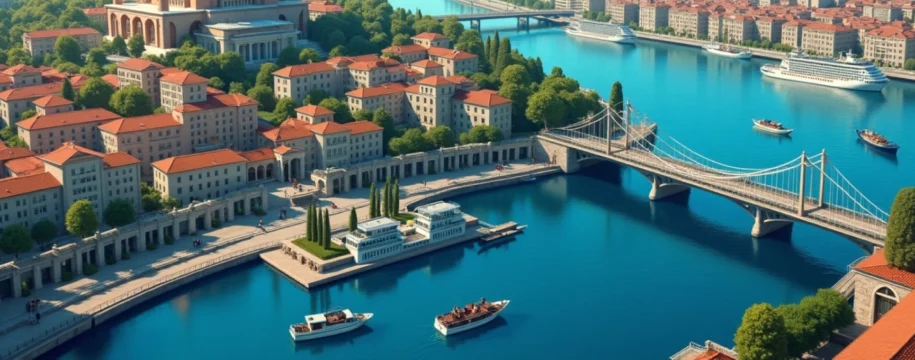
Istanbul stands as one of the world’s most extraordinary cities, serving as the only metropolis that physically spans two continents. This remarkable geographical positioning has shaped its identity for over two millennia, creating a unique urban landscape where European sophistication meets Asian mystique. The city’s strategic location along the Bosphorus Strait has made it a coveted prize for empires throughout history, from the Roman and Byzantine periods to the Ottoman era. Today, this continental duality continues to define Istanbul’s character, influencing everything from its architectural heritage to its vibrant culinary scene. The seamless blend of Eastern and Western cultures creates an atmosphere unlike anywhere else on Earth, making Istanbul a truly magical destination for travellers seeking to experience the convergence of two worlds.
Geographical significance of the bosphorus strait continental divide
The Bosphorus Strait represents far more than a simple waterway; it functions as one of the world’s most significant continental boundaries. This narrow channel, measuring approximately 31 kilometres in length and ranging from 700 metres to 3 kilometres in width, creates the physical separation between Europe and Asia. The strait’s strategic importance extends beyond its geographical significance, as it connects the Black Sea to the Sea of Marmara, ultimately linking to the Mediterranean through the Dardanelles.
Tectonic formation and geological structure of the istanbul strait
The geological formation of the Bosphorus reflects millions of years of tectonic activity along the North Anatolian Fault zone. This underwater canyon was carved through a combination of tectonic movements and glacial flooding during the last ice age. The strait’s depth varies considerably, reaching maximum depths of approximately 110 metres near the Black Sea entrance. The surrounding topography features steep hills on both sides, creating the dramatic landscape that defines Istanbul’s skyline. These geological characteristics have influenced human settlement patterns for millennia, with ancient peoples recognising the defensive advantages offered by the strait’s natural barriers.
Maritime navigation through the turkish straits system
The Bosphorus serves as a crucial component of the Turkish Straits system, handling over 48,000 vessel transits annually. This maritime corridor carries approximately 3% of global oil supplies and significant grain shipments from the Black Sea region. The complex current systems within the strait create challenging navigation conditions, with surface currents flowing southward towards the Mediterranean whilst deeper currents move northward from the Sea of Marmara. These hydrodynamic conditions require specialised pilotage services and strict traffic management protocols to ensure safe passage for commercial vessels and military craft.
Continental boundary demarcation between european thrace and anatolian peninsula
The Bosphorus creates the definitive boundary between European Turkey (Thrace) and Asian Turkey (Anatolia). This continental divide has profound implications for urban planning, administrative governance, and cultural identity within Istanbul. The European side encompasses historic districts such as Sultanahmet and Beyoğlu, whilst the Asian side includes areas like Üsküdar and Kadıköy. This geographical separation has fostered distinct neighbourhood characteristics on each side, with the European districts often reflecting Byzantine and Ottoman imperial heritage, whilst Asian neighbourhoods maintain stronger connections to Anatolian traditions.
Hydrographic characteristics and water flow dynamics
The hydrographic properties of the Bosphorus create a unique two-layer flow system that influences both marine ecology and human activities. The upper layer consists of less saline Black Sea water flowing southward, whilst the lower layer carries more saline Mediterranean water northward. This density-driven circulation pattern creates distinct thermoclines and haloclines throughout the water column. These characteristics support diverse marine ecosystems and have historically influenced fishing practices, whilst also affecting water quality management for the city’s millions of residents. The strait’s tidal variations remain minimal compared to open ocean conditions, but wind-driven currents can significantly impact surface conditions.
Architectural heritage spanning byzantine and ottoman civilisations
Istanbul’s architectural landscape tells the story of three great empires through stone, marble, and mortar. The city’s built environment represents an extraordinary palimpsest of Roman engineering, Byzantine grandeur, and Ottoman sophistication. This layered architectural heritage creates visual narratives that span over 1,500 years of continuous urban development. Each civilisation has left indelible marks on the urban fabric, creating a unique synthesis where ancient columns support Ottoman arches, and Byzantine foundations anchor imperial mosques.
Hagia sophia’s transformation from byzantine cathedral to imperial mosque
The Hagia Sophia stands as perhaps the most significant architectural symbol of Istanbul’s dual heritage. Originally constructed as a Christian cathedral between 532 and 537 CE under Emperor Justinian I, this magnificent structure represented the pinnacle of Byzantine architectural achievement. Its revolutionary dome, spanning 31 metres in diameter, remained the world’s largest cathedral dome for nearly 1,000 years. Following the Ottoman conquest in 1453, the building underwent careful conversion to serve as an imperial mosque, with the addition of minarets, mihrab, and minbar whilst preserving its fundamental Byzantine structure. This architectural transformation reflects the broader cultural synthesis that defines Istanbul, where Christian and Islamic artistic traditions coexist within a single extraordinary monument.
Topkapi palace complex and ottoman administrative architecture
The Topkapi Palace represents the administrative and ceremonial heart of the Ottoman Empire for over 400 years. This sprawling complex, constructed between 1459 and 1478, demonstrates the Ottoman approach to palace architecture through its series of courtyards, pavilions, and gardens. The palace’s design reflects Islamic concepts of privacy and hierarchy, with successive courtyards providing increasingly restricted access to the sultan’s private quarters. The Treasury houses an extraordinary collection of imperial regalia, including the famous Topkapi Dagger and the 86-carat Spoonmaker’s Diamond, whilst the Imperial Harem showcases the intricate tile work and calligraphy that characterise Ottoman decorative arts.
The palace’s strategic position overlooking the Golden Horn and Bosphorus demonstrates the Ottoman understanding of both defensive positioning and symbolic representation of imperial power.
Blue mosque’s classical ottoman design elements and iznik tilework
The Blue Mosque, officially known as the Sultan Ahmed Mosque, exemplifies the classical period of Ottoman architecture under the guidance of architect Sedefkâr Mehmed Ağa. Constructed between 1609 and 1616, the mosque’s six minarets created controversy for equalling the number at Mecca’s Great Mosque. The interior features over 20,000 handmade Iznik tiles in traditional blue and white patterns, creating the luminous atmosphere that gives the mosque its popular name. The prayer hall accommodates 10,000 worshippers beneath a central dome supported by four massive pillars. The mosque’s cascading domes and semi-domes create a harmonious silhouette that complements the nearby Hagia Sophia whilst asserting Ottoman architectural identity.
Galata tower’s genoese medieval engineering and defensive positioning
The Galata Tower represents a fascinating example of medieval Genoese engineering within Istanbul’s multicultural architectural landscape. Originally constructed in 1348 as part of the fortifications surrounding the Genoese colony of Galata, the tower rises 67 metres above sea level. Its conical roof and cylindrical stone construction reflect medieval Mediterranean defensive architecture adapted to local conditions. The tower’s strategic position on the northern shore of the Golden Horn provided surveillance capabilities over maritime traffic and potential threats from the sea. Today, the tower’s observation deck offers panoramic views encompassing both the European and Asian sides of the city, making it an ideal vantage point for understanding Istanbul’s geographical complexity.
Cultural synthesis through historical trade route convergence
Istanbul’s position at the crossroads of Europe and Asia established it as a natural convergence point for the world’s most significant trade routes. The city’s role as the terminal point of the Silk Road created unprecedented cultural exchange opportunities, where merchants, scholars, and artisans from diverse civilisations interacted daily. This commercial convergence fostered the development of unique cultural syntheses that continue to characterise modern Istanbul. The legacy of these historical trading relationships remains visible throughout the city’s markets, architectural styles, and cultural practices.
Silk road terminal markets and commercial district development
The Silk Road’s western terminus in Constantinople (historical Istanbul) transformed the city into medieval Europe’s most important commercial hub. Caravans arriving from Central Asia, China, and the Indian subcontinent would terminate their journeys here, transferring precious goods to Mediterranean and European trading networks. This position generated enormous wealth and cultural diversity, as merchants from different civilisations established permanent communities within the city. The commercial infrastructure developed to support these trading relationships included specialised warehouses, financial institutions, and craft workshops that processed raw materials from across the known world. These trading relationships facilitated the exchange of not only goods but also technologies, artistic styles, and intellectual traditions that enriched Byzantine and later Ottoman culture.
Grand bazaar’s traditional merchant guild system and artisan craftsmanship
The Grand Bazaar represents one of the world’s oldest and most sophisticated covered markets, operating continuously since the 15th century. This vast commercial complex contains over 4,000 shops organised according to traditional Ottoman guild systems, where similar trades cluster together in designated sections. The carpet sellers occupy specific areas adjacent to textile merchants, whilst goldsmiths and jewellers maintain their traditional locations near the bazaar’s centre. Each guild historically maintained strict quality standards and training programmes for apprentices, creating standardised products that earned international recognition. The bazaar’s architectural structure, featuring a series of interconnected vaulted passages, creates a unique shopping environment that protects merchants and customers from weather whilst facilitating the commercial interactions that have sustained this market for over 500 years.
Spice bazaar’s role in medieval commodity trading networks
The Egyptian Bazaar, commonly known as the Spice Bazaar, served as the primary distribution centre for exotic spices, medicinal herbs, and luxury goods imported from Asia and Africa. Constructed in the 17th century, this L-shaped market building contained 88 shops specialising in high-value, low-volume commodities that generated substantial profits for Ottoman merchants. The bazaar’s strategic location near the Golden Horn facilitated easy access for ships carrying precious cargoes from distant lands. Spices such as cinnamon, black pepper, and cardamom commanded prices comparable to precious metals, making the Spice Bazaar a crucial component of the Ottoman Empire’s economic infrastructure. The market also served as a pharmaceutical centre, where traditional healers and apothecaries prepared medicines using imported herbs and compounds according to recipes passed down through generations.
Caravanserai infrastructure and Trans-Continental commerce
The caravanserai network that supported overland trade routes required sophisticated infrastructure to accommodate merchants, animals, and goods during their journeys. Istanbul’s caravanserais provided secure accommodation, storage facilities, and commercial services for travelling merchants arriving from across Asia. These establishments featured fortified walls, central courtyards for animals, and upper-level accommodations for traders. The most elaborate caravanserais included mosques, baths, and repair workshops for equipment maintenance. The economic relationships established through these facilities created lasting commercial partnerships that spanned continents, with merchant families in Istanbul maintaining trading connections with partners in cities as distant as Samarkand, Damascus, and Venice. This infrastructure enabled the flow of goods, ideas, and cultural practices that enriched Istanbul’s cosmopolitan character.
Modern urban planning challenges across dual continental zones
Contemporary Istanbul faces unique urban planning challenges stemming from its position across two continents. The city’s population has grown exponentially to over 15 million residents, creating enormous pressure on infrastructure systems that must span the Bosphorus Strait. Urban planners must coordinate development across European and Asian sectors whilst preserving historical districts and managing environmental concerns. The geographical constraints imposed by the strait, combined with the city’s hilly topography, create complex engineering requirements for transportation networks, utility systems, and waste management infrastructure.
The metropolitan municipality has implemented ambitious infrastructure projects to address these challenges, including the Marmaray railway tunnel that connects European and Asian rail networks beneath the Bosphorus. This project required advanced engineering techniques to construct a tunnel through seismically active terrain whilst preserving important archaeological sites discovered during excavation. The railway system reduces traffic congestion on existing bridges and provides efficient public transportation for commuters travelling between continental zones. Additionally, the Eurasia Tunnel offers a dedicated automobile connection beneath the Bosphorus, further alleviating surface traffic pressures.
Housing development across both sides of the city reflects different demographic and economic patterns, with newer residential districts emerging on the Asian side whilst European neighbourhoods maintain higher property values due to their proximity to historical and commercial centres. Urban planners must balance preservation requirements for UNESCO World Heritage sites with modern development needs, creating zoning regulations that protect historical architecture whilst accommodating contemporary commercial and residential requirements. The challenge extends to public services provision, where fire departments, hospitals, and educational institutions must serve populations distributed across two continents connected by limited bridge and tunnel crossings.
Effective urban planning in Istanbul requires unprecedented coordination between continental zones, making it one of the world’s most complex metropolitan planning environments.
Culinary traditions reflecting mediterranean and central asian influences
Istanbul’s culinary landscape embodies the perfect synthesis of European and Asian flavours, creating one of the world’s most sophisticated food cultures. The city’s gastronomic traditions draw from Mediterranean coastal cuisines, Central Asian nomadic cooking methods, and Middle Eastern spice traditions. This convergence has produced distinctive dishes that cannot be found elsewhere, representing centuries of cultural exchange through food. Traditional Ottoman palace cuisine elevated these diverse influences into refined culinary arts that continue to influence modern Turkish cooking. The city’s position as a trading hub introduced ingredients from across the known world, whilst local production of olive oil, wine, and seafood provided Mediterranean foundations for elaborate feast preparations.
Street food culture in Istanbul reflects the city’s dual heritage through vendors selling European-style pastries alongside Asian-inspired grilled meats and vegetables. The famous Turkish breakfast tradition combines elements from both continental influences, featuring olives, cheeses, and bread that reflect Mediterranean preferences alongside honey, preserves, and tea preparations derived from Central Asian customs. Traditional fish restaurants along the Bosphorus serve freshly caught seafood prepared using techniques that blend European cooking methods with Asian spicing traditions. The city’s famous döner kebab represents this synthesis perfectly, combining Central Asian meat preparation techniques with Mediterranean vegetables and sauces served in bread formats influenced by both regional traditions.
Modern restaurant culture in Istanbul continues to evolve through creative interpretations of traditional recipes, with contemporary chefs exploring innovative combinations of European and Asian ingredients. The Asian side of the city has developed particular expertise in seafood preparation, with restaurants in Kadıköy and Üsküdar offering spectacular views of the European shoreline whilst serving dishes that emphasise fresh fish and seasonal vegetables. European districts feature establishments that specialise in meat-based dishes reflecting Ottoman court cuisine traditions, with elaborate preparation methods that transform simple ingredients into complex flavour profiles. The city’s dessert traditions showcase this cultural synthesis through sweets that combine European pastry techniques with Asian ingredients such as rosewater, pistachios, and honey preparations that create unique confectionery experiences.
Contemporary transportation infrastructure connecting european and asian shores
Modern Istanbul’s transportation network represents one of the most complex urban mobility systems in the world, requiring sophisticated engineering solutions to connect populations distributed across two continents. The Bosphorus Bridge system includes three major suspension bridges that handle both vehicular and pedestrian traffic between European and Asian shores. The 15 July Martyrs Bridge, completed in 1973, was Europe’s longest suspension bridge upon opening and continues to serve as a crucial transportation link for millions of daily commuters. These bridges experience significant traffic congestion during peak hours, necessitating advanced traffic management systems and alternative transportation options.
The Marmaray project revolutionised public transportation by creating the world’s deepest underwater railway tunnel, connecting Asian and European rail networks 60 metres beneath the Bosphorus seabed. This remarkable engineering achievement required specialised tunnel boring machines and advanced geological engineering to navigate through earthquake-prone terrain. The railway system handles over 1.5 million passengers daily, significantly reducing dependency on bridge crossings and providing reliable transportation regardless of weather conditions. Archaeological discoveries during construction delayed the project but enriched understanding of Istanbul’s ancient port facilities and shipbuilding traditions.
Ferry services maintain their traditional importance whilst adapting to modern transportation demands through larger vessels and improved scheduling systems. The Şehir Hatları municipal ferry company operates dozens of routes connecting various points along both European and Asian shorelines, providing scenic transportation options that showcase the city’s architectural heritage. These maritime services prove particularly valuable during bridge maintenance periods or severe weather conditions that affect road traffic. Additionally, sea buses offer high-speed alternatives for commuters travelling longer distances along the Marmara Sea coastline, connecting Istanbul to suburban communities and nearby islands.
The metro system expansion continues to address transportation challenges through underground networks that avoid geographical constraints imposed by the strait and hilly terrain. European and Asian metro lines operate independently but connect through the Marmaray system, creating integrated public transportation coverage across both continental zones. Future planning includes additional tunnel projects and expanded metro coverage to serve growing suburban populations whilst reducing environmental impacts associated with private vehicle dependency. These transportation investments demonstrate Istanbul’s commitment to maintaining its role as a major international city despite the unique geographical challenges presented by its transcontinental location.