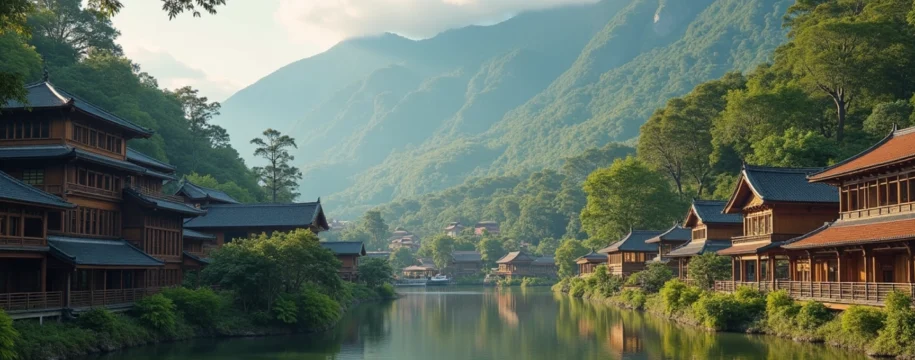
Nestled in the lush mountains of northern Thailand, Chiang Mai stands as one of Southeast Asia’s most captivating cultural destinations. This ancient city, often called the “Rose of the North,” seamlessly blends centuries-old traditions with modern sophistication, creating an atmosphere unlike anywhere else in the region. From its origins as the capital of the mighty Lanna Kingdom to its contemporary status as Thailand’s cultural heart, Chiang Mai continues to preserve and celebrate its rich heritage through magnificent temples, traditional craftsmanship, and vibrant festivals.
The city’s unique position at the confluence of ancient trade routes has shaped its distinctive character, fostering a melting pot of influences from Burma, Laos, and China. Today, visitors can witness this cultural tapestry through the city’s extraordinary architectural monuments , thriving artisan communities, and deeply rooted spiritual practices that have remained virtually unchanged for centuries.
Ancient lanna kingdom heritage and archaeological significance in northern thailand
The Lanna Kingdom, which flourished from the 13th to 18th centuries, established Chiang Mai as the political and cultural epicentre of northern Thailand. Founded in 1296 by King Mangrai, the kingdom developed a sophisticated administrative system and distinctive artistic traditions that continue to influence the region today. Archaeological evidence throughout the area reveals the extraordinary complexity of this ancient civilisation, with sophisticated irrigation systems, urban planning concepts, and architectural innovations that were centuries ahead of their time.
The kingdom’s strategic position along major trade routes connecting China, India, and the maritime kingdoms of Southeast Asia allowed for unprecedented cultural exchange. This cosmopolitan environment fostered the development of unique artistic styles, religious practices, and social customs that distinguished Lanna culture from other Thai kingdoms. Modern archaeological research continues to uncover new insights into daily life, governance, and spiritual beliefs of this remarkable civilisation.
Wat chedi luang temple complex and the sacred emerald buddha history
Wat Chedi Luang represents one of Chiang Mai’s most significant archaeological and religious sites, housing the ruins of a massive chedi that once stood over 80 metres tall. Constructed in the late 14th century during the reign of King Saen Muang Ma, this magnificent structure served as the spiritual heart of the Lanna Kingdom for nearly two centuries. The temple complex gained particular prominence when it became the home of the revered Emerald Buddha, Thailand’s most sacred religious artefact, from 1468 to 1552.
The Emerald Buddha’s presence at Wat Chedi Luang during this period marked the temple as the most important religious site in northern Thailand. Historical records indicate that the statue was discovered in 1434 when lightning struck the chedi, revealing the sacred image within. This discovery was interpreted as a divine sign, elevating the temple’s status and attracting pilgrims from across the region. The intricate carvings and architectural details that remain today provide invaluable insights into Lanna artistic traditions and religious symbolism.
Chiang mai old city moat system and medieval urban planning
The remarkable moat and wall system surrounding Chiang Mai’s old city represents one of the best-preserved examples of medieval Southeast Asian urban fortification. Constructed in a perfect square measuring approximately 1.5 kilometres on each side, the defensive system demonstrates sophisticated understanding of hydraulic engineering and strategic military planning. The moat, fed by the Ping River through an ingenious network of canals, served both defensive and practical purposes, providing water for irrigation and daily use while creating an effective barrier against invaders.
Archaeological investigations have revealed that the original earthwork fortifications were far more extensive than the current remains suggest. The city’s planners incorporated elements of traditional cosmological beliefs into the urban design, with gates positioned according to astronomical principles and sacred geometry. This integration of spiritual and practical considerations reflects the holistic approach to city planning characteristic of Lanna civilization, where temporal and spiritual realms were viewed as inseparable aspects of human existence.
King mengrai dynasty influence on contemporary lanna architecture
King Mengrai’s architectural legacy continues to influence building design and urban planning throughout northern Thailand today. The dynasty established distinctive architectural principles that balanced aesthetic beauty with functional requirements, creating structures that were both spiritually meaningful and practically suited to the tropical mountain environment. These design principles emphasised harmony between buildings and natural surroundings, incorporation of local materials, and integration of Buddhist cosmological concepts into structural elements.
Contemporary architects and craftsmen in Chiang Mai still reference Mengrai-era design principles when creating new buildings or restoring historical structures. The traditional multi-tiered rooflines, intricate wooden carvings, and use of local teak and bamboo reflect techniques refined during the Mengrai dynasty. This continuity demonstrates the enduring relevance of traditional design wisdom and its adaptability to modern needs while maintaining cultural authenticity.
Archaeological excavations at wiang kum kam ancient settlement
The ancient settlement of Wiang Kum Kam, located just south of modern Chiang Mai, provides fascinating insights into the early development of Lanna civilization. Established by King Mengrai in 1286 as his first capital, the site was later abandoned due to frequent flooding from the Ping River. Archaeological excavations beginning in the 1980s have uncovered extensive temple ruins, residential structures, and sophisticated water management systems that reveal the advanced engineering capabilities of 13th-century Lanna builders.
Recent discoveries at Wiang Kum Kam have revolutionised understanding of early Lanna urban planning and social organisation. The site’s layout reveals careful consideration of religious, administrative, and residential zones, with clear evidence of social stratification based on building materials and architectural complexity. These findings suggest that Lanna society was far more sophisticated than previously recognised, with well-developed trade networks, artistic traditions, and technological innovations that influenced the broader region.
Traditional lanna script preservation at manuscript museums
The preservation of ancient Lanna manuscripts represents one of Chiang Mai’s most important cultural conservation efforts. These palm leaf and paper documents, written in the distinctive Lanna script, contain invaluable information about historical events, religious teachings, traditional medicine, and social customs. Local manuscript museums and monastic libraries house thousands of these precious documents, many dating back several centuries and requiring specialised conservation techniques to prevent deterioration.
Modern preservation efforts combine traditional knowledge with contemporary conservation science to ensure these irreplaceable cultural treasures remain accessible to future generations. Scholars and monks work together to digitise manuscripts, train new generations in Lanna script reading, and maintain the oral traditions that provide context for written materials. This collaborative approach ensures that ancient wisdom remains relevant to contemporary life while preserving the authentic character of traditional knowledge systems.
Traditional craftsmanship centres and artisan village networks
Chiang Mai’s reputation as Thailand’s handicraft capital stems from centuries-old traditions passed down through generations of skilled artisans. The city and surrounding districts maintain vibrant networks of specialised villages where traditional techniques continue to thrive alongside modern innovations. These communities preserve not only technical skills but also the cultural knowledge, social structures, and spiritual practices associated with various crafts. The integration of traditional craftsmanship with contemporary design sensibilities has created a unique artistic movement that attracts collectors and enthusiasts from around the world.
The artisan village networks operate as living museums where visitors can observe master craftsmen at work, learn traditional techniques, and understand the cultural significance of different art forms. These communities face modern challenges including competition from mass-produced goods and the need to attract younger generations to maintain traditional skills. However, innovative approaches combining traditional methods with modern marketing and design concepts have helped many villages maintain economic viability while preserving cultural authenticity.
Bo sang umbrella village Hand-Painted parasol techniques
Bo Sang village, located just east of Chiang Mai, has maintained its reputation as Thailand’s premier umbrella-making centre for over two centuries. The village’s artisans create exquisite hand-painted parasols using traditional mulberry paper and bamboo frames, with each umbrella requiring several days of meticulous work. The painting techniques, passed down through family lineages, involve natural pigments and intricate designs inspired by Buddhist mythology, nature motifs, and traditional Lanna patterns.
The umbrella-making process begins with the harvesting of mulberry bark, which is processed into thin, durable paper through techniques virtually unchanged since the craft’s inception. Bamboo frames are carved and assembled with remarkable precision, creating structures that are both lightweight and remarkably durable. The final painting stage requires years of training to master, as artisans must develop the skill to create flowing, symmetrical designs while working on curved surfaces. This combination of technical precision and artistic creativity represents the essence of traditional Lanna craftsmanship.
San kamphaeng road silver and lacquerware manufacturing districts
San Kamphaeng Road stretches for kilometres east of Chiang Mai, lined with workshops and showrooms specialising in silver jewellery and lacquerware production. The area’s silversmiths employ techniques dating back to the Lanna Kingdom period, creating intricate pieces that combine traditional motifs with contemporary designs. Master craftsmen continue to use hand-forging methods, traditional alloys, and ancient decorative techniques that produce distinctive pieces impossible to replicate through mass production methods.
The lacquerware tradition of San Kamphaeng involves multiple stages of applying natural tree resin to bamboo or wood cores, creating objects that are both beautiful and highly durable. Each piece requires weeks to complete, as multiple thin layers of lacquer must be applied and polished between applications. The decorative techniques include gold leaf application, intricate engraving, and the incorporation of precious stones or mother-of-pearl inlays. These time-intensive processes reflect the cultural value placed on patience, precision, and artistic excellence in traditional Lanna society.
Sankampaeng hot springs textile weaving cooperatives
The textile weaving cooperatives near Sankampaeng Hot Springs represent some of northern Thailand’s most innovative approaches to preserving traditional crafts while meeting contemporary market demands. These communities specialise in producing hand-woven silk and cotton textiles using traditional Lanna patterns and techniques, but have adapted their production methods to incorporate modern design elements and quality control standards. The cooperatives operate as both production centres and training facilities, ensuring traditional knowledge transmission while providing sustainable livelihoods for local families.
The weaving process begins with silk production, where families raise silkworms and process cocoons using methods passed down through generations. Natural dyes derived from local plants create the distinctive colour palettes characteristic of northern Thai textiles. The actual weaving requires extraordinary skill, as artisans work entirely by memory to create complex geometric and floral patterns. These cooperatives have successfully balanced tradition with innovation , creating products that appeal to international markets while maintaining authentic cultural characteristics.
Hang dong teak wood carving and furniture crafting guilds
Hang Dong district has evolved into one of Southeast Asia’s most important centres for teak wood carving and furniture production, building upon centuries of traditional woodworking expertise. The area’s craftsmen specialise in creating everything from intricate religious sculptures to contemporary furniture pieces, utilising sustainable forestry practices and traditional joinery techniques that create exceptionally durable products. The guild system maintains quality standards and provides structured training for apprentices, ensuring traditional skills continue to develop and adapt to changing market conditions.
The teak carving tradition requires intimate knowledge of wood properties, tool handling, and design principles that take decades to master fully. Master carvers begin training apprentices at young ages, teaching them to read wood grain, understand structural principles, and develop the precise hand control necessary for detailed work. Modern workshops have incorporated power tools and improved safety equipment while maintaining the essential hand-carving techniques that give pieces their distinctive character. This synthesis of traditional skill and modern efficiency has enabled Hang Dong craftsmen to compete successfully in international markets while preserving authentic artistic traditions.
Northern thai culinary traditions and gastronomic heritage sites
Northern Thai cuisine represents a distinct culinary tradition that differs significantly from the better-known central and southern Thai cooking styles. The region’s cooler climate, mountainous terrain, and historical connections with neighbouring Myanmar, Laos, and southern China have created a unique gastronomic identity characterised by complex spice blends, fermented ingredients, and cooking techniques adapted to local conditions. Traditional northern Thai cooking emphasises bitter and sour flavours over the sweet and salty combinations typical of central Thai cuisine, reflecting both environmental factors and cultural preferences developed over centuries.
The preservation of traditional cooking methods and ingredients has become increasingly important as globalisation threatens to homogenise regional food cultures. Local organisations and culinary schools work to document traditional recipes, maintain heirloom vegetable varieties, and train new generations of cooks in authentic preparation techniques. These efforts extend beyond mere recipe preservation to encompass the cultural knowledge, seasonal rhythms, and social practices associated with traditional foodways. Understanding northern Thai cuisine requires appreciation of its deep connections to agricultural cycles , religious observances, and community social structures.
The complexity of northern Thai cuisine reflects centuries of cultural exchange and adaptation, creating flavour profiles that are both distinctive and deeply rooted in local ingredients and cooking traditions.
Traditional northern Thai meals emphasise communal dining experiences where multiple dishes are shared among diners, reflecting cultural values of community cooperation and hospitality. The famous khantoke dining style, where guests sit on the floor around low circular tables, exemplifies this communal approach while showcasing the full range of northern Thai flavours and textures. Signature dishes include khao soi , a rich coconut curry noodle soup that demonstrates Burmese influence; sai ua , a complex herbal sausage that showcases local spice knowledge; and nam prik ong , a tomato-based chilli dip that reflects indigenous ingredient preferences.
Modern restaurants and cooking schools in Chiang Mai have become important sites for preserving and transmitting traditional culinary knowledge. Many establishments source ingredients from local farmers who maintain heirloom varieties of vegetables, herbs, and spices that are essential for authentic flavours. These relationships between urban restaurants and rural producers help maintain agricultural biodiversity while providing economic incentives for continuing traditional farming practices. Cooking classes offered to visitors provide not only hands-on experience with traditional techniques but also education about the cultural contexts that give northern Thai cuisine its distinctive character.
Buddhist temple architecture and monastic cultural practices
Buddhist temple architecture in Chiang Mai represents one of the world’s most sophisticated expressions of religious building design, combining practical functionality with profound spiritual symbolism. The distinctive Lanna temple style, characterised by multi-tiered rooflines, intricate wooden carvings, and harmonious integration with natural surroundings, reflects centuries of architectural evolution guided by Buddhist cosmological principles. These structures serve not only as places of worship but as community centres, educational institutions, and repositories of cultural knowledge that maintain their relevance in contemporary Thai society.
The construction and maintenance of Buddhist temples involves entire communities in collaborative efforts that strengthen social bonds while preserving traditional building skills. Master craftsmen, monks, and community members work together following time-honoured protocols that ensure both structural integrity and spiritual appropriateness. These projects often take years or even decades to complete, creating opportunities for knowledge transmission between generations while fostering the patience and dedication considered essential for spiritual development.
Wat phra that doi suthep sacred mountain pilgrimage routes
Wat Phra That Doi Suthep, perched dramatically on Doi Suthep mountain overlooking Chiang Mai, represents one of Thailand’s most significant pilgrimage destinations. The temple’s legendary founding story, involving a white elephant that climbed the mountain and died at the site where the temple now stands, reflects the integration of Buddhist beliefs with local animistic traditions. The arduous journey to reach the temple, traditionally undertaken on foot via ancient pilgrimage paths, serves as both physical challenge and spiritual preparation for encountering the sacred.
The temple complex showcases the pinnacle of Lanna architectural achievement, with its golden chedi visible from throughout the Chiang Mai valley serving as both landmark and symbol of spiritual aspiration. The 309-step stairway leading to the temple entrance, flanked by elaborate naga serpent balustrades, creates a dramatic transition from the secular world below to the sacred realm above. Pilgrims traditionally make this ascent while contemplating Buddhist teachings, using the physical challenge as a metaphor for the spiritual journey toward enlightenment .
Wat chiang man oldest temple complex and relic veneration
Wat Chiang Man holds the distinction of being Chiang Mai’s oldest temple, established by King Mengrai himself as part of the city’s founding in 1296. The temple houses two of northern Thailand’s most venerated Buddha images: the crystal Phra Sae Tang Khamani and the marble Phra Sila Buddha, both believed to possess miraculous powers. These ancient sculptures attract devotees from across the region who come to make offerings and seek blessings for health,
prosperity, and spiritual guidance.The temple’s architectural features demonstrate the evolution of early Lanna design principles, with its distinctive chedi showing influences from both Burmese and Mon traditions. The elephant-supported base of the main chedi reflects the cosmological belief that elephants support the world, while the intricate stucco decorations showcase the sophisticated artistic techniques available to 13th-century craftsmen. Archaeological studies of the temple complex have revealed multiple construction phases, providing valuable insights into the development of Lanna architectural styles over several centuries.
Wat phra singh lanna-style buddha image collections
Wat Phra Singh houses one of northern Thailand’s most important collections of Lanna-style Buddha images, with the temple’s namesake Phra Singh Buddha serving as the finest example of regional sculptural traditions. This sacred image, believed to have been created in the 15th century, displays the characteristic features of Lanna Buddhist art: serene facial expressions, flowing robes, and symbolic hand positions that convey specific spiritual meanings. The temple’s collection includes dozens of additional Buddha images spanning several centuries, creating a comprehensive survey of evolving artistic styles and spiritual iconography.
The Phra Singh Buddha image demonstrates the sophisticated understanding of bronze casting and gold leaf application that distinguished Lanna craftsmen from their contemporaries in other Thai kingdoms. The statue’s proportions follow strict canonical guidelines derived from ancient Indian texts, yet incorporate subtle regional preferences for facial features and decorative elements. During the annual Songkran festival, the Phra Singh Buddha is ceremonially bathed by devotees and paraded through Chiang Mai’s streets, maintaining a tradition that connects contemporary residents with centuries of continuous religious practice and cultural identity.
Forest monastery meditation retreats in doi inthanon national park
The forest monasteries scattered throughout Doi Inthanon National Park represent a unique aspect of northern Thai Buddhist practice, where monks seek spiritual development through direct engagement with natural environments. These remote establishments, often accessible only by hiking trails, maintain the ancient tradition of wilderness meditation that was fundamental to early Buddhist practice. The monasteries operate as meditation retreat centres where both ordained monks and lay practitioners can experience intensive spiritual training away from urban distractions and material concerns.
Forest monastery practices emphasise mindfulness meditation, simple living, and harmony with natural rhythms that reflect core Buddhist principles. Residents follow strict daily schedules beginning before dawn with meditation sessions, followed by simple meals, manual labour, and evening dharma discussions. The physical challenges of mountain life serve as spiritual teachings, helping practitioners develop resilience, patience, and appreciation for basic necessities. These monasteries preserve ancient wisdom traditions while providing contemporary relevance for individuals seeking deeper spiritual understanding in an increasingly complex world.
Traditional festival celebrations and cultural calendar events
Chiang Mai’s festival calendar reflects the deep integration of Buddhist religious observances, agricultural cycles, and community social traditions that have shaped northern Thai culture for centuries. These celebrations serve multiple functions: maintaining religious practice, strengthening community bonds, preserving cultural knowledge, and providing economic opportunities through tourism and local commerce. The timing of major festivals corresponds to lunar calendar dates and seasonal agricultural activities, demonstrating the continued relevance of traditional timekeeping systems in contemporary life.
The Yi Peng Lantern Festival represents Chiang Mai’s most internationally recognised celebration, drawing visitors from around the world to witness thousands of khom loi lanterns released simultaneously into the night sky. This spectacular event combines ancient animistic beliefs about appeasing sky spirits with Buddhist concepts of merit-making and letting go of negative karma. The festival preparation involves entire communities in lantern construction, food preparation, and temple decoration, creating opportunities for knowledge transmission between generations while maintaining traditional craft skills.
Songkran, the traditional Thai New Year celebration, takes on distinctive characteristics in Chiang Mai that reflect northern cultural preferences for community participation and religious observance. The three-day festival begins with temple visits for merit-making ceremonies, continues with respectful water pouring on elder family members and Buddha images, and concludes with exuberant public water fights throughout the city. Local traditions include the construction of sand pagodas at temples, representing symbolic offerings and community cooperation, while traditional games and performances showcase cultural arts that might otherwise be forgotten in daily life.
The Loy Krathong festival demonstrates the sophisticated understanding of environmental cycles that characterises traditional Thai culture, with floating offerings released on waterways to honour water spirits and symbolically wash away negative karma from the previous year. Chiang Mai’s version of this festival incorporates unique northern elements including elaborate krathong designs using local flowers and materials, traditional Lanna performances, and community competitions that encourage artistic creativity while preserving cultural authenticity and environmental awareness.
Hill tribe cultural preservation and ethnic minority communities
The mountainous regions surrounding Chiang Mai are home to diverse ethnic minority communities whose traditional cultures represent distinct linguistic, religious, and social traditions that predate Thai settlement in the region. These hill tribe communities have maintained their cultural identities despite centuries of political change, economic pressures, and modernisation influences that threaten traditional ways of life. Contemporary preservation efforts focus on supporting economic sustainability while respecting cultural autonomy, creating opportunities for cultural exchange without compromising community values or traditional practices.
Modern hill tribe communities face complex challenges balancing cultural preservation with economic necessity, educational opportunities, and integration with broader Thai society. Government policies increasingly recognise the value of cultural diversity while providing support for sustainable development that respects traditional land use patterns and social structures. Tourism initiatives carefully managed by community leaders provide economic opportunities while maintaining cultural integrity, allowing visitors to learn about traditional practices without compromising the authentic character of daily life and spiritual beliefs.
Hmong village traditional textile production in doi pui
The Hmong villages on the slopes of Doi Pui mountain maintain some of Thailand’s most sophisticated traditional textile production systems, creating intricate embroidered fabrics that serve both practical and ceremonial functions. Hmong textile work involves complex geometric patterns that carry spiritual meanings and family history, with specific designs indicating clan affiliation, marital status, and regional origins. The production process requires years of training to master, as young women learn not only technical skills but also the cultural knowledge embedded in traditional designs.
Traditional Hmong textile production begins with hemp cultivation and processing, where plants are grown using organic methods passed down through generations, then harvested and processed into strong, durable fibres through labour-intensive techniques. The spinning, dyeing, and weaving processes utilise entirely natural materials, including plant-based dyes that create the distinctive blue indigo colours characteristic of Hmong clothing. The final embroidery work requires exceptional skill and patience, as individual pieces may take months to complete and represent significant family investments in cultural preservation and artistic expression.
Karen long neck tribe cultural tourism in mae rim district
The Karen Long Neck communities in Mae Rim district represent one of northern Thailand’s most distinctive ethnic minorities, known for the brass coils worn by women as expressions of cultural identity and spiritual beliefs. These communities have developed carefully managed cultural tourism programs that provide economic opportunities while maintaining traditional practices and protecting community autonomy. Visitors can observe traditional weaving techniques, learn about Karen agricultural methods, and understand the cultural significance of traditional dress and customs through respectful interaction with community members.
The brass neck coils worn by Karen women carry deep cultural significance beyond their striking visual impact, representing spiritual protection, cultural continuity, and resistance to assimilation pressures. The coils are added gradually throughout a woman’s life, beginning in early childhood and continuing through adulthood, creating a physical manifestation of cultural commitment and community belonging. Modern Karen communities work to ensure that young women understand both the cultural significance and personal choice involved in maintaining this tradition, balancing respect for cultural heritage with individual autonomy and changing social circumstances.
Akha coffee cultivation methods on mountain slopes
The Akha people have transformed their traditional agricultural knowledge into successful coffee cultivation enterprises that combine sustainable farming practices with market-oriented production systems. Akha coffee growers utilise traditional understanding of mountain ecology, soil management, and plant cultivation to produce high-quality arabica coffee that competes successfully in international specialty markets. The transition from subsistence agriculture to coffee production has provided economic opportunities while maintaining traditional relationships with the natural environment and community social structures.
Traditional Akha coffee cultivation methods emphasise organic growing techniques, shade cultivation systems, and integrated pest management that reflects centuries of accumulated ecological knowledge. Coffee plants are grown alongside traditional food crops and medicinal plants, creating diverse agricultural systems that support both economic production and cultural practices. The processing methods combine traditional knowledge with modern quality control techniques, producing distinctive coffee flavours that reflect both terroir characteristics and cultural approaches to agriculture. These methods demonstrate how traditional ecological wisdom can support sustainable economic development while preserving cultural identity.
Lisu silver jewellery crafting techniques and tribal customs
The Lisu people maintain sophisticated silversmithing traditions that produce intricate jewellery pieces serving both decorative and spiritual functions within traditional culture. Lisu silver work involves complex techniques including filigree, granulation, and repoussé that require years of training to master, with knowledge typically passed down through family lineages from master craftsmen to apprentices. The symbolic designs incorporated into Lisu jewellery reflect spiritual beliefs, clan affiliations, and individual life events, creating pieces that serve as personal talismans and cultural markers.
Traditional Lisu silver jewellery plays essential roles in ceremonial occasions, marriage customs, and spiritual practices that define community social structures and individual identity. The weight and quality of silver ornaments indicate family wealth and social status, while specific design elements communicate cultural information about the wearer’s background and life circumstances. Modern Lisu silversmiths adapt traditional techniques to create contemporary jewellery designs that appeal to broader markets while maintaining the technical excellence and cultural significance that distinguish authentic tribal craftsmanship. This adaptation ensures economic sustainability for traditional skills while preserving cultural knowledge and artistic traditions for future generations.