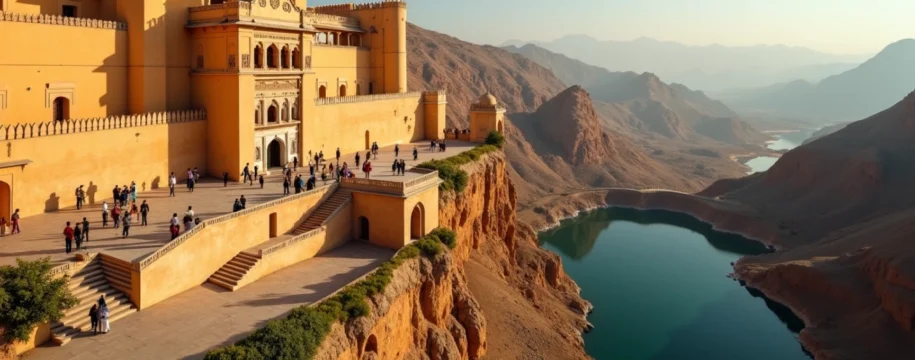
Rajasthan stands as India’s most magnificent testament to royal grandeur, where centuries of warrior dynasties have crafted a landscape dotted with majestic forts, ornate palaces, and vibrant cultural traditions. This northwestern state, literally meaning “Land of Kings,” encompasses the vast Thar Desert and showcases an extraordinary tapestry of architectural marvels, from the blue-painted streets of Jodhpur to the golden sandstone fortifications of Jaisalmer. The region’s rich heritage encompasses not only its famous monuments but also its thriving artisan communities, diverse wildlife sanctuaries, and deeply rooted cultural practices that continue to flourish in the modern era.
The state’s unique geographical position has made it a crossroads of civilisations, where Rajput valour, Mughal sophistication, and merchant prosperity converged to create an unparalleled cultural legacy. From the astronomical instruments of Jantar Mantar to the intricate mirror work of palace chambers, every element tells the story of a land where art, science, and spirituality found harmonious expression. Today’s visitors encounter this living heritage through bustling bazaars, traditional festivals, and architectural wonders that have withstood the test of time.
Architectural marvels of rajputana: fortified palaces and havelis
The architectural heritage of Rajasthan represents one of the world’s most sophisticated examples of defensive and palatial construction, where function and beauty achieved perfect balance. These structures demonstrate advanced engineering techniques developed over centuries, incorporating climate-responsive design elements that remain relevant today. The distinctive red sandstone and marble construction methods, combined with intricate carving traditions, created buildings that served both military and ceremonial purposes whilst showcasing the artistic prowess of their creators.
Mehrangarh fort’s strategic military architecture and blue city panoramas
Mehrangarh Fort towers 400 feet above Jodhpur, representing one of India’s most formidable defensive structures. The fort’s massive walls, some reaching 120 feet in height and 70 feet in thickness, demonstrate sophisticated military engineering principles that successfully repelled numerous sieges. The strategic positioning allows commanding views across the Thar Desert whilst the blue-painted houses below create a distinctive urban landscape that serves both aesthetic and practical purposes.
The fort’s seven gates commemorate various victories, each designed with sharp turns and narrow passages to confuse attacking forces. The Dedh Kamod Pol gate still bears cannon ball marks from Jaipur army attacks, whilst the elaborate Fateh Pol celebrates Maharaja Ajit Singh’s victories over Mughal forces. The internal courtyards showcase exquisite latticed windows and carved pillars that facilitated natural cooling systems essential in desert climates.
Amber palace’s sheesh mahal mirror work and Mughal-Rajput fusion elements
Amber Palace demonstrates the sophisticated architectural synthesis that emerged from Rajput-Mughal cultural exchange during the 16th and 17th centuries. The Sheesh Mahal, or Mirror Palace, contains thousands of tiny mirrors embedded in walls and ceilings, creating luminous effects that could illuminate entire chambers with minimal candlelight. This technique required master craftsmen who possessed intricate knowledge of light reflection and geometric patterns.
The palace complex incorporates distinctly Rajput elements like chattris (domed pavilions) alongside Mughal features such as formal gardens and water channels. The Diwan-i-Aam showcases red sandstone columns with capital designs that blend Hindu and Islamic motifs, whilst the private royal apartments demonstrate sophisticated ventilation systems that maintained comfortable temperatures year-round. The integration of defensive bastions with residential quarters exemplifies the practical approach to palace design during turbulent periods.
City palace udaipur’s lake pichola waterfront integration and zenana quarters
City Palace Udaipur represents perhaps the most romantically situated royal complex in India, where palace architecture seamlessly integrates with natural lake systems. The complex spans 400 years of construction, beginning with Maharana Udai Singh II in 1559, resulting in a fascinating architectural evolution that maintains stylistic coherence whilst adapting to changing royal requirements. The waterfront positioning creates unique microclimatic conditions that moderate the region’s harsh summers.
The zenana quarters showcase innovative privacy solutions that allowed royal women to observe court proceedings whilst maintaining purdah restrictions. Elaborate jharokhas (overhanging enclosed balconies) feature intricate stone screens that provide visual access whilst ensuring concealment. The palace’s water management systems include underground channels that connect to Lake Pichola, creating natural cooling effects throughout the complex. These engineering solutions demonstrate sophisticated understanding of both social requirements and environmental adaptation.
Patwon ki haveli’s intricate jharokha balconies and merchant architecture
Patwon Ki Haveli in Jaisalmer represents the pinnacle of merchant architectural patronage, where trading wealth funded extraordinary artistic achievements. This cluster of five mansions showcases the elaborate jharokha balcony tradition that became synonymous with Rajasthani architecture. Each balcony features unique geometric patterns carved from golden sandstone, demonstrating the competitive artistic patronage among wealthy merchant families.
The haveli’s interior spaces reveal sophisticated commercial architecture adapted to both residential and business functions. Ground floor areas served as shops and storage spaces whilst upper levels provided family accommodation, demonstrating efficient space utilisation within urban constraints. The intricate mirror work and painted frescoes throughout the complex indicate the prosperity generated by trans-Saharan and Central Asian trade routes that made Jaisalmer a crucial commercial hub.
Hawa mahal’s ventilation system and Purdah-Compliant design principles
Hawa Mahal stands as an architectural marvel that ingeniously solved the challenge of providing royal women with street views whilst maintaining strict purdah observance. The five-storey facade contains 953 small windows, each carefully positioned to create natural air circulation patterns that gave the structure its name, meaning “Palace of Winds.” This ventilation system maintains comfortable interior temperatures without mechanical intervention, demonstrating advanced understanding of airflow dynamics.
The building’s pyramidal structure and honeycomb design distribute weight efficiently whilst maximising natural lighting throughout interior spaces. Each window features elaborate sandstone screens that permit observation whilst ensuring privacy, showcasing the sophisticated geometric patterns characteristic of Rajasthani decorative arts. The structure serves purely ceremonial functions, with narrow corridors and staircases designed specifically for viewing street processions and festivals rather than residential occupation.
The architectural legacy of Rajasthan demonstrates how royal patronage, merchant wealth, and artisan expertise combined to create structures that remain functionally relevant whilst showcasing extraordinary artistic achievement.
Desert landscape heritage: thar’s cultural geography and settlements
The Thar Desert encompasses approximately 200,000 square kilometres, representing one of the world’s most densely populated desert regions where human adaptation has created unique cultural landscapes. This arid environment has shaped distinctive settlement patterns, architectural solutions, and resource management systems that demonstrate remarkable ingenuity in harsh climatic conditions. Traditional communities developed sophisticated water conservation techniques, drought-resistant crop varieties, and social structures that ensured survival across centuries of environmental challenges.
The desert’s cultural geography reveals how geographical constraints fostered innovation in everything from artistic expression to economic activities. Trade routes crossing the Thar connected Indian Ocean commerce with Central Asian markets, creating cosmopolitan urban centres that attracted diverse communities. These commercial networks facilitated cultural exchange whilst the challenging environment demanded technological innovations that influenced architectural styles, agricultural practices, and social organisation throughout the region.
Jaisalmer’s golden sandstone quarrying techniques and living fort ecosystem
Jaisalmer’s distinctive golden appearance derives from locally quarried sandstone that possesses unique geological properties making it ideal for intricate carving whilst maintaining structural integrity. Traditional quarrying techniques, passed down through generations of craftsmen, involve identifying optimal stone quality through sound testing and grain analysis. The sandstone’s warm colouring intensifies throughout the day, creating the dramatic visual effects that earned Jaisalmer its designation as the “Golden City.”
The living fort ecosystem represents a rare example of continuously inhabited medieval fortifications, housing approximately 4,000 residents within ancient walls. This urban environment includes traditional residences, shops, temples, and restaurants that maintain authentic desert lifestyle patterns whilst adapting to modern requirements. The fort’s narrow lanes and elevated position create natural cooling systems, whilst traditional rainwater harvesting structures called tankas demonstrate water conservation methods essential for desert survival.
Bikaner’s karni mata temple rat population and religious symbolism
Karni Mata Temple in Deshnoke houses approximately 25,000 rats considered sacred manifestations of the goddess Karni Mata, creating a unique religious ecosystem that attracts pilgrims and researchers alike. The temple’s architectural design accommodates this unusual congregation through protective screens, elevated walkways, and feeding areas that maintain both devotional atmosphere and hygiene standards. Local beliefs hold that devotees are reincarnated as rats before returning as members of Karni Mata’s clan.
The temple’s religious significance extends beyond its unusual inhabitants to encompass important Rajasthani folk traditions and community identity markers. Kabas , or white rats, are considered especially auspicious, whilst the feeding rituals demonstrate traditional concepts of hospitality and divine protection. The temple architecture incorporates silver doors and marble carvings that create sacred space whilst accommodating the practical requirements of the resident rat population.
Pushkar’s sacred geography: brahma temple and ghats configuration
Pushkar Lake represents one of Hinduism’s most sacred water bodies, surrounded by 52 ghats that create a amphitheatrical configuration of stone steps descending to the water’s edge. The town’s religious geography centres on the Brahma Temple, one of the world’s few temples dedicated to this creator deity, establishing Pushkar as a crucial pilgrimage destination. The lake’s formation, according to geological surveys, involved natural depression combined with human enhancement over centuries.
The ghat system demonstrates sophisticated urban planning that accommodates massive pilgrim influxes during festivals whilst maintaining everyday religious activities. Each ghat serves specific communities or purposes, from royal family use to ascetic meditation spaces, creating hierarchical sacred geography. The annual Kartik Purnima festival attracts over 200,000 pilgrims, testing the town’s infrastructure whilst generating significant economic activity that sustains local communities throughout the year.
Sam sand dunes tourism infrastructure and camel safari routes
Sam Sand Dunes provide Rajasthan’s most accessible desert experience, located 45 kilometres from Jaisalmer with established tourism infrastructure that balances visitor access with environmental protection. The dune system demonstrates classic desert geomorphology, with shifting sand patterns that create ever-changing landscapes ideal for photography and cultural experiences. Traditional camel safari routes follow ancient trading paths whilst avoiding sensitive ecological zones.
Tourism infrastructure development includes sustainable accommodation options ranging from luxury tents to traditional desert camps that showcase regional architectural styles. Local communities provide camel handling expertise, folk music performances, and traditional cuisine, creating authentic cultural exchanges whilst generating economic opportunities. The evening entertainment programs feature regional dance forms like Kalbeliya and Ghoomar, performed against dramatic sunset backdrops that highlight the desert’s natural beauty.
Rajput clan heritage: warrior dynasties and princely state legacies
The Rajput clans of Rajasthan established some of India’s most enduring princely states, where concepts of honour, valour, and royal duty shaped political, social, and cultural development for over a millennium. These warrior dynasties created sophisticated administrative systems whilst maintaining military traditions that successfully resisted external invasions and preserved regional autonomy. Their legacy encompasses not only political achievements but also artistic patronage, architectural innovation, and cultural practices that continue influencing contemporary Rajasthani society.
The clan system established complex networks of alliance and rivalry that shaped regional politics whilst fostering competitive cultural development. Each dynasty developed distinctive court traditions, architectural styles, and artistic preferences that created remarkable diversity within shared cultural frameworks. The princely states’ administrative innovations included revenue systems, military organisation, and diplomatic protocols that demonstrated sophisticated governance capabilities adapted to local conditions and external pressures.
Mewar dynasty’s chittorgarh resistance and rana pratap’s military strategies
The Mewar dynasty, particularly during Maharana Pratap’s reign (1572-1597), exemplified Rajput resistance against Mughal expansion through innovative military strategies and unwavering commitment to independence. Chittorgarh, the dynasty’s original capital, witnessed three major sieges that demonstrated both Rajput military capabilities and the strategic importance of fortified positions in medieval warfare. The fort’s massive walls and complex gate systems created defensive advantages that required enormous resources to overcome.
Rana Pratap’s guerrilla warfare tactics represented significant departure from traditional Rajput military approaches, adapting to Mughal numerical superiority through mobility and terrain advantage. His forces utilised the Aravalli Hills’ difficult terrain, establishing base camps that could support extended campaigns whilst avoiding direct confrontation with larger Mughal armies. The Battle of Haldighati (1576) demonstrated these tactical innovations, where despite numerical disadvantage, Mewar forces achieved tactical objectives whilst preserving military strength for continued resistance.
Marwar kingdom’s trade route control and jodhpur’s commercial heritage
The Marwar kingdom strategically positioned itself along crucial trade routes connecting Indian Ocean ports with Central Asian markets, generating enormous wealth that funded architectural projects and military expansion. Jodhpur’s merchants established trading posts from Afghanistan to Gujarat, creating commercial networks that facilitated not only economic prosperity but also cultural exchange. The Opium Route and Salt Trade particularly enriched Marwar’s treasury whilst establishing diplomatic relationships with neighbouring states.
Commercial heritage remains visible throughout Jodhpur’s old city, where traditional merchant houses showcase the prosperity generated by international trade. The Sardar Market and Clock Tower area preserve authentic trading environments where spice dealers, textile merchants, and handicraft artisans continue family traditions spanning generations. These commercial spaces demonstrate how trade wealth enabled artistic patronage whilst creating urban environments that balanced commercial efficiency with aesthetic achievement.
Jaipur’s sawai jai singh II urban planning and jantar mantar astronomical instruments
Sawai Jai Singh II’s founding of Jaipur in 1727 represented one of the world’s earliest examples of comprehensive urban planning, incorporating both ancient Indian architectural principles and contemporary defensive requirements. The city’s grid pattern, wide boulevards, and systematic zoning demonstrated advanced understanding of urban design whilst the distinctive pink colour scheme created visual unity across diverse architectural styles. The planning process involved detailed mathematical calculations to optimise space utilisation and traffic flow.
Jantar Mantar contains the world’s largest collection of architectural astronomical instruments, representing Sawai Jai Singh II’s passion for scientific accuracy and his recognition of astronomy’s importance for governance. The Samrat Yantra sundial achieves accuracy within two seconds, whilst other instruments enable precise measurement of celestial movements crucial for agricultural planning and religious observances. These instruments demonstrate how Rajput rulers combined traditional knowledge systems with Islamic astronomical traditions to create innovative scientific tools.
Shekhawati region’s fresco painting traditions and merchant patronage systems
The Shekhawati region developed India’s most extraordinary outdoor art gallery through merchant patronage of fresco painting that transformed entire towns into canvasses showcasing mythological themes, historical events, and social commentary. Wealthy merchant families commissioned elaborate paintings for their havelis’ exterior and interior walls, creating competitive displays of prosperity and cultural sophistication. These frescoes utilised natural pigments and traditional techniques that ensured longevity despite harsh desert conditions.
Merchant patronage systems established workshops where master artists trained apprentices in traditional techniques whilst developing innovative styles that incorporated European influence introduced through trade connections. The paintings document social changes, technological innovations, and cultural exchanges that occurred during the colonial period, providing invaluable insights into 19th and early 20th-century life. Towns like Mandawa, Nawalgarh, and Fatehpur became virtual museums where artistic traditions continue through conservation efforts and contemporary artistic practice.
The Rajput legacy demonstrates how military valor, commercial acumen, and cultural sophistication combined to create enduring achievements that continue inspiring contemporary development whilst preserving authentic traditional values.
Textile and handicraft manufacturing: traditional artisan techniques
Rajasthan’s textile and handicraft traditions represent centuries of technical innovation and artistic refinement, where skills pass through generations whilst adapting to changing market demands and aesthetic preferences. The state produces some of India’s finest textiles, including block-printed fabrics, mirror-work embroidery, and tie-dye techniques that have gained international recognition for their quality and distinctive designs. Traditional manufacturing processes utilise natural materials and time-honoured techniques that create products with unique characteristics impossible to replicate through industrial methods.
Contemporary artisan communities maintain traditional workshop structures whilst embracing modern marketing and design development approaches that enable global market access. Government initiatives and NGO programs support skill development and provide market linkages that ensure economic viability for traditional
crafts that support thousands of families across rural and urban centres throughout Rajasthan.The textile industry encompasses diverse specialisations including Sanganeri and Bagru block printing, Bandhani tie-dye from Jodhpur and Jaipur, and Kota Doria weaving that produces gossamer-thin fabrics prized for their delicate texture. Each region developed distinctive techniques adapted to local materials and cultural preferences, creating identifiable styles that command premium prices in domestic and international markets. Master craftsmen guard traditional knowledge whilst training apprentices in workshops that maintain guild-like structures dating back centuries.Handicraft manufacturing includes blue pottery from Jaipur, where Persian techniques merged with local artistic sensibilities to create unique ceramic traditions. Lac work from Jaipur involves intricate processes where natural resin creates vibrant colours and durable finishes for bangles, decorative items, and furniture. These crafts require specialised tools and techniques that artisans perfect through decades of practice, creating products that reflect both individual skill and collective cultural heritage.
Culinary heritage: dal baati churma and regional gastronomy specialities
Rajasthani cuisine evolved from the state’s challenging geographical conditions and warrior culture, creating robust flavours and preservation techniques that enabled food storage in desert climates without refrigeration. Traditional cooking methods utilise minimal water whilst maximising nutrition and flavour intensity through techniques like smoking, drying, and fermentation. The cuisine emphasises dairy products, lentils, and drought-resistant grains that thrive in arid conditions, creating protein-rich meals that sustained active lifestyles in harsh environments.
Dal Baati Churma represents the quintessential Rajasthani meal, combining lentil curry with wheat dumplings baked over cow dung fires and sweetened crushed wheat. The baati cooking method creates crispy exteriors whilst maintaining soft interiors, whilst the churma provides essential calories and nutrients needed for desert survival. Regional variations include different lentil combinations and spice blends that reflect local agricultural practices and cultural preferences developed over generations.
Speciality dishes vary significantly across regions, with Marwari cuisine featuring intense spices and minimal vegetables, whilst Mewar cooking incorporates more diverse ingredients due to better water availability. Laal Maas utilises fiery Mathania chillies to create lamb curry that preserves meat in desert conditions, whilst Gatte ki Sabzi transforms gram flour into protein-rich dumplings served in spiced yogurt gravy. These preparations demonstrate sophisticated understanding of nutrition, preservation, and flavour development using limited ingredient palettes.
Sweet preparations include traditional items like Ghevar, Malpua, and Balushahi that utilise clarified butter and sugar to create energy-dense foods suitable for festival celebrations and long-distance travel. Many sweets incorporate nuts and dried fruits that provide essential nutrients whilst the high sugar content ensures extended shelf life without artificial preservatives. Contemporary chefs increasingly recognise Rajasthani cuisine’s sophistication, adapting traditional recipes for modern tastes whilst preserving authentic preparation methods.
Rajasthani culinary traditions demonstrate how environmental constraints fostered innovative cooking techniques that created distinctive flavour profiles whilst ensuring nutritional adequacy and food security in challenging climatic conditions.
Wildlife conservation areas: ranthambore and desert national park ecosystems
Rajasthan’s wildlife conservation efforts protect diverse ecosystems ranging from dry deciduous forests to desert grasslands, supporting species adapted to arid conditions whilst maintaining ecological balance essential for regional environmental stability. These protected areas demonstrate how traditional conservation practices merged with modern wildlife management to create successful protection models that balance ecological requirements with community needs. The state’s conservation programs address challenges including habitat fragmentation, human-wildlife conflict, and climate change impacts on desert ecosystems.
Ranthambore National Park exemplifies successful tiger conservation, where Project Tiger initiatives restored populations from critically low numbers to current levels supporting approximately 70 tigers across 1,334 square kilometres. The park’s diverse habitats include lakes, grasslands, and rocky outcrops that provide ideal hunting grounds whilst ancient ruins create unique wildlife viewing opportunities. Former hunting grounds of Jaipur royalty became protected habitat where traditional water management systems continue supporting wildlife during drought periods.
Desert National Park protects 3,162 square kilometres of Thar Desert ecosystem, supporting the endangered Great Indian Bustard alongside diverse reptile and bird species adapted to extreme arid conditions. The park demonstrates desert ecosystem complexity, where limited rainfall creates specialised habitats supporting unique species assemblages found nowhere else in India. Conservation efforts include habitat restoration, community involvement programs, and research initiatives that study desert adaptation strategies relevant for climate change mitigation.
Wildlife corridors connect protected areas with surrounding landscapes, enabling animal movement essential for genetic diversity whilst reducing human-wildlife conflicts through planned land use. These corridors incorporate traditional grazing grounds and water sources that local communities have maintained for generations, creating collaborative conservation models. Community-based conservation programs provide alternative livelihoods whilst engaging local populations as wildlife protectors rather than competitors for natural resources.
The state’s conservation success stories include leopard population recovery, blackbuck protection through community reserves, and bird sanctuary development that supports both resident and migratory species. Keoladeo National Park demonstrates how human intervention can create artificial wetlands that become globally significant bird habitats, attracting over 370 species including endangered Siberian Cranes. These achievements illustrate how traditional ecological knowledge combined with scientific wildlife management creates effective conservation strategies adapted to local conditions.