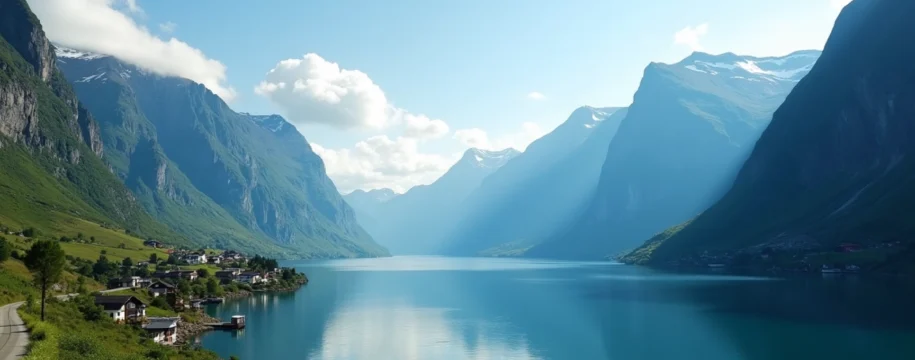
Norway’s majestic fjords represent one of Earth’s most spectacular natural phenomena, carved by glacial forces over millions of years into dramatic waterways that slice through towering mountain ranges. These UNESCO World Heritage landscapes offer an unparalleled combination of pristine wilderness, cascading waterfalls, and mirror-like waters that reflect snow-capped peaks rising directly from sea level. Planning a comprehensive fjord expedition requires careful consideration of seasonal variations, transportation logistics, and accommodation availability across a region spanning from the dramatic Geirangerfjord to the narrow Nærøyfjord. The Norwegian fjord system encompasses over 1,000 individual waterways, yet the most accessible and visually stunning routes concentrate along the western coastline between Bergen and Trondheim, creating a natural corridor for scenic exploration.
Essential Pre-Journey planning for norwegian fjord expeditions
Successful fjord exploration begins months before departure, particularly when targeting peak summer conditions or winter aurora viewing opportunities. The planning phase establishes the foundation for seamless transportation connections, optimal accommodation placement, and weather-appropriate activities that maximise scenic photography opportunities.
Optimal seasonal timing for geirangerfjord and nærøyfjord navigation
The Norwegian fjord season operates on a compressed timeline dictated by harsh winter conditions and limited daylight hours. Mid-May through September represents the prime viewing window, with July and August offering the most reliable weather patterns but also the heaviest tourist concentrations. The Geirangerfjord typically becomes accessible via the Trollstigen route around mid-May, though exact opening dates vary annually based on snow clearance operations. Ferry services between Hellesylt and Geiranger commence full operations by early June, providing essential transportation links for visitors without private vehicles.
September emerges as an increasingly popular month for fjord exploration, offering stable weather conditions, reduced crowds, and the beginning of autumn colour transformations across the landscape. The shoulder season benefits include lower accommodation rates and enhanced photography opportunities as morning mist creates atmospheric conditions over the water surfaces. However, September visitors must accept shorter daylight hours and the possibility of early snowfall in elevated areas.
Climate considerations and midnight sun photography opportunities
Norwegian fjord weather patterns challenge even experienced travellers with rapid changes and unpredictable conditions. Temperature variations can span 20 degrees Celsius within a single day, necessitating layered clothing systems that adapt to morning chill, afternoon warmth, and evening cooldowns. Precipitation occurs frequently throughout the summer months, with Bergen recording over 200 rainy days annually, creating the lush green landscapes characteristic of the region.
The midnight sun phenomenon extends viewing opportunities significantly during peak summer months, with perpetual daylight north of the Arctic Circle and extended golden hour conditions throughout the fjord region. This natural lighting creates exceptional photography conditions between 10 PM and 2 AM, when tourist activity diminishes and reflective water surfaces remain undisturbed by ferry traffic.
Weather variability remains the single greatest challenge for fjord visitors, with conditions changing dramatically within hours and differing significantly between sea level and mountain viewpoints.
Transportation infrastructure analysis: bergen railway and hurtigruten routes
Norway’s transportation infrastructure represents one of Europe’s most sophisticated systems for accessing remote natural areas, combining rail, ferry, and bus networks into seamless connections. The Bergen Railway stands as the primary arterial route, linking Oslo to the western fjord region through dramatic mountain passes and serving as the foundation for most “Norway in a Nutshell” itineraries. This engineering marvel traverses the Hardangervidda plateau at elevations exceeding 1,200 metres, providing spectacular highland scenery before descending into fjord valleys.
The Hurtigruten coastal voyage offers an alternative approach, providing northbound and southbound services that connect Bergen with Trondheim while accessing smaller coastal communities unreachable by road. This historic postal route maintains year-round schedules despite challenging weather conditions, making it particularly valuable for winter fjord exploration when mountain roads remain closed.
Accommodation booking strategies for flåm and ålesund peak season
Accommodation availability throughout the Norwegian fjord region operates under extreme supply constraints during peak season, with properties in prime locations like Flåm, Geiranger, and Ålesund booking completely solid months in advance. The village of Flåm contains fewer than 400 permanent residents yet receives over 200 cruise ship visits annually, creating massive imbalances between accommodation supply and demand.
Successful booking strategies require flexibility in location and dates, with many experienced travellers choosing base accommodations in larger towns like Voss or Stryn while making day trips to signature destinations. Alternative lodging options include traditional Norwegian mountain huts, glamping facilities, and family-operated guesthouses that provide authentic cultural experiences alongside dramatic natural settings.
Strategic fjord route selection and itinerary architecture
Designing an effective fjord itinerary requires balancing geographic coverage with transportation efficiency, ensuring adequate time for spontaneous stops while maintaining realistic daily distances. The western Norwegian coastline spans over 500 kilometres from Stavanger to Trondheim, containing dozens of accessible fjords that vary dramatically in character and accessibility.
UNESCO world heritage fjords: geirangerfjord access via dalsnibba viewpoint
The Geirangerfjord represents the crown jewel of Norwegian scenic tourism, earning UNESCO World Heritage status through its combination of towering waterfalls, pristine wilderness, and cultural landscape elements. Access routes include the dramatic ferry crossing from Hellesylt, which provides two hours of continuous fjord viewing as vessels navigate between vertical rock walls rising over 1,400 metres directly from the waterline.
The Dalsnibba viewpoint, accessible via a challenging mountain road from Geiranger village, offers the most comprehensive panoramic vista of the entire fjord system at an elevation of 1,476 metres. This vantage point requires careful timing to avoid cloud cover that frequently obscures the view, with optimal visibility typically occurring during mid-morning hours before afternoon weather systems develop.
Professional photographers recommend arriving at Dalsnibba before 9 AM to capture the fjord in pristine morning light , while tourist buses begin arriving around 10 AM, significantly increasing crowd levels. The access road closes completely during winter months, typically from November through May, making summer visits essential for this particular viewpoint.
Nærøyfjord navigation through gudvangen and aurland connections
The Nærøyfjord distinguishes itself as the narrowest section of any UNESCO World Heritage fjord, with water passages constricting to just 250 metres between opposing cliff faces. This intimate scale creates unique acoustic phenomena where sounds echo dramatically between rock walls, and weather conditions can change rapidly as wind patterns funnel through the confined space.
Navigation options include high-speed ferry services between Kaupanger and Gudvangen, providing two-hour crossings that showcase the fjord’s most dramatic sections. Alternative approaches utilise the historic Flåm Railway connection, allowing visitors to combine rail transportation with fjord cruising in seamless day-trip packages that depart from Bergen or nearby accommodation bases.
The village of Aurland serves as an excellent base for extended Nærøyfjord exploration, offering accommodation options ranging from luxury hotels to traditional Norwegian guesthouses. The nearby Stegastein viewpoint provides spectacular overlook photography opportunities accessed via a short drive from Aurland centre, though the platform can become crowded during peak visiting hours between noon and 4 PM.
Hardangerfjord circuit integration with trolltunga and preikestolen
The Hardangerfjord region combines accessible scenic driving routes with challenging hiking opportunities that attract adventure tourism enthusiasts from across Europe. The famous Trolltunga formation requires a demanding 22-kilometre round-trip hike with 900 metres of elevation gain, making it unsuitable for casual visitors but rewarding dedicated trekkers with one of Norway’s most iconic photography opportunities.
Preikestolen, or Pulpit Rock, offers a more accessible alternative with an 8-kilometre round-trip hike that accommodates moderate fitness levels while still providing dramatic cliff-edge viewpoints over the Lysefjord. This destination has experienced significant crowding issues in recent years , with parking areas filling completely by 8 AM during peak summer weekends.
Circuit planning through the Hardangerfjord region benefits from strategic base selection in towns like Odda or Rosendal, which provide access to multiple hiking trails, ferry connections, and cultural attractions including the historic Baroniet Rosendal manor house and gardens. The region’s fruit-growing heritage creates additional seasonal attractions during spring blossom periods and autumn harvest times.
Sognefjord Deep-Water exploration from balestrand to skjolden
Sognefjord earns distinction as Norway’s longest and deepest fjord, extending 205 kilometres inland and reaching depths exceeding 1,300 metres below sea level. The fjord’s massive scale creates diverse microenvironments along its length, from maritime coastal conditions near Bergen to alpine landscapes surrounding the innermost reaches near Skjolden.
The village of Balestrand historically served as an artists’ colony, attracting painters and writers who established the romantic perception of Norwegian fjord landscapes throughout European cultural circles. Modern visitors can explore this artistic heritage through local galleries and museums while enjoying some of the region’s finest accommodation options, including historic hotels that maintain period architecture and furnishings.
Ferry services connect Balestrand with multiple destinations along the Sognefjord, including Flåm, Aurland, and the remote village of Fjærland, home to the Norwegian Glacier Museum and several accessible glacier viewpoints. These connections create flexible itinerary options that avoid backtracking while maximising scenic water transportation opportunities.
Transportation methods and Multi-Modal journey coordination
Norwegian fjord exploration benefits tremendously from multi-modal transportation approaches that combine rail, ferry, bus, and private vehicle segments to access remote destinations while minimising environmental impact. The integrated transportation network requires careful coordination of schedules and advance booking, particularly during peak summer months when capacity limitations affect all services.
Norway in a nutshell railway combinations and flåm line engineering
The Flåm Railway represents one of the world’s steepest train lines, descending 863 metres over 20 kilometres through a dramatic valley carved by glacial action. This engineering masterpiece required 20 years of construction and includes 20 tunnels that spiral through solid rock to achieve manageable gradients for passenger service. The journey provides continuous scenic viewing opportunities, with the train making scheduled stops at viewpoints and the famous Kjosfossen waterfall.
Railway enthusiasts particularly appreciate the technical achievement represented by the Flåm line , which maintains a gradient of 5.5% for most of its length while negotiating hairpin turns that provide 360-degree valley views. The service operates vintage electric trains that enhance the historical atmosphere while providing modern comfort features including panoramic windows designed specifically for sightseeing purposes.
Coordination with ferry services creates seamless connections between Flåm and other fjord destinations, though passengers must book complete packages in advance during peak season to guarantee space on all transportation segments. The most popular combinations include Bergen Railway connections to Myrdal station, followed by the Flåm Railway descent and Nærøyfjord ferry crossings.
Hurtigruten coastal voyage integration with fjord detours
The Hurtigruten coastal service provides unique access to remote fjord areas while maintaining comfortable accommodation aboard purpose-built vessels designed for Norwegian conditions. Ships call at Bergen, Ålesund, Molde, and Kristiansund, creating convenient entry points for fjord exploration without requiring extensive overland transportation.
Flexible ticketing options allow passengers to disembark for extended stays in fjord regions before rejoining later voyages, though this requires advance coordination with shore excursion providers and local accommodation. The ships themselves offer exceptional viewing platforms and dining facilities that showcase regional cuisine prepared with local ingredients sourced from fjord communities.
Hurtigruten voyages provide unparalleled access to Norway’s coastal communities while serving as floating hotels that eliminate daily packing and accommodation searches.
Rental vehicle navigation through trollstigen and atlantic road
Self-driving through Norwegian fjord regions requires careful preparation for challenging road conditions, including narrow passages, steep gradients, and weather-related closures that can significantly impact itinerary timing. The famous Trollstigen, or Troll’s Path, features eleven hairpin turns with gradients up to 10% and width restrictions that challenge even experienced mountain drivers.
Rental vehicle selection becomes critical for fjord exploration, with compact cars providing better manoeuvrability on narrow mountain roads while larger vehicles offer enhanced comfort for extended touring. All-wheel drive systems prove valuable for wet conditions and early season travel when snow may remain on higher elevation passes.
The Atlantic Road represents one of Norway’s most celebrated scenic driving routes, connecting a series of small islands via dramatic bridges and causeways that provide spectacular ocean views. This route experiences severe weather conditions during autumn and winter storms, making summer visits essential for safe navigation and optimal photography conditions.
Ferry scheduling for Hellesylt-Geiranger and Kaupanger-Gudvangen routes
Ferry transportation forms an essential component of fjord exploration, providing access to destinations unreachable by road while offering optimal viewing angles for photography and relaxation. The Hellesylt-Geiranger route operates multiple daily crossings during summer months, with each journey providing two hours of continuous fjord viewing as vessels navigate between towering cliff walls.
Schedule coordination becomes particularly important when connecting ferry services with other transportation modes, as delays or weather cancellations can disrupt carefully planned itineraries. Advanced booking ensures vehicle space during peak periods, though foot passengers generally find accommodation even during busy periods.
Alternative ferry routes include the Kaupanger-Gudvangen service across the Nærøyfjord and various connections throughout the Sognefjord system that link smaller communities with main transportation hubs. These services often provide the only practical access to remote villages and hiking trail heads that offer exceptional wilderness experiences away from major tourist concentrations.
Photography and viewpoint optimisation techniques
Norwegian fjord photography requires specialised techniques adapted to challenging lighting conditions, dramatic scale variations, and rapidly changing weather patterns that can transform scenes within minutes. The interplay between water surfaces, vertical rock faces, and atmospheric conditions creates unique opportunities for compelling imagery while presenting technical challenges that test equipment capabilities and photographer skill levels.
Successful fjord photography begins with understanding the dramatic scale differential between human observers and the landscape features, requiring careful composition techniques that establish perspective through foreground elements or human figures. The overwhelming grandeur of fjord scenery can paradoxically result in flat, lifeless images without proper attention to compositional fundamentals and technical exposure considerations.
Optimal lighting conditions typically occur during extended golden hour periods that characterise Norwegian summer evenings, when low-angle sunlight illuminates cliff faces while casting dramatic shadows across water surfaces. Professional landscape photographers often work exclusively during these extended twilight periods , taking advantage of colour temperature variations and atmospheric conditions that enhance the mystical quality associated with Nordic landscapes.
Weather monitoring becomes essential for planning photography expeditions, as cloud cover, precipitation, and wind conditions dramatically affect both accessibility and visual impact of key viewpoints. Many iconic Norwegian landscape images capture the interaction between weather systems and topographical features, requiring patience and flexibility to capture optimal moments when atmospheric conditions align with compositional opportunities.
Regional accommodation and dining infrastructure analysis
The accommodation infrastructure throughout Norwegian fjord regions reflects the challenging balance between preserving pristine natural environments and providing comfortable facilities for increasing visitor volumes. Traditional Norwegian hospitality emphasises quality over quantity, resulting in smaller-scale properties that integrate harmoniously with natural surroundings while maintaining high service standards and authentic cultural experiences.
Luxury accommodation options concentrate in signature destinations like Geiranger, Flåm, and Balestrand, where historic hotels maintain period architecture and furnishings that reflect the golden age of Norwegian tourism during the late 19th and early 20th centuries. These properties command premium rates during peak season but provide unparalleled access to iconic viewpoints and cultural experiences that justify the investment for discerning travellers seeking authentic Nordic hospitality.
Alternative lodging includes mountain huts, glamping facilities, and family-operated guesthouses that offer intimate cultural exchanges while providing comfortable accommodation at moderate price points. Many properties emphasise local food systems, featuring cuisine prepared with ingredients sourced from nearby farms, fisheries, and wild foraging areas that reflect traditional Norwegian dietary patterns adapted to modern culinary techniques.
Dining throughout the fjord region showcases Norway’s evolving culinary identity, combining traditional preservation techniques with contemporary presentation styles and international influences introduced through tourism exposure. Local specialities include fresh salmon, Arctic char, and shellfish harvested from pristine fjord waters, often prepared using smoking, c
uring, curing, and fermentation methods developed over centuries of survival in harsh climatic conditions.Regional breweries and distilleries contribute to the evolving beverage landscape, with establishments like Ægir BrewPub in Flåm showcasing craft beer production inspired by Norse mythology and local ingredient sourcing. Many fjord region restaurants maintain extensive wine cellars featuring international selections alongside Norwegian aquavit and traditional fruit wines produced from local orchards that benefit from the region’s unique microclimate conditions.
Traditional Norwegian cuisine reflects centuries of adaptation to harsh climatic conditions, emphasising preservation techniques and seasonal ingredient availability that create distinctive flavour profiles unavailable elsewhere in Europe.
Weather contingency planning and safety protocols for fjord tourism
Weather-related safety considerations represent the most critical aspect of fjord tourism planning, as conditions can deteriorate rapidly from benign to life-threatening within hours. Norwegian meteorological services provide sophisticated forecasting systems, but the complex topography of fjord regions creates microclimates that defy accurate prediction beyond 48-hour timeframes. Visitors must maintain flexibility in their itineraries while carrying appropriate emergency equipment regardless of initial weather conditions.
Emergency communication systems throughout the fjord region rely heavily on cellular networks that provide inconsistent coverage in remote valleys and elevated viewpoints. Satellite communication devices become essential safety equipment for serious hiking expeditions or extended wilderness photography sessions in areas beyond standard emergency response capabilities. The Norwegian Red Cross maintains mountain rescue stations throughout the region, but response times can exceed several hours during adverse weather conditions or remote location emergencies.
Clothing and equipment selection must account for rapid temperature fluctuations and precipitation changes that characterise fjord weather patterns. Layering systems prove essential, with base layers providing moisture management, insulation layers offering thermal protection, and shell layers defending against wind and precipitation. Waterproof footwear with aggressive tread patterns becomes necessary for safely navigating wet rock surfaces and muddy trails that remain slippery even during dry periods.
Transportation safety protocols require understanding road closure procedures and alternative route planning when weather conditions deteriorate beyond acceptable limits. Mountain passes frequently close during storms, fog conditions, or high wind events that make driving hazardous even for experienced operators. Ferry services suspend operations during severe weather, potentially stranding visitors in remote locations without alternative transportation options until conditions improve and normal schedules resume.
Health and medical considerations include altitude effects at higher viewpoints, hypothermia risks during extended outdoor exposure, and dehydration concerns during long hiking expeditions. Remote locations may require several hours of evacuation time to reach appropriate medical facilities, making prevention and early intervention critical for managing health emergencies. Travel insurance specifically covering mountain rescue and helicopter evacuation becomes essential protection for visitors engaging in outdoor activities beyond basic sightseeing from established viewpoints.
Group safety protocols emphasise communication procedures, emergency contact information, and contingency planning that accounts for various scenarios including weather deterioration, vehicle breakdown, medical emergencies, and communication system failures. Solo travellers face additional risks and should maintain regular contact schedules with accommodation providers or tour operators who can initiate emergency procedures if predetermined check-in times are missed.