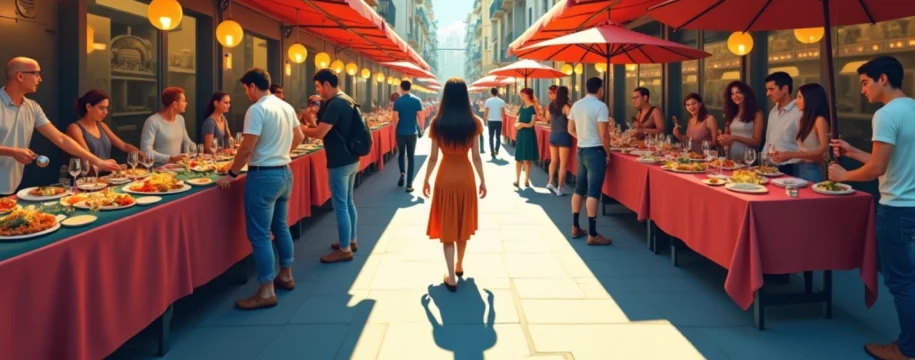
Culinary exploration represents one of the most authentic ways to understand a culture, yet many travellers believe that experiencing genuine local cuisine requires substantial financial investment. This misconception often leads to missed opportunities for meaningful cultural immersion through food. The reality is that some of the world’s most memorable gastronomic experiences occur not in Michelin-starred establishments, but in bustling street markets, family-run kitchens, and community dining spaces where locals gather daily.
Food serves as a universal language that transcends barriers, offering insights into history, traditions, and social customs that guidebooks simply cannot convey. The challenge lies in navigating unfamiliar culinary landscapes whilst maintaining a reasonable budget. Smart travellers understand that authentic eating experiences often cost significantly less than tourist-oriented dining options, provided one knows where to look and how to engage with local food culture effectively.
Street food markets and local vendor navigation strategies
Street food markets represent the beating heart of culinary culture in countless destinations worldwide. These vibrant spaces offer unparalleled access to traditional flavours at remarkably affordable prices. The key to successful street food exploration lies in understanding local customs, identifying quality vendors, and navigating complex market systems with confidence.
Safety considerations should never be overlooked when exploring street food scenes. Observe vendor hygiene practices, look for high turnover of food items, and choose stalls frequented by locals rather than tourists. Fresh ingredients, proper food handling, and quick service typically indicate reliable vendors who prioritise quality alongside affordability.
Night market exploration in bangkok’s chatuchak and taiwan’s shilin districts
Bangkok’s Chatuchak Weekend Market transforms into a culinary wonderland during evening hours, offering everything from traditional som tam to innovative fusion creations. Vendors here operate on razor-thin margins, passing savings directly to customers who can enjoy substantial meals for under £3. The market’s labyrinthine layout rewards patient exploration, with hidden gems often tucked away in less obvious corners.
Taiwan’s Shilin Night Market exemplifies the organised chaos of Asian street food culture. The systematic vendor arrangement allows for efficient sampling of regional specialities like beef noodle soup, stinky tofu, and bubble tea. Understanding the ordering system – typically involving pointing, basic Mandarin phrases, or written menus – significantly enhances the experience whilst avoiding tourist pricing traps.
Hawker centre etiquette and ordering systems in singapore and malaysia
Singapore’s hawker centres operate on a unique system that combines individual vendor stalls with communal seating areas. The chope culture – reserving tables with tissue packets – demonstrates local dining etiquette that visitors should respect. Most stalls display prices prominently, and haggling is not customary, ensuring transparent pricing for all customers regardless of origin.
Malaysian hawker centres often feature more relaxed atmospheres but maintain similar organisational structures. The diversity of cuisines – Malay, Chinese, Indian, and fusion – within single locations provides exceptional value for culinary exploration. Payment systems vary between cash-only operations and modern digital platforms, so carrying small denominations ensures smooth transactions.
Food truck circuit mapping in mexico city’s roma norte and condesa neighbourhoods
Mexico City’s food truck scene operates on predictable schedules and locations, allowing strategic planning for maximum culinary impact. Roma Norte features upscale truck operators serving gourmet interpretations of traditional dishes, whilst maintaining significantly lower prices than established restaurants. Peak hours typically occur during lunch and late evening periods when office workers and nightlife enthusiasts converge.
Condesa’s food truck circuit focuses heavily on traditional preparations with minimal tourist adaptation. Taco stands, elote carts, and tamale vendors offer authentic flavours at local prices – often 50-70% less than restaurant equivalents. Building relationships with regular vendors through repeat visits often results in generous portions and insider recommendations for other neighbourhood food experiences.
Borough market and camden lock alternative vendor selection in london
London’s Borough Market presents both opportunities and challenges for budget-conscious food exploration. Whilst certain vendors cater to tourists with inflated pricing, savvy visitors can identify authentic operators serving quality ingredients at reasonable costs. Early morning visits often yield better prices and fresher selections before tourist crowds arrive.
Camden Lock’s diverse vendor scene requires careful navigation to avoid tourist traps whilst discovering genuine international cuisine. Established vendors with loyal local followings typically offer superior value compared to flashy newcomers targeting passing foot traffic. Observing queue patterns and customer demographics provides valuable intelligence for vendor selection.
Budget-conscious culinary tourism through Home-Style dining experiences
Home-style dining experiences offer unparalleled authenticity whilst often providing exceptional value compared to commercial dining establishments. These intimate encounters with local food culture create lasting memories and meaningful connections that transcend typical tourist experiences. The challenge lies in identifying legitimate opportunities whilst avoiding commercialised versions that compromise both authenticity and affordability.
Successful home dining arrangements require cultural sensitivity, open-mindedness regarding unfamiliar flavours, and realistic expectations about comfort levels compared to restaurant service. The rewards – genuine hospitality, family recipes, and cultural insights – justify minor inconveniences for travellers seeking deeper cultural engagement through food.
Homestay meal integration programs in rural tuscany and provence regions
Rural Tuscany’s agriturismo network offers structured homestay experiences that include meal preparation and consumption alongside farming families. These programs provide access to seasonal ingredients, traditional cooking methods, and regional specialities rarely found in commercial establishments. Costs typically range from £25-40 per person per day for full meal integration, representing exceptional value considering the quality and authenticity of experiences provided.
Provence’s farm-stay programs emphasise Mediterranean cooking traditions using herbs, vegetables, and proteins produced locally. Participants often engage in ingredient harvesting, preparation techniques, and communal dining practices that reflect centuries-old customs. The educational component adds substantial value beyond mere sustenance, creating comprehensive cultural immersion opportunities.
Community kitchen participation in indian ashrams and tibetan monasteries
Indian ashrams frequently welcome visitors to participate in community kitchen operations, providing meals in exchange for modest donations or volunteer labour. These experiences offer profound insights into vegetarian cooking traditions, spice utilisation, and communal dining customs. Costs remain minimal – often under £5 daily – whilst providing nutritious, authentic meals prepared according to ancient traditions.
Tibetan monastery kitchens operate on principles of simplicity and nourishment rather than elaborate presentation. Visitors can participate in meal preparation whilst learning about Buddhist dietary principles and traditional preservation techniques. The meditative aspects of communal cooking create unique experiences that combine spiritual and culinary exploration.
Farm-to-table dining cooperatives in new zealand’s south island
New Zealand’s South Island features numerous cooperative dining arrangements where travellers can access fresh, locally-produced ingredients through direct farmer relationships. These networks often include accommodation options that integrate meal preparation using on-site produce, reducing costs whilst ensuring peak freshness and quality.
Seasonal availability drives menu planning in these cooperative arrangements, creating opportunities to experience ingredients at optimal ripeness and flavour development. Participants gain appreciation for agricultural cycles, sustainable farming practices, and the connection between environmental stewardship and culinary excellence.
Family-run taverna discovery methods in greek cyclades islands
Authentic Greek tavernas operate on principles of hospitality and tradition rather than profit maximisation, particularly in smaller island communities. Family-run establishments often lack English signage but compensate with genuine warmth and exceptional value. Building relationships through repeat visits frequently results in off-menu specialities and insider access to local food culture.
Island tavernas source ingredients locally due to logistical constraints, ensuring freshness whilst supporting community economics. Understanding seasonal availability and fishing patterns enhances appreciation for daily menu variations and helps visitors align expectations with local realities.
Strategic restaurant selection using local Price-Point intelligence
Intelligent restaurant selection requires understanding local pricing structures, wage indices, and cultural dining patterns. This knowledge enables travellers to identify genuine value whilst avoiding both tourist traps and inappropriately upscale establishments that strain travel budgets. Price-point intelligence involves researching local economic conditions, typical meal costs for residents, and identifying establishments that serve locals rather than exclusively catering to tourists.
Successful restaurant selection also considers timing, location, and service styles that align with budget constraints whilst maintaining quality expectations. Understanding local dining customs – such as lunch specials, early bird offerings, or communal dining traditions – can significantly reduce costs whilst enhancing cultural authenticity.
Michelin bib gourmand establishment identification and booking tactics
Michelin Bib Gourmand restaurants represent exceptional value propositions, offering high-quality cuisine at moderate prices. These establishments undergo rigorous evaluation processes that ensure both culinary excellence and reasonable pricing structures. Booking strategies for Bib Gourmand restaurants often require advance planning, particularly in popular destinations where demand exceeds capacity.
Many Bib Gourmand establishments offer lunch menus at significantly reduced prices compared to dinner service, providing access to acclaimed cuisine within tighter budget parameters. Understanding reservation systems, cancellation policies, and walk-in opportunities maximises chances of securing tables whilst maintaining flexibility for spontaneous dining decisions.
Zagat rating Cross-Reference with local wage index analysis
Zagat ratings provide valuable intelligence when cross-referenced with local economic data to identify restaurants offering genuine value. This analytical approach involves comparing restaurant pricing with average local wages to determine affordability for resident populations rather than tourist demographics. Establishments serving locals regularly typically offer superior value propositions compared to tourist-focused venues.
Wage index analysis helps establish baseline expectations for meal costs in different destinations. Understanding that a £15 meal in Bangkok represents significantly different value than the same price in London enables more informed dining decisions aligned with local economic realities.
Tripadvisor algorithm manipulation for authentic local recommendations
TripAdvisor’s algorithm prioritises recent reviews and high ratings, but sophisticated users can filter results to identify authentic local establishments rather than tourist-oriented venues. Searching for restaurants with predominantly local reviewer demographics, reading negative reviews for legitimate concerns, and identifying consistent themes across multiple reviews provides more accurate intelligence than simple rating averages.
Advanced filtering techniques include searching for establishments mentioned in local language reviews, identifying restaurants with limited English-language descriptions, and focusing on venues with consistent pricing mentioned across multiple reviews. These methods help bypass algorithm biases that favour tourist-accessible establishments.
Google maps review filtering for Price-Conscious traveller insights
Google Maps reviews often contain specific pricing information and detailed descriptions of portion sizes, service quality, and value propositions. Filtering reviews by traveller demographics, visit timing, and specific keywords related to value and pricing provides actionable intelligence for budget-conscious dining decisions.
Photo reviews on Google Maps reveal actual dishes, portion sizes, and restaurant atmospheres that help set appropriate expectations. Identifying patterns in multiple photo reviews – such as consistently generous portions or high-quality presentations – indicates reliable value propositions worth investigating further.
The most memorable culinary experiences often emerge from unexpected encounters with local food culture rather than meticulously planned restaurant visits.
Culinary workshop and cooking class investment optimisation
Culinary workshops and cooking classes represent investments in knowledge and skills that extend far beyond single meal experiences. These educational opportunities provide techniques, ingredient knowledge, and cultural insights applicable to future cooking endeavours, creating lasting value that justifies initial expenditure. Successful workshop selection requires evaluating instructor credentials, class content depth, ingredient quality, and practical applicability to home cooking situations.
The most valuable cooking classes emphasise technique transfer rather than simple recipe following, enabling participants to adapt learned skills to different ingredients and cooking environments. Market tours combined with cooking instruction provide comprehensive understanding of ingredient selection, seasonal availability, and local sourcing practices that enhance overall culinary knowledge.
Cost optimisation for cooking classes involves comparing group versus private instruction options, evaluating included ingredients and equipment usage, and considering location factors that affect overall pricing. Workshop packages that include market visits, multiple courses, and take-home materials often provide superior value compared to basic instruction-only formats. Some programs offer accommodation packages that integrate cooking instruction with lodging, creating comprehensive cultural immersion experiences at competitive pricing.
Language barriers in cooking classes can actually enhance learning experiences by encouraging non-verbal communication and hands-on technique demonstration. Choosing instructors who emphasise practical demonstration over complex verbal instruction ensures successful learning regardless of linguistic limitations. Many acclaimed cooking programs operate successfully with minimal shared language, relying instead on universal cooking principles and enthusiastic instruction methods.
Regional speciality procurement through direct producer channels
Direct procurement from local producers eliminates intermediary markups whilst providing access to peak-quality ingredients often unavailable through commercial channels. This approach requires identifying authentic producers, understanding seasonal availability patterns, and navigating purchasing processes that may differ significantly from familiar retail experiences. Producer relationships often yield insights into traditional preparation methods, optimal usage timing, and storage techniques that enhance ingredient utilisation.
Successful direct procurement involves researching regional specialities before arrival, identifying producer locations and operating schedules, and understanding quality indicators for unfamiliar products. Language preparation for basic transaction communication and cultural research regarding appropriate purchasing etiquette prevents misunderstandings whilst demonstrating respect for local customs.
Cheese producers in France, olive oil makers in Italy, spice growers in India, and tea plantations in Sri Lanka often welcome visitors for direct purchases that provide superior products at reduced costs compared to retail channels. These interactions frequently include educational components about production processes, quality factors, and optimal usage methods that add substantial value beyond simple product acquisition.
Transportation and preservation considerations become crucial when purchasing perishable specialities directly from producers. Understanding customs regulations for international transport, appropriate packaging methods, and optimal consumption timing ensures successful speciality procurement without waste or legal complications. Many producers offer shipping services that simplify logistics whilst maintaining direct pricing advantages.
Authentic regional specialities purchased directly from producers often cost less than inferior commercial versions whilst providing incomparable quality and freshness.
Food festival and seasonal event calendar strategic planning
Food festivals represent concentrated opportunities for experiencing diverse culinary offerings at competitive prices within controlled environments. Strategic festival planning involves researching annual event calendars, understanding pricing structures, and timing visits to coincide with optimal festival periods whilst avoiding peak accommodation pricing. Festival intelligence includes identifying authentic local events versus tourist-oriented celebrations that may prioritise commercial considerations over culinary authenticity.
Seasonal event planning extends beyond major festivals to include harvest celebrations, religious food traditions, and community gatherings that provide insider access to local culinary culture. Understanding agricultural cycles, religious calendars, and cultural celebration timing enables strategic travel planning that aligns with optimal food experiences whilst potentially reducing overall travel costs during off-peak periods.
Regional harvest festivals often feature ingredient-focused celebrations that highlight local agricultural specialities at peak seasonal quality. Wine harvest festivals in France, truffle seasons in Italy, and fruit celebrations throughout various destinations provide access to premium ingredients and traditional preparation methods at fraction of commercial pricing. These events frequently include educational components about agricultural practices and traditional processing techniques.
Many destinations feature weekly or monthly food markets that operate on regular schedules throughout tourist seasons. Understanding these recurring events enables flexible travel planning that incorporates multiple market experiences without rigid scheduling constraints. Local market calendars often include special themed events, seasonal celebrations, or producer showcases that provide enhanced experiences beyond standard market operations.
| Festival Type | Average Cost Range | Duration | Best Value Period |
|---|---|---|---|
| Harvest Festivals | £5-15 per event | 1-3 days | Opening day |
| Night Markets | £2-8 per dish | Daily/Weekly | Late evening |
| Food Trucks | £4-12 per meal | Seasonal | Lunch hours |
| Cultural Celebrations | Free-£20 | 2-7 days | Community days |
Weather considerations play crucial roles in festival planning, particularly for outdoor events that may face cancellation or reduced vendor participation during adverse conditions. Backup planning for alternative food experiences ensures continued culinary exploration regardless of weather-related festival disruptions. Indoor market alternatives, covered dining areas, and weather-independent cooking classes provide contingency options that maintain gastronomic focus despite environmental challenges.
Strategic festival timing can provide access to authentic regional cuisines at significantly reduced costs whilst supporting local food communities and traditional celebration practices.
Understanding festival vendor selection processes helps identify authentic local producers versus commercial operators who may prioritise volume over quality. Established festivals often feature application processes that screen vendors for authenticity,
quality, and cultural authenticity. Researching vendor lists and application criteria helps identify festivals that prioritise genuine local food culture over generic commercial offerings. Premium festivals often feature juried selection processes that ensure vendor quality whilst maintaining affordable pricing for festival attendees.
Food festival budgeting should account for additional costs beyond entry fees, including transportation between venues, accommodation during peak periods, and potential equipment needs for outdoor events. Many festivals offer multi-day passes or early bird pricing that significantly reduces per-event costs for committed attendees. Understanding festival layout and vendor distribution helps optimise time and budget allocation across diverse culinary offerings.
Local food festivals frequently feature competitions, demonstrations, and educational workshops that provide additional value beyond simple food sampling. These supplementary activities often include interaction with renowned chefs, traditional cooking technique demonstrations, and ingredient sourcing education that enhances overall festival experiences. Participation in these educational components requires advance registration but typically costs significantly less than equivalent private instruction.
Regional timing considerations extend beyond weather factors to include agricultural seasons, religious observances, and cultural celebration patterns that affect festival quality and authenticity. Olive harvest festivals in Mediterranean regions, wine celebrations during grape season, and seafood festivals during peak fishing periods provide optimal ingredient quality and traditional preparation methods. Understanding these natural cycles enables strategic planning that maximises culinary authenticity whilst often reducing accommodation and transportation costs during off-peak tourist periods.
The intersection of agricultural seasons, cultural traditions, and festival timing creates optimal opportunities for authentic culinary experiences at substantially reduced costs compared to commercial dining alternatives.
Festival vendor interaction strategies can significantly enhance value received from entry fees and food purchases. Building rapport with vendors through genuine interest in their products, techniques, and cultural backgrounds often results in generous sampling opportunities, preparation tips, and recommendations for other local food experiences. Many vendors appreciate educated questions about ingredients, traditional methods, and regional variations that demonstrate respect for their culinary expertise.
Documentation of festival experiences through photographs, notes, and vendor contact information creates valuable resources for future travel planning and home cooking applications. Many festival vendors offer mail-order services, seasonal availability information, and referrals to similar producers in other regions. This intelligence gathering transforms single festival visits into ongoing relationships that provide continued access to authentic ingredients and cultural insights.
Weather contingency planning becomes essential for outdoor festivals that may experience reduced vendor participation or cancelled events during adverse conditions. Researching indoor alternatives, covered market spaces, and weather-independent food experiences ensures continued culinary exploration regardless of meteorological challenges. Many destinations offer permanent covered markets that operate year-round and provide similar vendor diversity without weather-related uncertainties.
Budget tracking throughout festival experiences helps identify optimal spending strategies and vendor selection criteria for future events. Understanding which food categories provide best value, identifying portion sizes that justify pricing, and recognising quality indicators specific to different cuisines enables more efficient festival navigation. This analytical approach transforms festival participation from random sampling to strategic culinary exploration that maximises both educational value and budget efficiency.
The cumulative impact of strategic food festival participation extends far beyond individual event experiences to create comprehensive understanding of regional culinary landscapes, seasonal ingredient patterns, and traditional preparation methods. This knowledge base enhances all subsequent travel dining decisions by providing context for evaluating authenticity, recognising quality ingredients, and appreciating cultural significance of various culinary traditions. Festival experiences essentially serve as intensive cultural education programs that provide lasting value for future gastronomic exploration worldwide.