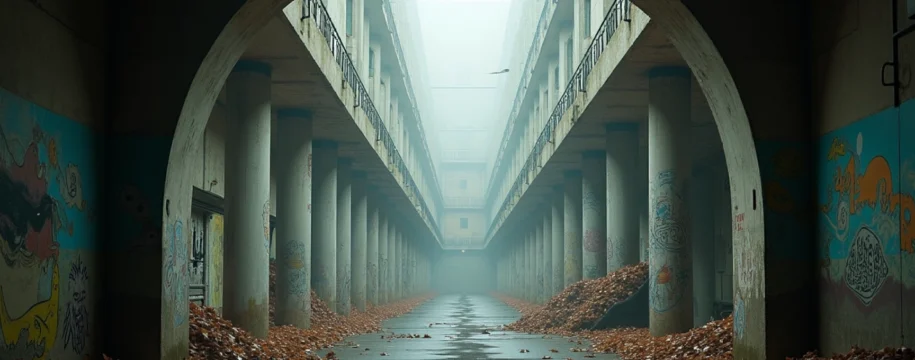
Urban exploration offers an extraordinary window into forgotten histories and architectural mysteries, yet the intensity of these environments can quickly become overwhelming for even seasoned explorers. The combination of sensory overload from decaying structures, the psychological weight of abandoned spaces, and the physical demands of navigating complex industrial sites creates a perfect storm of stimulation that can transform an exciting adventure into an anxiety-inducing ordeal. Understanding how to manage these challenges whilst maintaining the thrill of discovery requires strategic planning, psychological preparation, and mindful execution of exploration techniques.
The modern urbex community has evolved sophisticated approaches to managing environmental stressors whilst preserving the authentic experience of urban exploration. From implementing structured rest protocols to developing cognitive frameworks for processing overwhelming visual information, today’s explorers employ evidence-based techniques that enhance both safety and enjoyment. These methods acknowledge that feeling overwhelmed isn’t a sign of weakness but rather a natural response to environments specifically designed to stimulate multiple senses simultaneously.
Pre-exploration planning strategies for urban photography and documentation
Effective preparation forms the cornerstone of manageable urban exploration experiences, transforming potentially chaotic adventures into structured discoveries. The planning phase allows you to anticipate challenges, establish clear objectives, and create mental frameworks that prevent information overload during actual exploration sessions. By investing time in thorough preparation, you establish a foundation of confidence that significantly reduces anxiety and overwhelm in unfamiliar environments.
Researching abandoned sites through UER forums and OpenStreetMap analysis
Digital reconnaissance represents your first line of defence against overwhelming exploration experiences. UER forums provide invaluable insights into site conditions, access points, and potential hazards that might trigger anxiety responses. These community-driven platforms offer detailed reconnaissance reports that help you visualise spaces before arrival, reducing the cognitive load of processing entirely new environments. OpenStreetMap analysis complements forum research by revealing structural layouts, neighbouring properties, and escape routes that become crucial when claustrophobic feelings arise in confined spaces.
Successful site research involves creating detailed mental maps of target locations, identifying multiple entry and exit points, and understanding the historical context that shaped these spaces. This preparation process transforms mysterious, potentially intimidating environments into familiar territories before you physically arrive. The psychological comfort derived from comprehensive research cannot be overstated—knowing what to expect dramatically reduces the startle response that often triggers overwhelming sensations in abandoned buildings.
Weather pattern assessment and golden hour photography planning
Environmental conditions significantly impact both the intensity of exploration experiences and your psychological state during urban adventures. Overcast days naturally reduce harsh lighting contrasts that can create visually overwhelming environments, whilst clear weather provides optimal conditions for documenting architectural details without the stress of poor visibility. Planning exploration sessions around golden hour photography windows ensures you’ll encounter spaces at their most visually appealing moments, reducing the potential for disappointment or frustration that compounds overwhelming feelings.
Weather assessment extends beyond simple rain considerations to include factors like humidity levels, which affect air quality in enclosed spaces, and wind patterns that influence noise levels around industrial sites. High humidity can intensify musty odours that trigger claustrophobic responses, whilst unexpected wind patterns might create unsettling sounds that heighten anxiety. By monitoring these variables and scheduling explorations during optimal conditions, you create environmental circumstances that support rather than hinder your psychological comfort throughout the adventure.
Legal framework navigation and trespassing risk mitigation
Understanding legal boundaries before exploration eliminates a major source of anxiety that can overshadow entire adventures. Research local trespassing laws, property ownership records, and enforcement patterns to gauge realistic risks associated with specific locations. This knowledge transforms vague worries about legal consequences into concrete understanding of actual risks, allowing you to make informed decisions rather than operating under constant stress about potential legal ramifications.
Legal preparation involves identifying public access points, understanding the difference between civil and criminal trespassing charges, and knowing your rights during potential encounters with security personnel or law enforcement. Many overwhelming exploration experiences stem from uncertainty about legal standing rather than actual environmental factors. By establishing clear legal frameworks before departure, you eliminate this significant stressor and can focus entirely on the exploration experience itself.
Essential gear selection for Low-Light urban photography
Equipment choices directly impact your comfort level and ability to manage challenging exploration environments effectively. Essential gear selection focuses on items that enhance safety, improve visibility, and provide psychological comfort rather than accumulating excessive equipment that becomes burdensome. A well-chosen headlamp with adjustable brightness settings prevents the disorientation that contributes to overwhelming sensations in dark spaces, whilst a reliable backup light source ensures you never face complete darkness unexpectedly.
Camera gear selection requires balancing photographic capabilities with mobility and stress management considerations. Wide-angle lenses capture more environmental context with fewer shots, reducing the time spent in potentially overwhelming spaces, whilst fast aperture lenses perform better in low-light conditions without requiring lengthy exposure times that leave you vulnerable in unstable environments. Consider bringing noise-cancelling headphones for managing auditory overload and a small portable chair for mandatory rest breaks during extended exploration sessions.
Psychological preparation techniques for overwhelming urban environments
Mental preparation proves as crucial as physical equipment when managing the intense stimulation characteristic of urban exploration environments. The psychological landscape of abandoned spaces presents unique challenges that trigger ancient survival instincts, creating stress responses disproportionate to actual dangers present. By developing specific mental frameworks and coping strategies before entering these environments, you can maintain emotional equilibrium whilst fully experiencing the wonder and mystery that draws explorers to these forgotten spaces.
Mindfulness anchoring methods in High-Stimulus environments
Mindfulness anchoring provides immediate tools for managing overwhelming sensations when they arise during exploration sessions. These techniques involve establishing pre-planned sensory anchors that you can activate when feeling overwhelmed, creating instant pathways back to calm, centred states of mind. Popular anchoring methods include focusing on specific tactile sensations like the texture of your camera strap, the weight of your backpack, or the feeling of your feet making contact with solid ground beneath debris-covered floors.
Breathing-based anchors prove particularly effective in enclosed or underground spaces where claustrophobic feelings might develop. Practice the 4-7-8 breathing technique before explorations, where you inhale for four counts, hold for seven, and exhale for eight. This pattern activates parasympathetic nervous system responses that directly counteract the fight-or-flight reactions triggered by overwhelming environments. Visual anchoring techniques involve identifying specific architectural features or lighting patterns that provide focal points during moments of sensory overload.
Cognitive load management through selective attention training
Urban exploration environments bombard visitors with simultaneous visual, auditory, and olfactory stimuli that can quickly exceed cognitive processing capabilities. Selective attention training teaches you to consciously choose which stimuli receive active attention whilst allowing others to fade into background awareness. This skill prevents the mental fatigue that accumulates when attempting to process every detail simultaneously, preserving cognitive resources for navigation, safety assessment, and photographic composition decisions.
Implement the 3-2-1 grounding technique during exploration sessions by consciously identifying three visual elements, two auditory elements, and one tactile sensation at regular intervals. This structured approach to environmental processing prevents cognitive overload whilst ensuring you remain sufficiently aware of surroundings for safety purposes. Practice selective attention by focusing exclusively on architectural details for five-minute intervals, then switching to light patterns, then to spatial relationships, creating mental breaks between different types of sensory processing.
Exposure therapy progression for claustrophobic underground spaces
Systematic exposure therapy principles help explorers gradually build tolerance for increasingly challenging underground environments without triggering overwhelming panic responses. Begin with easily accessible basement spaces or ground-level industrial buildings before progressing to deeper underground locations like tunnels or extensive sewer systems. This progressive approach allows your nervous system to adapt gradually to confined spaces whilst building confidence through successful experiences in less challenging environments.
Document your comfort levels in different types of spaces to identify specific triggers that contribute to claustrophobic responses. Some explorers find that ceiling height affects them more significantly than wall proximity, whilst others react more strongly to air quality issues than spatial constraints. Understanding your personal trigger patterns enables you to select exploration targets that gradually expand your comfort zone without overwhelming your coping capabilities.
Breathing regulation techniques for Anxiety-Inducing locations
Controlled breathing serves as your most reliable tool for managing anxiety responses in challenging exploration environments. Unlike external equipment or environmental modifications, breathing techniques remain constantly available and require no additional gear or preparation time. Master the box breathing method used by military personnel in high-stress situations: inhale for four counts, hold for four, exhale for four, hold for four, then repeat. This technique maintains steady oxygen flow whilst activating calming neurological responses.
Practice breath awareness exercises in comfortable environments before attempting them in stressful exploration contexts. Develop the ability to notice when breathing becomes shallow or rapid—early warning signs that overwhelming sensations are developing. Implement preventive breathing protocols by taking three conscious deep breaths before entering new spaces, transitioning between different areas, or beginning photography sessions in visually complex environments.
Strategic route planning and sensory overload prevention
Intelligent route planning transforms chaotic exploration experiences into manageable adventures by controlling the pace and intensity of sensory input throughout your journey. Rather than wandering aimlessly through complex sites, strategic routing allows you to orchestrate exposure to stimulating environments in ways that prevent accumulative overwhelm. This approach recognises that sensory tolerance operates like physical endurance—requiring careful pacing to maintain peak performance throughout extended exploration sessions.
Implementing the pomodoro technique for exploration sessions
The Pomodoro Technique adapts remarkably well to urban exploration contexts, providing structured intervals that prevent sensory overload accumulation. Plan exploration sessions in 25-minute focused intervals followed by 5-minute rest periods where you step outside the building or find quiet areas for mental decompression. This systematic approach prevents the gradual buildup of overwhelming sensations that often culminate in sudden anxiety attacks or premature exploration termination.
During rest intervals, practice active recovery by focusing on calming activities like reviewing photographs, drinking water, or engaging in light stretching to counteract the physical tension that accompanies high-stimulation environments. Use these breaks to assess your mental state and adjust subsequent exploration intensity accordingly. If you notice increasing stress levels, extend rest periods or modify planned routes to include less challenging areas.
Creating mental maps of complex industrial sites and tunnels
Mental mapping provides crucial navigation confidence that directly reduces anxiety levels in maze-like industrial complexes or extensive tunnel systems. Before entering complex sites, study available floor plans, satellite imagery, or community-generated maps to establish basic spatial understanding. Create simplified mental models focusing on major landmarks, primary corridors, and exit locations rather than attempting to memorise every detail.
Develop personal waypoint systems using distinctive architectural features, unique graffiti tags, or memorable damage patterns as navigation anchors. These landmarks provide psychological comfort by confirming your location within larger site contexts, preventing the disorientation that contributes to overwhelming sensations in repetitive or confusing environments. Practice mental mapping techniques in familiar locations first, then gradually apply these skills to more challenging exploration targets.
Establishing rest points in High-Density urban exploration areas
Strategic rest point identification prevents sensory overload by ensuring you always have accessible areas for mental and physical recovery during exploration sessions. Ideal rest points combine safety, relative quiet, and visual simplicity—offering respite from the intense stimulation characteristic of active exploration areas. Look for locations with natural lighting, stable flooring, and clear sightlines to multiple exits that provide psychological comfort during recovery periods.
Map potential rest points during initial site reconnaissance, noting their accessibility from different areas within larger complexes. Consider factors like air quality, structural stability, and visibility to other explorers when evaluating rest point suitability. Some explorers benefit from creating comfort kits containing items like portable cushions, favourite snacks, or calming music that transform basic rest areas into genuinely restorative environments.
Noise pollution management in active construction zones
Auditory overload significantly contributes to overwhelming exploration experiences, particularly in areas with ongoing demolition, active machinery, or high traffic volumes nearby. Develop noise management strategies that maintain safety awareness whilst reducing stress-inducing auditory input. High-quality earplugs designed for concerts or construction work filter harmful noise levels whilst preserving your ability to hear important sounds like approaching footsteps or structural settling.
Plan exploration timing around predictable noise patterns when possible, avoiding peak construction hours or heavy traffic periods that create unnecessarily stressful auditory environments. Some sites become dramatically more manageable during weekend periods when industrial activity decreases significantly. Consider bringing white noise generating apps that mask irregular, startling sounds with consistent background audio that feels less intrusive to your nervous system.
Solo exploration safety protocols and emergency preparedness
Solo exploration amplifies both the freedom and responsibility inherent in urban exploration adventures, requiring heightened attention to safety protocols that prevent overwhelming situations from escalating into dangerous emergencies. The psychological comfort derived from thorough emergency preparedness cannot be overstated—knowing you can handle unexpected situations dramatically reduces baseline anxiety levels that contribute to feeling overwhelmed. This preparation extends beyond basic first aid to include communication strategies, extraction planning, and self-rescue techniques specific to urban exploration environments.
Establish comprehensive check-in protocols with trusted contacts who understand your exploration timeline and can initiate assistance if communication lapses occur. Share detailed location information, planned exploration duration, and expected return times with someone capable of coordinating rescue efforts if necessary. Modern satellite communicators provide reliable emergency communication even in underground locations or areas with poor cellular coverage, offering psychological security that allows more relaxed exploration experiences.
Develop personal emergency action plans that address common urban exploration hazards like structural collapse, injury in remote locations, encounters with hostile individuals, or becoming lost in complex tunnel systems. Practice these scenarios mentally and physically when possible, building confidence in your ability to manage unexpected challenges. Consider carrying emergency signaling devices like whistles or strobe lights that can attract attention without requiring electronic battery power that might fail when needed most.
Create emergency supply caches containing water, basic medical supplies, emergency food, and communication devices distributed strategically throughout exploration areas. These caches provide fallback resources if primary supplies become inaccessible due to route changes or unexpected delays. Document cache locations using GPS coordinates and distinctive landmark descriptions to ensure reliable access during high-stress emergency situations.
Managing information overload during Multi-Location urban expeditions
Extended exploration expeditions involving multiple sites within single days create cumulative information processing challenges that can rapidly evolve into overwhelming experiences if not managed proactively. The sheer volume of visual, historical, and spatial information encountered during ambitious exploration schedules exceeds most individuals’ comfortable processing capacity, leading to decision fatigue, reduced enjoyment, and increased accident risk. Successful multi-location management requires systematic approaches to information intake, processing, and storage that prevent cognitive overload whilst preserving the richness of exploration experiences.
Implement structured documentation systems that capture essential information without requiring excessive mental energy during active exploration phases. Develop standardised location assessment templates covering safety observations, photographic opportunities, historical significance, and accessibility factors that can be completed quickly using voice recording apps or simple checklists. This systematic approach prevents the anxiety associated with potentially forgetting important discoveries whilst reducing the cognitive burden of deciding what information deserves preservation.
Design exploration schedules that alternate between high-intensity locations requiring extensive mental processing and simpler sites that provide relative cognitive rest whilst maintaining forward progress. For example, follow complex industrial facility explorations with straightforward abandoned residential properties that offer photographic opportunities without demanding intensive spatial navigation or safety assessment. This pacing strategy prevents the accumulation of mental fatigue that transforms exciting discoveries into overwhelming obligations.
Establish clear criteria for expedition modification based on real-time assessment of your mental state and processing capacity. Develop personal indicators that signal when information overload is approaching dangerous levels, such as difficulty making simple decisions, increased irritability, or reduced attention to safety protocols. Create contingency plans that allow graceful expedition modification without feeling like you’re abandoning important exploration goals, such as prioritising the most significant locations whilst deferring secondary targets to future expeditions.
Post-exploration processing and mental decompression methods
The exploration experience doesn’t end when you exit the final site of the day—effective processing of accumulated information and experiences proves crucial for preventing delayed overwhelm and maintaining long-term enthusiasm for urban exploration activities. Many explorers underestimate the mental energy required to process intense sensory experiences, leading to post-exploration fatigue, mood disruption, or reluctance to plan future adventures. Structured decompression techniques help integrate exploration experiences whilst preventing the psychological equivalent of decompression sickness that can occur when transitioning too rapidly from high-stimulation environments back to normal daily routines.
Create dedicated transition rituals that mark the end of exploration sessions and beginning of processing phases. These rituals might include equipment cleaning and organisation, initial photo review, or simply spending ten minutes in a peaceful outdoor setting to readjust to normal sensory environments. The specific activities matter less than establishing consistent patterns that signal to your nervous system that high-alert exploration mode can safely conclude.
Develop systematic approaches to photograph review and story documentation that prevent the overwhelming task of processing hundreds of images and complex memories simultaneously. Many explorers find that reviewing photos within
24-48 hours creates manageable information processing cycles that prevent cognitive overload whilst memories remain fresh and accessible. Schedule regular photo editing sessions immediately following exploration days rather than allowing massive backlogs to accumulate, which transforms enjoyable creative work into overwhelming digital mountains requiring expedition-level planning to conquer.
Implement journaling practices that capture emotional responses, technical observations, and historical insights whilst experiences remain vivid in your memory. Voice recording applications allow rapid documentation during post-exploration drives home, preserving spontaneous insights that often prove most valuable for understanding personal exploration patterns and preferences. These recordings become invaluable resources for planning future expeditions and identifying which types of environments consistently produce overwhelming versus energising experiences.
Design social media sharing strategies that prevent the pressure of immediate documentation from interfering with present-moment exploration experiences. Many explorers report feeling overwhelmed by the perceived obligation to create shareable content during expeditions, which shifts focus from personal discovery to external validation. Establish boundaries around documentation frequency and sharing timelines that preserve exploration authenticity whilst allowing community engagement when you feel prepared to process and present experiences thoughtfully.
Create physical and digital archives that transform overwhelming collections of exploration materials into organised resources for future reference and inspiration. Develop filing systems that categorise locations by difficulty level, accessibility, historical significance, and personal impact ratings. This organisation serves dual purposes: preventing information chaos whilst building comprehensive databases that enhance future exploration planning. Consider creating exploration portfolios that showcase your most meaningful discoveries alongside technical notes about conditions, equipment performance, and emotional responses that inform better preparation for similar future adventures.
Establish recovery protocols that address the physical and emotional fatigue accompanying intensive exploration sessions. Many urban exploration environments expose visitors to poor air quality, unusual physical demands, and psychologically challenging stimuli that create hidden energy drains requiring conscious recovery attention. Plan post-exploration nutrition, hydration, and rest schedules that support your body’s natural healing processes whilst preventing the delayed overwhelm that can emerge days after challenging expeditions.
The most successful urban explorers develop personal debriefing systems that extract maximum learning value from each expedition whilst preventing information overload from compromising future exploration enthusiasm. This might involve discussing experiences with fellow explorers, writing detailed location reviews for community forums, or simply spending quiet time reflecting on which aspects of the day felt most and least manageable. These processing activities transform potentially overwhelming experiences into valuable learning opportunities that enhance both safety and enjoyment for subsequent adventures.