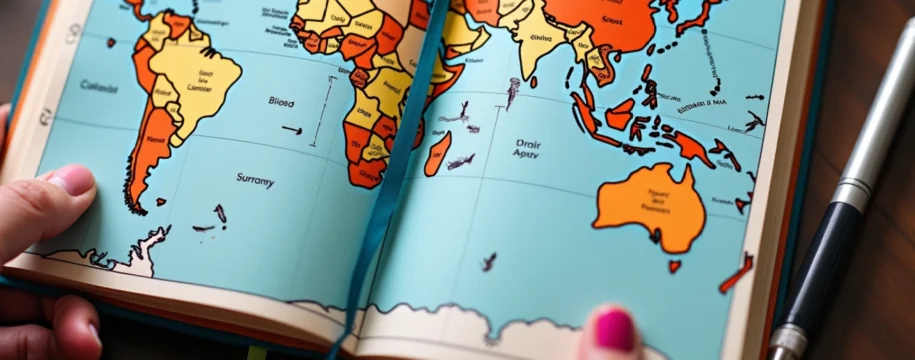
Travel experiences possess an ephemeral quality that makes them simultaneously precious and fragile. The cobblestone streets of Prague, the aromatic spice markets of Istanbul, or the ethereal aurora borealis dancing across Nordic skies – these moments deserve more than fleeting social media posts or hastily snapped photographs. Creating a comprehensive travel journal transforms fleeting experiences into permanent treasures, allowing you to revisit not just what you saw, but how you felt, what you learned, and how each destination changed your perspective on the world.
The art of travel journaling extends far beyond simple diary entries. Modern travellers have access to sophisticated methodologies that combine traditional writing with digital innovation, sensory documentation techniques, and visual storytelling approaches. Whether you’re planning a weekend city break or embarking on a months-long adventure across continents, the right journaling system can capture nuances that even the highest-resolution cameras miss – the sound of morning prayers echoing through Marrakech, the taste of authentic ramen discovered in a Tokyo alley, or the profound silence of standing alone before Machu Picchu at sunrise.
Essential travel journal formats and physical medium selection
Selecting the appropriate journal format represents the foundation of successful travel documentation. The choice between physical notebooks, digital platforms, or hybrid systems depends on your personal preferences, travel style, and the specific environments you’ll encounter during your journeys.
Moleskine classic vs leuchtturm1917 bullet journal comparison
The debate between Moleskine and Leuchtturm1917 notebooks has dominated traveller discussions for years, with each offering distinct advantages for different journaling approaches. Moleskine’s classic hardcover notebooks feature the iconic elastic closure and expandable pocket, making them ideal for storing ticket stubs, business cards, and small mementoes. The paper quality, while adequate for most pens, can experience bleeding with fountain pens or markers.
Leuchtturm1917 journals provide superior paper quality with 80gsm pages that handle various ink types without bleeding through. The pre-numbered pages and built-in index system make these notebooks particularly suitable for bullet journaling methodologies. For travellers who prefer structured organisation with rapid logging capabilities, the Leuchtturm1917’s dotted pages offer perfect flexibility for both written entries and simple sketches.
Digital platforms: day one app vs journey cloud integration
Digital journaling platforms have revolutionised how modern travellers capture and organise their experiences. Day One stands out for its seamless integration across Apple devices, offering automatic location tagging, weather data inclusion, and photo synchronisation. The app’s ability to create multiple journals allows you to separate different trips or categorise entries by themes such as food experiences, cultural observations, or personal reflections.
Journey Cloud provides cross-platform functionality that appeals to Android users and those who switch between different operating systems. Its collaborative features enable couples or travel groups to contribute to shared journals, creating comprehensive documentation from multiple perspectives. The platform’s robust search functionality makes retrieving specific memories effortless, even years after your travels.
Hybrid Scrapbook-Journal systems using traveler’s notebook inserts
The Traveler’s Notebook system offers unparalleled flexibility for creative documentation enthusiasts. This refillable leather cover accommodates multiple inserts, allowing you to combine lined pages for writing, blank pages for sketching, and kraft paper sections for adhering memorabilia. The modular approach means you can customise your setup for each destination – perhaps adding a watercolour paper insert for Mediterranean coastal sketches or including grid pages for mapping walking routes through historic city centres.
Professional travellers often create themed inserts for specific aspects of their journeys: restaurant reviews, architectural observations, or language learning notes. This compartmentalisation prevents important details from becoming lost within general daily entries whilst maintaining everything within a single, portable system.
Waterproof and Climate-Resistant paper options for extreme destinations
Extreme weather conditions demand specialised materials that can withstand humidity, rain, sand, and temperature fluctuations. Rite in the Rain notebooks utilise all-weather writing paper that performs reliably in tropical rainforests, arctic expeditions, or desert environments. The synthetic paper options resist tearing and maintain legibility even when completely soaked.
Stone paper notebooks, made from calcium carbonate, provide an eco-friendly alternative that’s naturally waterproof and tear-resistant. These journals feel remarkably similar to traditional paper whilst offering superior durability for adventure travel. For extreme conditions, consider vacuum-sealing backup pages or creating digital scans of important entries using smartphone apps designed for document preservation.
Advanced memory capture techniques and documentation methodologies
Effective travel journaling transcends basic chronological recording by implementing sophisticated capture techniques that preserve the full spectrum of travel experiences. These methodologies help transform scattered observations into coherent narratives that transport you back to specific moments years later.
Sensory mapping protocol for marrakech souks and bangkok street markets
Markets represent some of travel’s most overwhelming yet rewarding experiences, bombarding visitors with simultaneous sensory input that traditional photography cannot adequately capture. Developing a systematic sensory mapping protocol ensures you document these complex environments comprehensively.
Begin with visual observations: the interplay of shadows and sunlight filtering through market canopies, the explosion of colours from spice pyramids or textile displays, the animated gestures of vendors negotiating with customers. Document sounds systematically – the rhythmic chopping of fresh herbs, calls to prayer echoing above marketplace chatter, the sizzle of street food preparation, or the musical quality of tonal languages bargaining over prices.
Olfactory documentation proves particularly powerful for memory recall. Describe the layered aromas of cardamom, cinnamon, and turmeric in spice markets, the smoky incense wafting from nearby temples, or the complex bouquet of fresh bread, grilled meats, and tropical fruits. Tactile sensations – the smooth coolness of silk scarves, the rough texture of handwoven baskets, or the humid warmth of crowded walkways – complete your sensory documentation.
Chronological vs thematic entry organisation systems
Most novice travel journalists default to chronological organisation, creating day-by-day accounts that mirror traditional diary formats. However, thematic organisation often proves more valuable for long-term memory preservation and meaningful reflection. Consider dedicating sections to specific themes: culinary discoveries, architectural marvels, human connections, transportation adventures, or moments of personal growth.
Thematic organisation allows patterns to emerge across different destinations. Your food entries might reveal evolving taste preferences or increasing culinary adventurousness throughout your journey. Architecture observations could document your growing appreciation for specific design elements or historical periods. Human connection entries often become the most treasured sections , preserving conversations and encounters that shaped your understanding of different cultures.
The most profound travel memories often emerge from unexpected moments rather than planned activities, making flexible documentation systems essential for capturing spontaneous experiences.
Voice-to-text transcription using google keep for Real-Time capture
Immediate experience capture prevents the loss of crucial details that fade within hours of occurrence. Google Keep’s voice-to-text functionality enables real-time documentation whilst walking through destinations, sitting in cafes, or relaxing in hotel rooms. The app’s ability to transcribe multiple languages proves invaluable when documenting conversations with locals or noting foreign phrases you’ve learned.
Create a systematic approach to voice recordings: morning reflections on the previous day’s experiences, midday observations during meals or rest breaks, and evening summaries capturing overall impressions. The spontaneous nature of voice recording often produces more authentic emotional content than carefully composed written entries. Later transcription sessions provide opportunities for reflection and expansion of initial observations.
Cultural immersion documentation: language snippets and local expressions
Language represents the soul of cultural experience, yet most travellers fail to document the linguistic discoveries that enrich their journeys. Create dedicated sections for local phrases, idioms, and expressions that reveal cultural values and worldviews. Note pronunciation guides using phonetic spelling that makes sense to you personally.
Document context alongside language learning: where you heard specific phrases, who taught them to you, and the situations where they proved useful. Record amusing mistranslations or miscommunications that led to unexpected adventures. These linguistic encounters often become cherished memories that highlight the universal human desire for connection despite language barriers.
Visual storytelling integration and Mixed-Media approaches
Contemporary travel journaling benefits enormously from mixed-media approaches that combine traditional writing with visual elements, creating rich, multi-dimensional documentation that engages multiple senses and memory pathways.
Polaroid fujifilm instax mini integration techniques
Instant photography adds tangible authenticity to digital-dominated travel documentation. Fujifilm Instax Mini cameras produce credit-card-sized prints perfect for journal integration, whilst the instant development process creates shared moments with locals who often become fascinated by the retro technology. Unlike digital photos that remain trapped in devices, physical prints demand immediate integration into your narrative.
Develop systematic approaches to instant photography: capture one meaningful image per destination highlighting your primary impression, document new friendships by photographing travel companions or locals you meet, or create before-and-after sequences showing how your perspective on specific locations evolves throughout your visit. The limited number of exposures per film pack encourages thoughtful composition rather than careless snapping.
Mount Polaroids using photo corners rather than permanent adhesive, allowing future repositioning if needed. Leave space around each image for handwritten captions describing the circumstances of capture, emotional context, or subsequent developments related to the photographed moment.
Hand-drawn map creation for tuscany wine trails and scottish highlands
Personal cartography transforms abstract geographical knowledge into intimate spatial understanding. Hand-drawn maps capture subjective experiences that conventional maps cannot convey – the steep climb that left you breathless, the hidden shortcut discovered by accident, or the perfect viewpoint found through local recommendation.
Begin with basic compass orientation and major landmarks, then layer personal discoveries: recommended restaurants, scenic overlooks, interesting shops, or locations of meaningful encounters. Use symbols consistently throughout your journal to create a personal iconography: stars for exceptional views, hearts for romantic moments, or exclamation points for surprising discoveries. These personalised maps become invaluable references for future visits or recommendations to friends.
Include elevation changes, walking times between points, and difficulty assessments for hiking routes. Note seasonal variations if visiting the same area multiple times. Document alternative routes discovered during exploration, creating comprehensive navigation resources that reflect your actual experience rather than theoretical possibilities.
Ticket stub and ephemera preservation using Acid-Free adhesives
Physical mementoes provide powerful memory triggers, but improper preservation can damage both items and journal pages. Invest in acid-free adhesive products specifically designed for archival preservation. Photo mounting corners offer removable attachment options, whilst acid-free glue sticks provide permanent mounting for items you’re comfortable making part of your journal permanently.
Create systematic collection protocols during travel: dedicate specific envelope or folder for daily ephemera collection, photograph items before mounting as backup documentation, and prioritise items with unique design elements or personal significance. Museum tickets, transportation passes, restaurant receipts, and handwritten notes from locals all contribute valuable context to written entries.
The tactile quality of preserved ephemera creates powerful sensory connections that can instantly transport you back to specific moments, making these seemingly insignificant items invaluable components of comprehensive travel documentation.
Watercolour sketching fundamentals for santorini sunsets
Basic watercolour techniques can capture atmospheric qualities that photography struggles to convey, particularly for dramatic lighting conditions like Mediterranean sunsets or Nordic aurora displays. Portable watercolour sets designed for travel typically include 12-24 colours sufficient for most landscape work, whilst water brushes eliminate the need for separate water containers.
Focus on capturing mood and atmosphere rather than photorealistic detail. Document colour progressions during sunset sequences, note how architectural elements frame natural phenomena, and experiment with wet-on-wet techniques for sky work versus wet-on-dry approaches for architectural details. Include written notes about timing, weather conditions, and viewing locations to provide context for future reference.
Consider dedicating specific pages to colour mixing experiments using local pigments or unusual lighting conditions. These technical exercises often become treasured documentation of specific destinations’ unique visual qualities.
QR code integration for linking audio recordings and video content
QR codes bridge the gap between physical journals and digital content, allowing seamless integration of multimedia elements without cluttering written pages. Generate QR codes linking to cloud-stored audio recordings of local musicians, video footage of cultural performances, or voice memos capturing ambient soundscapes that define specific locations.
Create systematic filing structures for linked content: organise by date, location, or theme to enable easy retrieval years later. Include brief written descriptions alongside QR codes explaining the linked content and its significance to your journey. This hybrid approach preserves the tactile satisfaction of physical journaling whilst incorporating rich multimedia documentation that enhances long-term memory preservation.
Location-specific journaling strategies for different travel contexts
Different destinations and travel styles demand adapted journaling approaches that respect local customs whilst maximising documentation opportunities. Urban exploration requires different techniques than wilderness adventures, whilst cultural sensitivity considerations vary significantly between regions and communities.
Urban environments offer abundant opportunities for architectural documentation, street photography integration, and cultural observation, but require discretion when documenting local communities. Develop systematic approaches to city exploration that balance comprehensive documentation with respectful engagement. Focus on public spaces, architectural details, and cultural displays that welcome observation whilst being sensitive to privacy concerns in residential areas or during religious observances.
Wilderness journaling emphasises environmental observation, personal challenge documentation, and safety considerations. Include detailed weather observations, wildlife encounters, navigation notes, and equipment performance assessments. Document how natural environments affect your emotional state and perspective, noting moments of particular beauty, challenge, or revelation that define outdoor experiences.
Cultural immersion experiences require careful balance between documentation and respectful participation. Some communities welcome visitor documentation whilst others prefer privacy during traditional activities. Always seek permission before photographing people, and consider offering to share images with subjects who express interest. Focus on documenting your personal learning and emotional responses rather than treating communities as exotic subjects for observation.
Long-term preservation and archive management systems
Effective travel journal preservation ensures your documented experiences remain accessible and intact for decades to come. Professional archival techniques protect against common preservation threats including light exposure, moisture damage, chemical deterioration, and physical wear.
Store physical journals in cool, dry environments away from direct sunlight and temperature fluctuations. Archival-quality storage boxes provide protection whilst allowing easy access for regular reading. For journals containing mixed media elements, consider interleaving with acid-free tissue paper to prevent adhesive transfer or ink bleeding between pages.
Digital backup strategies prove essential even for primarily physical documentation. High-resolution scanning preserves visual elements whilst creating searchable text through OCR technology. Cloud storage with multiple backup locations protects against device failure or loss. Consider creating multiple backup formats: PDF files for easy reading, individual page images for detailed preservation, and editable text documents for content searching.
Develop consistent naming conventions for digital files that enable easy retrieval: combine date ranges, destinations, and descriptive keywords in file names. Create master indices linking physical journal page numbers to digital file names, facilitating cross-referencing between formats.
Professional travel writing techniques and narrative structure development
Advanced journaling incorporates professional writing techniques that transform personal documentation into compelling narratives worthy of sharing with others or potentially developing into published travel writing. These skills enhance personal documentation quality whilst creating opportunities for broader audience engagement.
Narrative arc development applies storytelling principles to individual entries and overall journey documentation. Structure entries with engaging opening hooks, detailed middle development, and satisfying conclusions that reflect on significance or meaning. Avoid purely chronological reporting in favour of thematic focus that highlights specific aspects of each experience.
Character development techniques apply to both self-documentation and portraits of people encountered during travel. Track your personal growth throughout journeys, noting how challenges, successes, and cultural exposures shape your worldview and capabilities. Document other travellers and locals as fully-realised individuals with unique stories rather than peripheral figures in your adventure narrative.
Sensory writing techniques create immersive reading experiences that transport readers to documented locations. Move beyond visual descriptions to incorporate sounds, smells, textures, and tastes that define specific environments. Use specific, concrete details rather than generic adjectives to create authentic atmosphere and emotional resonance.
Dialogue preservation captures the authentic voices of people encountered during travel, providing insight into local perspectives and cultural values. Note distinctive speech patterns, interesting vocabulary choices, and cultural concepts that lack direct translation. These linguistic elements often provide the most authentic cultural documentation whilst highlighting universal human connections that transcend language barriers.