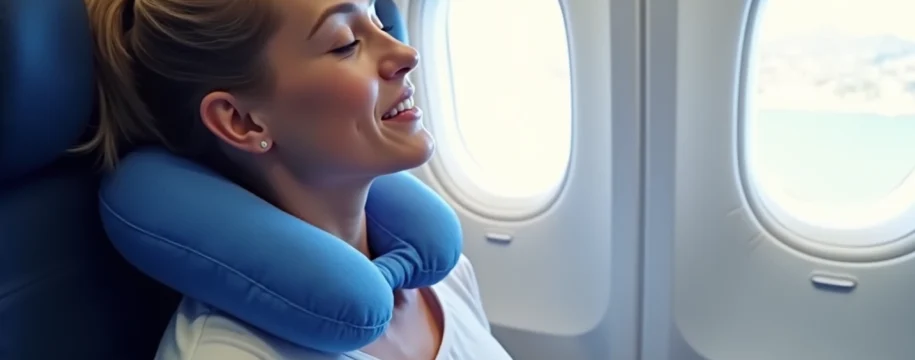
Long-haul flights present unique challenges for maintaining comfort and achieving quality rest during extended periods of confinement. The cramped quarters of aircraft cabins, combined with fixed seating positions and limited personal space, can lead to significant neck strain, muscle tension, and disrupted sleep patterns. Modern air travel demands range from 8-hour transatlantic journeys to gruelling 15-hour Pacific crossings, making the selection of an appropriate travel pillow a critical factor in passenger wellbeing. The aviation industry has witnessed remarkable innovations in travel comfort accessories, with manufacturers developing sophisticated solutions that address the complex biomechanical requirements of seated sleep. Understanding the intricate relationship between human anatomy, aircraft seating configurations, and pillow design technology becomes essential for frequent travellers seeking to minimise discomfort and maximise rest quality during their journeys.
Ergonomic design principles for Long-Haul flight comfort
The foundation of effective travel pillow design rests upon fundamental ergonomic principles that address the unique challenges posed by aircraft seating environments. Modern commercial aircraft seats, particularly in economy class, typically feature seat backs angled between 98 and 105 degrees, creating an unnatural positioning for the human spine during rest periods. This configuration forces the cervical spine into compromised positions that can lead to muscle strain, nerve compression, and circulatory restrictions over extended periods.
Cervical spine alignment during extended reclined positioning
Maintaining proper cervical spine alignment during flight requires understanding the natural curvature of the neck and how traditional aircraft seating disrupts this positioning. The human cervical spine maintains a lordotic curve of approximately 20-40 degrees under normal circumstances, but aircraft seats often force this curve to flatten or reverse. Quality travel pillows must compensate for this disruption by providing targeted support that maintains the natural cervical lordosis even in constrained seating environments.
Research indicates that improper neck positioning during extended periods can lead to muscle fatigue within 30-45 minutes, progressing to pain and stiffness that may persist for days after travel. The most effective pillow designs incorporate anatomically-shaped supports that cradle the suboccipital region while providing lateral stability to prevent excessive head movement during turbulence or passenger repositioning.
Memory foam density classifications and pressure point distribution
Memory foam technology has revolutionised travel pillow construction through its ability to conform to individual anatomical variations while maintaining structural integrity. Professional-grade memory foam utilises density measurements ranging from 2.5 to 5.5 pounds per cubic foot, with optimal travel applications typically requiring densities between 3.5 and 4.5 pounds per cubic foot. This density range provides sufficient support to maintain cervical alignment while offering enough conformability to accommodate varying head and neck sizes.
The viscoelastic properties of high-quality memory foam respond to body temperature and pressure, creating custom-fitted support that distributes weight evenly across contact surfaces. This pressure distribution capability becomes particularly important during long flights, where prolonged pressure on specific anatomical points can lead to discomfort, numbness, and circulatory restrictions. Premium travel pillows incorporate temperature-neutral foam formulations that maintain consistent performance across the wide temperature variations common in aircraft cabins.
Anthropometric measurements for optimal neck support geometry
Effective pillow design must accommodate the wide range of human anatomical variations found in the travelling population. Anthropometric studies reveal that adult neck circumferences range from 28-48 centimetres, while the distance from the base of the skull to the shoulders varies between 10-18 centimetres. These measurements directly influence the geometric requirements for effective neck support systems.
The most successful travel pillow designs incorporate adjustable elements that accommodate this anatomical diversity. Variable-height side supports, adjustable securing mechanisms, and modular construction allow individual users to customise their pillow configuration for optimal comfort. Advanced ergonomic designs also consider the relationship between shoulder width and neck positioning, ensuring that pillow geometry complements rather than conflicts with natural body mechanics during rest.
Sleep phase compatibility with aircraft seat configurations
Human sleep architecture consists of distinct phases that require different types of physical support for optimal quality. Light sleep phases allow for some conscious positioning adjustment, while deeper sleep stages involve involuntary muscle relaxation that increases the risk of head and neck displacement. Travel pillows must provide adequate support across all sleep phases while accommodating the limited reclining capability of most aircraft seats.
The transition between sleep phases often involves subtle repositioning movements that can compromise neck alignment if adequate support isn’t maintained. Effective pillow designs incorporate wraparound or 360-degree support systems that maintain alignment regardless of minor positional shifts. This comprehensive support approach becomes particularly crucial during the deeper sleep phases when natural protective reflexes are diminished.
Travel pillow construction materials and durability standards
The demanding environment of air travel places unique stresses on pillow materials and construction methods. Cabin air pressure variations, temperature fluctuations, and handling requirements during transit create challenges that domestic bedding rarely encounters. Understanding these environmental factors helps inform material selection and construction methodology for travel-specific applications. Professional travel pillows must maintain their structural integrity and comfort properties through hundreds of compression cycles while resisting the degradation effects of varying atmospheric conditions.
Shredded memory foam versus solid foam core performance
The choice between shredded memory foam and solid foam cores represents a fundamental design decision that significantly impacts pillow performance characteristics. Solid foam cores provide consistent support geometry and maintain their shape more effectively over extended use periods. However, they offer limited adjustability and may not accommodate individual anatomical variations as effectively as alternative constructions.
Shredded memory foam construction allows for greater conformability and user customisation through foam redistribution within the pillow chamber. This design approach enables users to adjust support characteristics by manipulating foam concentration in specific areas. Shredded foam designs also provide superior breathability due to increased air circulation paths, though they may experience more significant compression over time compared to solid foam alternatives.
Microfiber fill technology and compression recovery rates
Advanced microfiber technologies offer lightweight alternatives to traditional foam constructions while maintaining excellent support characteristics. High-performance microfiber fills utilise synthetic fibres with diameters measured in micrometers, creating dense yet breathable support matrices. These materials excel in applications requiring frequent compression and expansion cycles, such as inflatable pillow systems or hybrid constructions.
Compression recovery rates become critical factors in travel applications where pillows must return to their original shape after prolonged compression during packing. Quality microfiber fills demonstrate recovery rates exceeding 95% within minutes of decompression, ensuring consistent performance throughout extended travel periods. The resilience of these materials also contributes to long-term durability, with premium microfiber fills maintaining their loft characteristics through thousands of compression cycles.
Hypoallergenic fabric treatments for sensitive skin conditions
Aircraft cabin environments present unique challenges for individuals with sensitive skin or allergic conditions. Recycled cabin air, varying humidity levels, and prolonged contact with pillow surfaces can exacerbate existing skin sensitivities. Professional travel pillows incorporate hypoallergenic fabric treatments and materials specifically selected to minimise allergic reactions and skin irritation during extended contact periods.
Modern hypoallergenic treatments include antimicrobial coatings, dust mite barriers, and chemical-free fabric processing methods. These treatments must maintain their effectiveness through multiple washing cycles while preserving the tactile qualities that contribute to user comfort. Advanced fabric technologies also incorporate moisture-wicking properties that help regulate skin temperature and reduce the accumulation of perspiration that can contribute to bacterial growth.
Machine washability requirements for international travel hygiene
International travel exposes pillow materials to diverse environmental conditions and potential contaminants that make regular cleaning essential for hygiene maintenance. Machine washability requirements must balance cleaning effectiveness with material preservation to ensure long-term pillow performance. Professional-grade travel pillows incorporate removable, washable covers while ensuring that internal support materials can withstand periodic cleaning when necessary.
Washing temperature requirements vary by material type, with most travel pillow fabrics requiring temperatures between 30-60 degrees Celsius for effective sanitisation. The selection of dyes, finishes, and fabric constructions must consider these temperature requirements to prevent degradation, colour loss, or dimensional changes during cleaning cycles.
Inflatable travel pillow technologies and valve systems
Inflatable pillow technologies represent a sophisticated approach to travel comfort that addresses the critical constraints of luggage space and weight restrictions. Modern inflatable systems utilise advanced materials and valve technologies that deliver support characteristics comparable to traditional foam constructions while collapsing to minimal packed dimensions. The engineering challenges inherent in inflatable design require careful consideration of material selection, seam construction, and valve performance to ensure reliability throughout extended use periods.
Contemporary inflatable pillows incorporate multi-chamber designs that provide graduated support characteristics across different anatomical regions. These systems allow for independent pressure adjustment in various zones, enabling users to customise support levels for optimal comfort. The integration of non-stretch fabrics with strategic elastic panels creates hybrid constructions that combine the packability of inflatable designs with the stability of traditional pillow forms.
Valve technology has evolved significantly beyond simple screw-type closures to include one-way inflation valves, rapid-deflation systems, and pressure relief mechanisms. Professional inflatable pillows often feature dual-valve systems that enable quick inflation through large-diameter valves while providing fine pressure adjustment through smaller precision valves. These systems must maintain airtight seals across wide temperature and pressure variations while remaining operable with minimal user effort.
The material science behind modern inflatable pillows involves sophisticated laminated constructions that combine puncture resistance with flexibility and comfort. Thermoplastic polyurethane films bonded to textile substrates provide the necessary barrier properties while maintaining tactile qualities suitable for direct skin contact. Surface textures and coatings contribute to grip characteristics that prevent pillow migration during sleep while adding to user comfort through enhanced tactile feedback.
The most successful inflatable travel pillow designs achieve pack sizes smaller than 200 cubic centimetres while providing support surfaces exceeding 400 square centimetres when deployed, representing compression ratios that exceed traditional pillow technologies by factors of ten or more.
Brand-specific analysis: trtl, cabeau evolution, and Tempur-Pedic comparisons
The travel pillow market has witnessed the emergence of several innovative brands that have developed distinctive approaches to addressing the challenges of aircraft comfort. These manufacturers have invested heavily in research and development to create products that differentiate themselves through unique design philosophies, proprietary technologies, and specific user experience optimisations. Understanding the technical approaches employed by leading brands provides valuable insight into the evolving landscape of travel comfort solutions.
Trtl pillow scarf design patent and lateral support mechanics
The Trtl pillow represents a radical departure from traditional U-shaped travel pillow designs through its innovative scarf-based support system. This design incorporates a rigid internal support structure wrapped in a soft fleece covering that encircles the neck like a traditional scarf. The patented design addresses the common limitation of traditional pillows that allow the head to fall forward by providing targeted lateral support that maintains head positioning during sleep.
The internal support mechanism utilises a curved plastic framework that positions against one side of the neck and chin, creating a stable platform for lateral head rest. This asymmetric support approach recognises that most individuals favour sleeping on one side and optimises the pillow design for this preferred position. The Trtl system weighs approximately 150 grams and compresses to dimensions suitable for carry-on luggage while providing support characteristics that rival much larger traditional pillows.
Cabeau evolution S3 360-degree head support engineering
Cabeau’s Evolution S3 pillow employs a comprehensive support philosophy that provides 360-degree head and neck stabilisation through memory foam construction and adjustable securing mechanisms. The design incorporates raised side supports that cradle the head while maintaining an open front section that accommodates natural breathing patterns. The pillow’s memory foam core utilises medium-density formulations that provide firm support while conforming to individual head shapes.
The Evolution S3’s distinguishing feature lies in its adjustable chin strap system that prevents forward head movement while maintaining user comfort. This mechanism addresses one of the primary limitations of U-shaped pillows by providing active restraint against gravitational forces that typically cause head dropping during sleep. The securing system incorporates quick-release mechanisms that allow rapid adjustment without complete pillow removal, facilitating position changes during extended flights.
Tempur-pedic transit pillow proprietary foam composition
Tempur-Pedic’s entry into the travel pillow market leverages the company’s extensive experience with memory foam technology developed for mattress applications. The Transit pillow incorporates proprietary foam formulations that utilise the company’s temperature-responsive viscoelastic materials adapted for travel-specific requirements. These materials maintain their support characteristics across the wide temperature ranges encountered in aircraft cabins while providing the pressure relief properties associated with Tempur-Pedic’s bedding products.
The foam composition incorporates open-cell structures that enhance breathability while maintaining the slow-recovery characteristics that define high-quality memory foam. This balance between support and comfort addresses the prolonged contact periods common in travel applications where traditional memory foam might retain excessive heat. Tempur-Pedic’s approach emphasises material consistency and long-term durability, targeting frequent travellers who require reliable performance across hundreds of use cycles.
J-pillow wraparound design for Multi-Positional sleep support
The J-Pillow design addresses the multi-directional nature of sleep positioning through its distinctive wraparound configuration that provides support for forward, lateral, and chin-down sleeping positions. This innovative approach recognises that travellers often shift between multiple positions during extended flights and provides comprehensive support for these varied requirements. The pillow’s J-shaped profile cradles the head while extending forward to provide chin support, creating a cocoon-like environment that maintains comfort regardless of head positioning.
The construction utilises polyester fibre fill that provides consistent support characteristics while maintaining shape recovery after compression. The pillow’s asymmetric design accommodates both window-seat leaning and upright sleeping positions, making it particularly suitable for passengers who cannot predict their seating arrangements in advance. The J-Pillow system incorporates attachment points that secure the pillow to clothing or seat components, preventing migration during sleep and maintaining optimal positioning throughout the flight.
Airline-specific seat compatibility and regulatory compliance
The diverse landscape of airline seating configurations creates complex compatibility requirements for travel pillow design and selection. Different aircraft manufacturers, airline specifications, and cabin class configurations result in significant variations in seat dimensions, headrest designs, and available space for comfort accessories. Understanding these variations becomes essential for selecting pillows that will perform effectively across different airlines and aircraft types that travellers may encounter during their journeys.
Economy class seats from major manufacturers like Boeing and Airbus typically feature seat pitches ranging from 28-34 inches, with seat widths between 17-18 inches. These constrained dimensions significantly impact pillow effectiveness, particularly for designs that require additional space for proper positioning. Premium economy and business class configurations provide additional space that can accommodate larger pillow designs, but also introduce different support requirements due to increased seat recline capabilities and varied headrest designs.
Regulatory compliance considerations encompass both aviation safety requirements and international transport regulations that affect pillow design and usage. Aviation authorities require that all passenger items remain secured during takeoff, landing, and turbulence periods, influencing pillow attachment mechanisms and storage requirements. Compliance considerations also extend to material flammability standards that dictate fabric selection and chemical treatments applied to pillow components.
The integration of travel pillows with airline-provided amenities requires consideration of blanket compatibility, headrest interactions, and entertainment system accessibility. Many modern aircraft incorporate adjustable headrest wings that can conflict with certain pillow designs, while seatback entertainment systems may limit the positioning options for larger pillow configurations. Understanding these interactions helps inform pillow selection based on anticipated airline and aircraft types for specific travel itineraries.
Recent studies indicate that seat-pillow compatibility issues affect passenger comfort satisfaction ratings by up to 40%, highlighting the importance of selecting pillows that complement rather than conflict with airline seating systems.
Medical considerations for Long-Distance aviation travel
Extended air travel presents specific medical challenges that proper pillow selection can help mitigate, particularly regarding circulatory health, musculoskeletal comfort, and sleep quality maintenance. The combination of reduced cabin pressure, limited mobility, and constrained positioning creates conditions that can exacerbate existing health conditions or contribute to new discomfort issues. Medical-grade travel pillows incorporate design features that address these physiological challenges while maintaining the comfort characteristics essential for quality rest during flight.
Circulatory considerations become particularly important during flights exce
eding 8 hours in duration, as prolonged immobility can contribute to blood pooling in the lower extremities and increase the risk of deep vein thrombosis. Proper neck positioning facilitated by quality pillow support helps maintain optimal positioning for lymphatic drainage and reduces the risk of cervical muscle spasm that can impede circulation to the head and neck region.
Individuals with pre-existing cervical spine conditions, including herniated discs, cervical stenosis, or previous neck injuries, require specialized consideration when selecting travel pillows. These conditions often involve compromised spinal stability or nerve compression that can be exacerbated by improper positioning during extended travel periods. Medical-grade support systems incorporate firmer support materials and more precise anatomical contouring to maintain therapeutic positioning throughout the flight duration.
Sleep quality maintenance during long-haul flights requires consideration of circadian rhythm disruption and its impact on recovery processes. Quality sleep during travel depends not only on physical comfort but also on the pillow’s ability to create a sense of familiarity and security that promotes relaxation. Research indicates that maintaining consistent sleep positioning, facilitated by appropriate pillow support, can help minimize jet lag effects and improve adaptation to new time zones.
The relationship between proper neck support and overall spinal alignment extends beyond immediate comfort to influence long-term musculoskeletal health. Poor positioning during extended flights can contribute to muscle imbalances, trigger point development, and chronic pain patterns that may persist long after travel completion. Preventive pillow selection should consider not only immediate comfort requirements but also the long-term implications of repeated exposure to suboptimal positioning during frequent travel.
Medical professionals recommend that passengers with chronic neck pain or previous cervical injuries consult with their healthcare providers before selecting travel pillows, as individual anatomical variations and specific medical conditions may require customized support solutions beyond standard commercial offerings.
The integration of travel pillows with other comfort measures, including compression garments, seat cushions, and positioning aids, creates comprehensive comfort systems that address multiple aspects of travel-related health challenges. This holistic approach recognizes that effective travel comfort extends beyond isolated support elements to encompass the complex interactions between various physiological systems affected by extended air travel. Understanding these medical considerations enables informed decision-making that prioritizes both immediate comfort and long-term health outcomes during aviation travel.