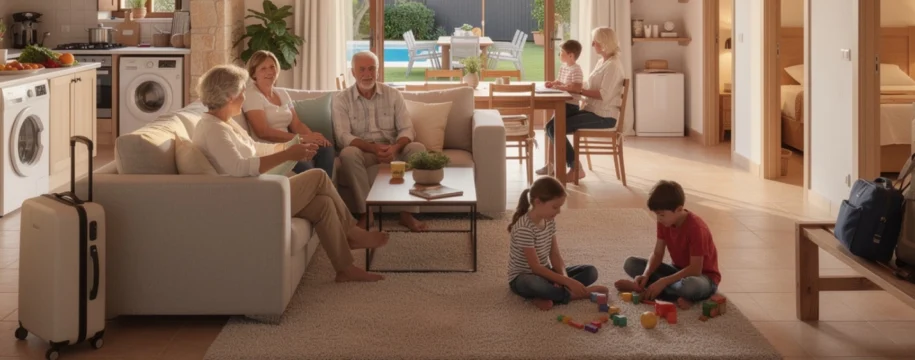
Family holidays have evolved dramatically over the past decade, with travellers increasingly seeking accommodation that provides genuine comfort rather than cramped compromise. The shift towards seasonal rentals reflects a fundamental change in how families approach travel—prioritising space, flexibility, and authentic living arrangements over traditional hospitality models. For multi-generational groups or families with children of varying ages, the constraints of standard hotel rooms quickly become apparent: limited storage, confined living areas, and the constant juggling of schedules around shared facilities.
Seasonal rentals address these limitations by offering purpose-built or adapted spaces designed for extended family living rather than overnight accommodation. Whether you’re planning a week-long summer escape to the Mediterranean coast or a fortnight exploring rural Britain, the spatial advantages of private rental properties fundamentally transform the holiday experience. The question isn’t simply about having more square metres—it’s about how that space is configured, what amenities it includes, and how effectively it accommodates the complex dynamics of family travel.
Multi-bedroom configurations in holiday lettings versus standard hotel suites
The architectural layout of seasonal rentals provides a stark contrast to conventional hotel accommodation, particularly when examining bedroom distribution and privacy arrangements. Hotel suites, even premium offerings, typically follow a standardised template: one or two bedrooms with limited scope for customisation. This model works adequately for couples or small nuclear families but quickly becomes problematic when grandparents, teenagers, or multiple sibling groups need accommodation under one booking.
Separate sleeping quarters for parents and children in Self-Catering properties
Self-catering properties excel in providing distinct sleeping zones that respect the different needs and schedules of various family members. Parents travelling with young children benefit enormously from separate bedrooms that allow early bedtimes without confining adults to darkened rooms for the remainder of the evening. In contrast, hotel accommodation often forces families into awkward compromises—either booking multiple rooms at considerable expense or enduring disrupted sleep patterns throughout the holiday.
The practical advantages extend beyond mere convenience. Separate sleeping quarters in holiday lettings enable parents to maintain some semblance of their pre-children evening routines whilst ensuring youngsters receive adequate rest. Properties with three, four, or even five bedrooms allow for thoughtful allocation: perhaps one room for parents, individual rooms for older children who value privacy, and shared accommodation for younger siblings who prefer companionship. This flexibility simply doesn’t exist within the rigid framework of traditional hospitality.
Private bedroom allocation in coastal villas along the algarve and costa del sol
Mediterranean coastal properties demonstrate particularly impressive bedroom configurations, with many purpose-built villas offering en-suite facilities for each sleeping quarter. Along Portugal’s Algarve coastline and Spain’s Costa del Sol, rental properties frequently feature four to six bedrooms, each with private bathrooms—a specification that eliminates morning congestion and reduces family friction considerably. The design philosophy behind these properties acknowledges that successful family holidays require both togetherness and retreat spaces.
Property developers in these regions have recognised that British, German, and Scandinavian families—their primary markets—expect generous sleeping arrangements when investing in week-long or fortnight bookings. The resulting architectural standards far exceed what families would encounter in even upscale resort hotels, where bathroom sharing remains commonplace and bedroom privacy often requires booking separate accommodation at exponentially higher costs.
Interconnecting room limitations in traditional hospitality accommodation
Hotels market interconnecting rooms as a family-friendly solution, yet this arrangement presents significant drawbacks that become apparent within hours of check-in. Sound transmission between rooms rarely meets the expectations of marketing materials, with parents frequently disturbed by children’s early wakings or teenagers kept awake by adult conversations. The pseudo-privacy of interconnecting rooms satisfies neither demographic adequately, creating an uncomfortable middle ground that compromises everyone’s rest quality.
Furthermore, interconnecting room availability remains subject to hotel occupancy levels and booking circumstances. Families arriving to discover their “guaranteed” interconnecting rooms have been allocated on separate floors or corridor sections face immediate holiday disruption. Seasonal rentals eliminate this uncertainty entirely—the bedroom configuration you view during booking remains exactly as presented, with no last-minute substitutions or disappointing surprises upon arrival.
Dorm
Dormitory-style sleeping arrangements in alpine chalets and lakeside lodges
Dormitory-style bedrooms are another way that seasonal rentals create more space for family trips, particularly in alpine chalets and lakeside lodges. Instead of squeezing extra camp beds into a hotel room, you often find thoughtfully designed bunk rooms with four, six, or even eight beds, configured specifically for cousins, siblings, or youth groups. This approach consolidates sleeping space for children and teenagers, freeing up additional double or twin rooms for parents and grandparents who may prefer quieter quarters.
In ski destinations across the Alps and family-focused lakeside resorts in Austria, Switzerland, and northern Italy, these bunk rooms typically integrate built-in storage, reading lights, and sometimes en-suite shower rooms. That means you can settle kids into a dedicated “sleep and play” zone while adults maintain more peaceful sleeping environments elsewhere in the property. For large family reunions, this dormitory-style configuration in seasonal rentals is far more practical than booking an entire hotel floor and trying to keep everyone together across multiple doorways and corridors.
From a value perspective, dorm-style rooms are an efficient way to accommodate bigger numbers without compromising comfort. Rather than paying for individual hotel beds charged per person, you gain access to an integrated sleeping solution under one roof where socialising continues long after the slopes or lakeside activities end. Crucially, you retain a clear separation between communal daytime living spaces and sleeping quarters, something that standard hotel layouts rarely achieve for large family parties.
Living space footprint analysis: serviced apartments against premium hotel rooms
Beyond bedroom count, one of the most tangible advantages of seasonal rentals for family travel is the overall living space footprint. Where a premium hotel room might offer 25 to 40 square metres including a compact bathroom, an equivalently priced serviced apartment or entire home rental can easily double or triple that area. For families who value space to unpack, relax, and simply be together, this difference changes the entire rhythm of a holiday.
Serviced apartments and self-contained rentals combine residential-style floor plans with the flexibility travellers expect from holiday accommodation. You gain access to separate living rooms, dining areas, and kitchen facilities, as well as corridors, hallways, and storage zones that don’t exist in standard hotel layouts. The result is a property that behaves much more like a home, allowing children to nap undisturbed, teenagers to retreat to quiet corners, and adults to enjoy grown-up evenings without disturbing sleeping little ones.
Square metre comparisons between airbnb entire homes and boutique hotels
When you compare the square metre allowance of an Airbnb entire home with that of a boutique hotel room, the imbalance becomes obvious. A family suite in a city-centre boutique hotel might provide 35 square metres at a premium nightly rate, whereas a two- or three-bedroom serviced apartment in a similar location could offer 70–100 square metres for a comparable or even lower price. On a cost-per-square-metre basis, seasonal rentals frequently deliver far better value for families.
Industry data from European urban markets consistently shows that apartments and entire homes list with significantly larger footprints than hotel equivalents in the same postcode. This extra space is not just empty floor: it often includes full-size dining tables, sofas, and workspaces that make extended stays more comfortable. For remote workers or teenagers studying during term-time breaks, having an actual desk or dining table to use, rather than balancing laptops on beds, can make stays more productive and less stressful.
From a practical standpoint, more space also means easier organisation for multi-generational groups. Suitcases can be stored out of sight, pushchairs parked in hallways, and sports equipment such as skis, bikes, or surfboards housed without blocking circulation. For families used to living in full-sized homes, this difference in usable area between short-term rentals and hotels often feels as stark as the difference between a studio flat and a family house.
Open-plan kitchen-dining areas in cornwall cottages and scottish highlands retreats
Open-plan kitchen-dining spaces are one of the defining features of modern family-oriented seasonal rentals, particularly in coastal cottages across Cornwall and remote retreats in the Scottish Highlands. Instead of eating perched on the edge of a hotel bed or booking restaurant tables for every meal, you benefit from a central hub where cooking, conversation, and play naturally blend. This “great room” layout mirrors contemporary home design and instantly feels more intuitive for families.
In Cornish holiday cottages, it’s common to find generous farmhouse tables, breakfast bars, and fully equipped kitchens in a single interconnected space. Children can colour or play board games while you prepare meals, and grandparents can sit with a cup of tea, enjoying the view, without feeling banished to a separate lounge. Highland properties often add wood-burning stoves and panoramic windows, extending the sense of space and offering a cosy yet expansive setting for evening gatherings after days exploring lochs and glens.
For families managing dietary requirements, fussy eaters, or early-rising toddlers, these open-plan kitchen-dining areas provide invaluable flexibility. You can serve meals to suit your own schedule, manage snacks, and accommodate multiple mealtimes without the cost and logistical challenges of hotel restaurants. It transforms the holiday from a sequence of reservations into a more relaxed, home-like experience that still feels special.
Dedicated lounge zones in tuscany farmhouses and provence country estates
Where hotels typically offer a single multi-purpose room, seasonal rentals in regions such as Tuscany and Provence often feature several dedicated lounge zones. In a converted Tuscan farmhouse, you might find a formal sitting room with views over the vineyards, a snug or TV room for film nights, and a covered loggia or veranda for evening aperitifs. This zoning allows different generations to enjoy parallel activities without competing for the same sofa or screen.
Provence country estates frequently include reading rooms, library corners, or mezzanine lounges that act as quiet retreats away from the main social spaces. For parents travelling with teenagers, this can be transformative: young adults gain a sense of independence and personal territory, while still remaining safely within the property boundary. Similarly, grandparents who need to rest during the day can do so in comfortable lounges far removed from the energetic noise of children’s play.
Dedicated lounge areas also support more intentional holiday routines. Mornings might begin with coffee in a sunlit sitting room, afternoons spent in a cooler TV lounge during the hottest hours, and evenings moved outdoors under pergolas or terraces. This kind of fluid, multi-zone living is impossible in even the largest hotel suite, where seating is limited and socialising inevitably takes place on or around the bed.
Outdoor terrace and garden access in mediterranean rental properties
One of the most pronounced spatial advantages of Mediterranean seasonal rentals is direct access to private outdoor terraces and gardens. In coastal Spain, Italy, Greece, and southern France, villas and apartments frequently include generous balconies, roof terraces, or enclosed courtyards that act as open-air extensions of the living room. For families, this effectively doubles usable space during warm months, creating safe areas for children to play and adults to relax.
Unlike hotel balconies—often narrow, overlooked, and unsuitable for anything beyond two chairs—private terraces in holiday rentals allow for full outdoor dining setups, lounge seating, and sometimes even outdoor kitchens or barbecues. Garden areas can accommodate paddling pools, ball games, and shaded reading spots, giving children freedom to move without leaving the property. This is particularly valuable for parents seeking a balance between giving kids independence and maintaining an eye on safety.
From an experiential standpoint, having your own outdoor space makes a holiday feel less like a series of departures and returns and more like continuous, relaxed living. You can step outside with a morning coffee, hang wetsuits or swimwear to dry, or enjoy late-night conversations under the stars, all without navigating hotel corridors or communal areas. For many families, this blend of indoor and outdoor private space is the defining reason to choose seasonal rentals over conventional accommodation.
Purpose-built family amenities in private rental accommodation
Space alone does not guarantee a successful family holiday; what matters just as much is how that space is equipped. Purpose-built family amenities are where seasonal rentals truly distinguish themselves from hotel rooms and even many serviced apartments. From full-size kitchens and laundry rooms to play areas, pools, and multiple bathrooms, these features are designed around everyday family life rather than transient overnight stays.
As demand for family-friendly seasonal rentals has increased, owners and operators have responded by upgrading properties with facilities that anticipate the needs of guests travelling with children and extended family groups. The result is a new generation of rental accommodation that feels not only more spacious than hotels, but also more functional for real-world family routines. This can mean the difference between a holiday that feels stressful and one that feels genuinely restorative.
Full-size kitchen facilities with dishwashers and washing machines
For family trips, having a full-size kitchen is less of a luxury and more of a necessity. Seasonal rentals routinely provide ovens, hobs, full-height fridges, freezers, dishwashers, and ample worktop space—equipment that simply does not fit into the footprint of a standard hotel room or even many suites. This allows you to cook proper meals, store bulk groceries, and cater to special diets without relying on room service or restaurant availability.
Dishwashers and washing machines are especially valuable for longer stays. Instead of accumulating piles of plates or packing excessive clothing, you can run a daily wash cycle and travel lighter. Parents of young children, in particular, appreciate the ability to deal immediately with spills, beachwear, and muddy clothes, rather than transporting everything home unwashed. It is the difference between treating your rental as an actual temporary home and feeling confined to a basic kitchenette.
From a cost perspective, full kitchen facilities can significantly reduce holiday expenditure. Preparing breakfasts, picnics, and some evening meals at “home” dramatically lowers reliance on restaurants, especially in high-season destinations where prices rise. Over a two-week stay, the savings from self-catering in a well-equipped kitchen can offset a substantial portion of the rental fee itself, all while giving you healthier and more flexible dining options.
Children’s play areas in lake district manor houses and cotswolds barn conversions
In rural UK destinations such as the Lake District and the Cotswolds, many larger seasonal rentals have invested in dedicated children’s play areas. In a converted barn or manor house, you might find a games room stocked with table football, pool tables, and board games, or an attic space transformed into a den with beanbags and consoles. These zones act as safety valves for energy and noise, giving children somewhere to play while adults enjoy quieter spaces elsewhere.
Outdoor play equipment is also common: swings, climbing frames, trampolines, and even small football pitches appear in the grounds of family-focused properties. This kind of onsite entertainment reduces pressure to plan constant excursions and provides an easy answer to the inevitable “What shall we do now?” question. For parents of younger children, the ability to let kids play in a fenced garden or dedicated play barn while remaining within line of sight can be invaluable.
Compared with hotels, where play spaces are often limited to a modest indoor kids’ club or shared playground, private rentals deliver exclusivity as well as space. Your children do not have to compete with dozens of other young guests for equipment or supervision, and you can adapt play times to suit your own schedule. The result is a more relaxed rhythm to the day, with less time spent negotiating queues or crowded communal zones.
Private swimming pools in balearic islands and greek islands holiday homes
Private pools are among the most sought-after amenities in family-oriented seasonal rentals, particularly in sun-soaked destinations such as the Balearic Islands and the Greek Islands. Having exclusive access to a swimming pool transforms how you use your holiday space: instead of planning around hotel pool opening hours or racing to reserve loungers, you can swim, sunbathe, and play in the water whenever it suits you.
From a spatial perspective, a private pool and surrounding terrace effectively create an additional outdoor living room. Children can move between the house and the water without passing through communal areas, and you can supervise from shaded seating or a nearby kitchen. Many villas in Mallorca, Ibiza, Crete, and Rhodes include shallow sections or separate children’s pools, as well as safety features such as gated access or alarms—important considerations for families with non-swimmers.
There is also a psychological benefit to this kind of private amenity. A pool that belongs solely to your group becomes a natural focal point for the holiday, encouraging shared activities rather than fragmented days. Morning laps, afternoon games, and evening dips all take place in a setting that feels like your own, rather than a crowded resort environment. For extended families who may not see each other often, these shared poolside moments often become the highlight of the trip.
Multiple bathroom configurations reducing morning congestion
Anyone who has tried to get a family of five ready in a single hotel bathroom understands the value of multiple bathrooms. Seasonal rentals, especially larger villas and houses, typically feature at least one bathroom per couple and often additional shower rooms or WCs. This configuration drastically reduces morning congestion and pre-dinner queues, making shared schedules—such as early excursions or restaurant reservations—much easier to manage.
In many modern villas and renovated farmhouses, en-suite bathrooms are attached to most bedrooms, giving adults and older teenagers a level of privacy that hotels rarely match without booking separate rooms. Family bathrooms with bathtubs cater for younger children, while walk-in showers speed up routines for everyone else. The net effect is a reduction in domestic friction: fewer arguments about whose turn it is, less waiting around, and more time actually enjoying your destination.
Multiple bathrooms also enhance comfort during longer stays. If one family member is unwell, they can use their own facilities without disrupting others. Similarly, guests with mobility challenges can often be allocated ground-floor bedrooms with accessible shower rooms. This kind of spatial flexibility supports multi-generational travel in a way that standardised hotel floor plans seldom achieve.
Cost-per-square-metre efficiency for extended family groups
While the spatial advantages of seasonal rentals are clear, many families still ask a practical question: does all this extra room actually cost more? When you analyse accommodation in terms of cost per square metre and per person, seasonal rentals frequently offer superior value, especially for extended family groups or multi-family holidays. Instead of paying per room or per bed, you are effectively investing in a whole property that can spread costs across several households.
This economic efficiency becomes particularly apparent when comparing popular family destinations where hotel prices surge during school holidays. A four-bedroom villa or townhouse might initially appear expensive when viewed as a single nightly rate, but once you divide that figure among eight or ten guests, the per-person cost can drop below that of basic hotel rooms—while still providing significantly more space and amenities.
Nightly rate comparison between four-bedroom villas and multiple hotel rooms
Consider a typical Mediterranean resort town in peak summer season. A mid-range hotel might charge a family £250–£300 per night for a room that sleeps four, with limited living space. Two such rooms for an extended family quickly reach £500–£600 per night, not including meals or extras. By contrast, a four-bedroom villa with a pool in the same area might list at £700–£800 per night, yet comfortably accommodate eight to ten guests with full self-catering facilities.
When split across four adults and several children, that villa’s nightly rate often works out at £80–£120 per adult, with children effectively adding minimal incremental cost. Moreover, the villa provides separate bedrooms, multiple bathrooms, living rooms, and outdoor spaces that two hotel rooms can never match. The real cost of the hotel option increases further when you factor in restaurant dining, resort fees, and charges for parking, Wi-Fi, or pool facilities.
For families planning special occasions—such as milestone birthdays, anniversaries, or reunions—the ability to consolidate everyone under one roof dramatically improves both budget management and logistics. Instead of juggling multiple bookings, currencies, and cancellation policies, you handle a single rental contract and divide costs internally as you see fit.
Per-person accommodation costs in booking.com and vrbo rental properties
Online platforms such as Booking.com and Vrbo make it easier than ever to calculate per-person accommodation costs for seasonal rentals. Many listings clearly state maximum occupancy, bedroom count, and total floor area, allowing you to estimate not just nightly rates but also cost per guest and cost per square metre. When you apply this lens, the value proposition of family-sized rentals compared with hotels becomes particularly compelling.
For example, a three-bedroom apartment sleeping six in a European city might cost £300 per night on Vrbo, translating to £50 per person if all beds are used. A centrally located hotel offering triple rooms at £180 per night would charge £60 per person—yet provide far less space and no kitchen or living room. Once you add the savings from self-catering and reduced ancillary fees, the gap widens further in favour of the rental property.
This per-person approach also helps families decide whether to upgrade. Spending an additional £50 per night on a larger villa that accommodates extra relatives or friends can reduce overall costs by bringing more contributors into the budget. In contrast, moving up a hotel category generally increases the price for each individual room without improving total space or flexibility.
Long-stay discounts on weekly rentals in normandy and brittany regions
In traditional holiday regions such as Normandy and Brittany, weekly and fortnightly rentals remain the norm, and many owners offer substantial discounts for longer stays. Rather than charging rigid nightly rates, seasonal rentals in these areas often feature step-down pricing that rewards guests who book full weeks or multiple weeks. For families, this not only reduces the effective nightly cost but also encourages slower, more immersive travel.
A gîte in rural Normandy might list at €1,200 for a week in high season—a figure that initially seems high compared with a single hotel night. Yet spread across seven nights and a family of six, the cost per person per night falls to under €30, often including large gardens, barbecues, and proximity to beaches or historic towns. For a fortnight, owners may apply a further percentage discount, recognising the reduced turnover and cleaning workload.
Long-stay discounts align neatly with the needs of families taking extended summer breaks or combining remote work with travel. Instead of moving between several hotels and repacking every few days, you can unpack once into a spacious rental and treat it as a base for regional exploration. The financial and emotional benefits of this approach—lower costs, less stress, more routine—are considerable.
Privacy zoning and personal space management in self-contained properties
Space is not just about square metres; it is also about how those metres are organised to support privacy and personal space. Self-contained seasonal rentals offer far greater control over privacy zoning than hotel rooms, enabling you to separate noisy and quiet areas, children’s and adults’ zones, day and night spaces. For multi-generational trips, this can be the deciding factor between a harmonious holiday and one where everyone feels on top of each other.
Thoughtful layout is especially important when travelling with people who have very different routines—early-rising toddlers, teenagers who stay up late, adults working remotely, and grandparents who need daytime rest. In a hotel, these competing needs collide in a single room or at best a pair of interconnected rooms. In a self-contained property, you can allocate bedrooms, lounges, and terraces in ways that respect individual rhythms while still fostering shared experiences.
Sound insulation between bedrooms in converted andalusian fincas
In southern Spain, many converted Andalusian fincas have been renovated with thick stone walls and improved sound insulation between bedrooms. Originally designed as farmhouses, these buildings often feature deep structural walls that naturally dampen noise, unlike the lighter partitions found in many modern hotels. For families, this means that a crying baby, lively children, or late-night conversations are less likely to disturb sleeping relatives in other rooms.
Renovation projects in rural Andalusia commonly add modern glazing and upgraded doors while preserving the original footprint. The result is a property where you can close a bedroom door and genuinely retreat from the sounds of the central courtyard or living areas. Parents can enjoy an evening glass of wine in the kitchen or on the terrace without worrying that every word will carry through to sleeping children.
This level of acoustic separation supports healthier sleep patterns during holidays—a factor often overlooked yet critical when multiple generations share accommodation. Better sleep leads to calmer days, fewer irritations, and more energy for exploring nearby white villages, vineyards, and walking trails. In contrast, the thin walls and corridor noise of many hotels can undermine rest even in otherwise comfortable surroundings.
Separate entrance points in dordogne stone houses and umbrian estates
In regions like the Dordogne and Umbria, larger stone houses and estates often include separate entrance points or annexes within the same property. For family trips, these secondary access routes provide an elegant way to manage differing schedules and privacy needs. Adult children, friends, or grandparents can come and go without passing through communal living spaces or disturbing others who are resting.
Annexes or self-contained wings might include their own small kitchenette, sitting area, and terrace in addition to bedrooms and bathrooms. This allows semi-independent living for part of the group—ideal for grandparents who value quiet mornings, or for a second family joining the holiday. Yet everyone still shares the main house, gardens, and pool, preserving the sense of a joint trip rather than completely separate holidays.
Compared with hotel arrangements, where independence usually requires booking entirely separate rooms or even different properties, this multi-entrance model keeps families physically close while respecting personal space. It is particularly well-suited to longer stays, where a degree of separation helps maintain good relations over two or three weeks together.
Adult-only retreat spaces in gîtes and mas properties across rural france
French gîtes and traditional mas properties often incorporate explicit adult-only retreat spaces—quiet lounges, wine cellars with tasting tables, or shaded terraces positioned away from main play areas. For parents and grandparents, these zones offer a psychological reset button: a place to step away from the noise and activity of family life without leaving the property or incurring extra costs.
In rural Provence or Languedoc, you might find pergola-covered seating areas overlooking vineyards or lavender fields, deliberately separated from the pool and garden where children tend to congregate. Indoors, smaller salons or reading rooms provide adult-only sanctuaries with comfortable chairs, bookshelves, and perhaps a piano or record player. These areas are often decorated in a more refined style, reinforcing the sense that they are reserved for quiet conversation and relaxation.
Having access to an adult retreat space can be the difference between feeling constantly “on duty” and genuinely unwinding on a family trip. It allows parents to take turns supervising children while the other retreats to a peaceful corner, much like different rooms in a well-designed home. Hotels rarely provide this kind of private, adults-only space exclusively for one family; instead, adults must share bars, lounges, or spas with other guests, which can feel less restorative.
Storage capacity and unpacking solutions for extended family stays
One often underestimated aspect of spatial comfort is storage. Families travelling for a week or more accumulate a surprising amount of belongings: clothes for multiple weather conditions, toys, sports equipment, buggies, groceries, and sometimes work gear. Seasonal rentals are generally far better equipped to handle this volume than hotel rooms, offering wardrobes, utility rooms, garages, and under-stair spaces that keep clutter under control.
Being able to fully unpack into wardrobes and cupboards, store suitcases out of sight, and allocate dedicated spots for shoes, coats, and beach gear makes a rental feel like a true temporary home. This not only improves day-to-day organisation but also reduces the visual and mental load of living out of bags. With less clutter in bedrooms and living areas, the generous floor space of a rental can be used for what matters most: relaxing and spending time together.
Wardrobe space in peak district stone cottages versus compact hotel cupboards
Traditional stone cottages in the Peak District often feature built-in wardrobes, chests of drawers, and under-eaves storage that far exceed the capacity of a typical hotel cupboard. Where a hotel might offer a narrow wardrobe with a handful of hangers and a small luggage rack, a family-sized cottage can provide full-height wardrobes in each bedroom, plus additional storage on landings or in hallways.
For extended stays, this difference is crucial. You can hang walking gear, waterproofs, and smarter outfits separately, keeping muddy boots away from children’s clothes and picnic supplies. Drawers allow everyone to unpack properly, reducing the daily ritual of rummaging through suitcases. For parents with babies or toddlers, ample wardrobe space also makes it easier to organise nappies, spare bedding, and supplies in a way that does not dominate the room.
As a result, bedrooms remain restful spaces rather than feeling like temporary storage units. In combination with larger floor areas, proper wardrobe provision in seasonal rentals contributes significantly to the perception of “more space” on family trips, even when the underlying square footage is similar to a hotel suite.
Garage and utility room storage in languedoc rental homes
In southern French regions such as Languedoc, many villas and village houses include garages and utility rooms that become invaluable storage zones on family holidays. Garages can house cars, bicycles, surfboards, paddleboards, and beach equipment, keeping them secure and out of living areas. Utility rooms typically contain washing machines, dryers, sinks, and shelving for cleaning products and bulky items like cool boxes.
For active families, this dedicated storage capacity transforms how space is used inside the main house. Instead of tripping over sports gear in corridors or piling prams in living rooms, you can keep circulation routes clear and communal areas focused on comfort. Wet or sandy items can be dealt with in utility zones before entering the house, preserving floors and soft furnishings.
This kind of back-of-house space simply does not exist in standard hotels, where guests must either leave equipment in cars, hire lockers, or bring everything into compact rooms. In a seasonal rental, garage and utility areas absorb the inevitable “stuff” of family travel, making the property feel more spacious and better organised throughout the stay.
Luggage organisation in multi-level croatian coastal apartments
Multi-level apartments along the Croatian coast offer another subtle but effective advantage: opportunities to distribute luggage and belongings across different floors and landings. Duplex and triplex layouts naturally separate sleeping areas from living zones, and stairwells or mezzanines often include alcoves or cupboards ideal for suitcase storage. This vertical arrangement helps keep the main social spaces free from clutter.
Families can assign specific floors or sections to different units within the group—parents on one level, grandparents on another, teenagers in a loft space—each with its own storage niches. Suitcases can be tucked under beds, into built-in wardrobes, or in corridor recesses, rather than encroaching on limited floor area. For longer stays, this allows everyone to unpack fully and use their allocated spaces as if they were at home.
In contrast, even large hotel suites usually offer just one or two logical places for luggage, leading to crowded corners and blocked circulation. Croatian coastal rentals showcase how thoughtful multi-level design, combined with ample storage, can make a property feel far larger and more usable than its raw square metre count suggests—another reason why seasonal rentals are so well suited to family trips.