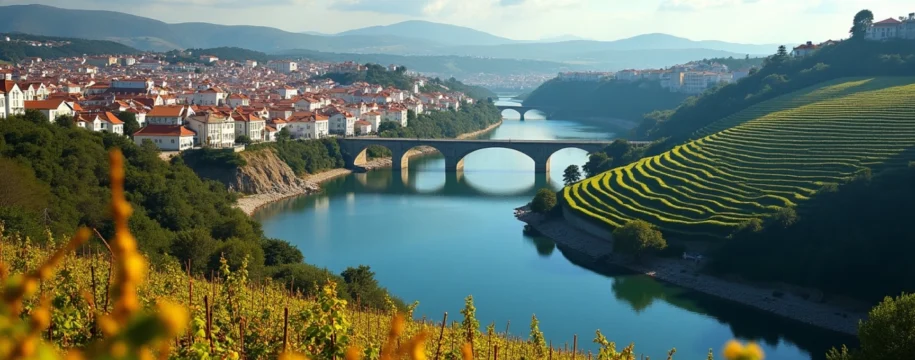
Portugal’s captivating landscapes extend far beyond the charming streets of Lisbon, revealing a tapestry of breathtaking regions that showcase the country’s remarkable diversity. From the terraced vineyards of the Douro Valley to the volcanic wonders of the Azores, Portugal offers travellers an extraordinary collection of destinations that remain relatively untouched by mass tourism. Each region possesses its own distinct character, shaped by centuries of history, unique geological features, and vibrant local traditions that continue to thrive in these picturesque corners of the Iberian Peninsula.
The allure of Portugal’s lesser-known regions lies not only in their natural beauty but also in their ability to provide authentic experiences that connect visitors with the country’s rich cultural heritage. Whether you’re drawn to medieval fortifications perched on coastal cliffs, UNESCO World Heritage landscapes carved by ancient rivers, or volcanic archipelagos rising from the Atlantic Ocean, Portugal’s regional treasures offer something extraordinary for every type of traveller seeking memorable adventures beyond the capital city.
Northern portugal’s douro valley wine region and UNESCO world heritage landscapes
The Douro Valley stands as one of Portugal’s most magnificent natural and cultural treasures, where centuries of viticulture have sculpted dramatic terraced landscapes along the meandering Douro River. This UNESCO World Heritage site represents the world’s oldest demarcated wine region, officially established in 1756, and continues to produce some of the planet’s finest port wines and table wines. The valley’s steep schist slopes, carved over millennia by the river’s relentless flow, create a stunning amphitheatre of vineyards that change dramatically with each season.
The region’s unique microclimate, characterised by hot, dry summers and mild winters, provides ideal conditions for grape cultivation. Quintas (wine estates) dot the landscape like jewels, each contributing to a winemaking tradition that spans over two thousand years. The Douro’s extraordinary beauty becomes most apparent during harvest season, when the terraces transform into a golden tapestry of ripening grapes, creating photo opportunities that rival any destination in Europe.
Porto’s historic ribeira district and dom luís I bridge photography spots
Porto’s historic Ribeira district serves as the gateway to the Douro Valley, offering visitors their first glimpse of the region’s architectural splendour and riverside charm. The district’s colourful facades cascade down to the riverbank, creating a UNESCO-listed panorama that has inspired countless photographers and artists. The narrow medieval streets wind between centuries-old buildings, many adorned with traditional azulejo tiles that tell stories of Portugal’s maritime heritage.
The iconic Dom Luís I Bridge, designed by Théophile Seyrig (a disciple of Gustave Eiffel), provides spectacular vantage points for capturing the Ribeira’s beauty. From the bridge’s upper deck, photographers can frame the entire historic quarter against the backdrop of Vila Nova de Gaia’s port wine cellars. The best lighting occurs during golden hour, when the setting sun illuminates the district’s terracotta rooftops and reflects off the Douro’s surface, creating magical photography conditions.
Quinta do crasto and quinta da pacheca vineyard terraces along the douro river
Quinta do Crasto represents one of the Douro Valley’s most prestigious wine estates, perched dramatically on terraces that seem to defy gravity as they cascade toward the river. This family-owned quinta has been producing exceptional wines for over a century, combining traditional winemaking methods with modern techniques. Visitors can explore the estate’s museum, which showcases ancient winemaking equipment and provides insight into the region’s viticultural evolution.
Quinta da Pacheca offers equally stunning vineyard experiences, famous for its innovative wine barrel accommodations that allow guests to sleep among the vines. The quinta’s terraced vineyards provide breathtaking views of the surrounding landscape, particularly from the estate’s tasting room terrace. These quintas demonstrate how traditional Portuguese winemaking continues to thrive while embracing sustainable practices that protect the valley’s delicate ecosystem for future generations.
Peso da régua wine museum and traditional rabelo boat experiences
Peso da Régua, often considered the heart of the Douro wine region, houses the fascinating Douro Museum, which chronicles the valley’s winemaking heritage through interactive exhibitions and historical artefacts. The museum occupies a beautifully restored warehouse that once stored port wine barrels before their journey downstream to Porto. Visitors can discover the evolution of viticulture in the region, from Roman times to the present day, through multimedia displays that bring the valley’s history to life.
The traditional rabelo boats, once essential for transporting port wine barrels down the treacherous Douro River, now offer scenic cruises that showcase the valley’s beauty from a unique perspective. These flat-bottomed vessels, with their distinctive square sails, navigate the river’s calmer stretches, providing passengers with unobstructed views of the terraced vineyards that rise steeply from the water’s edge. Many cruises include wine tastings featuring local varieties, allowing visitors to savour the valley’s renowned wines while surrounded by the landscape that produces them.
Pinhão railway station’s azulejo tile panels and valley viewpoints
Pinhão Railway Station stands as one of Portugal’s most beautiful train stations, adorned with stunning azulejo tile panels that depict the Douro Valley’s winemaking traditions and seasonal changes. These hand-painted ceramic tiles, created in the early 20th century, showcase vineyard workers harvesting grapes, traditional winemaking processes, and the valley’s distinctive landscape throughout the four seasons. The station itself serves as an open-air gallery celebrating the region’s cultural heritage.
The surrounding area offers some of the Douro Valley’s most spectacular viewpoints, accessible via well-marked hiking trails that wind through terraced vineyards and olive groves. The Miradouro de Casal de Loivos provides panoramic views of the river’s dramatic horseshoe bend, while the viewpoint at São Leonardo da Galafura offers what many consider the valley’s most photogenic vista. These elevated perspectives reveal the full magnitude of human achievement in transforming this rugged landscape into one of the world’s most beautiful wine regions.
Central portugal’s óbidos medieval fortifications and coastal silver coast
Central Portugal’s Silver Coast region encompasses some of the country’s most enchanting medieval towns and pristine Atlantic beaches, creating a diverse landscape that seamlessly blends historical significance with natural beauty. This coastal stretch, known locally as the Costa da Prata , extends from just north of Lisbon to beyond Coimbra, offering visitors an authentic glimpse into Portugal’s rich medieval heritage while providing access to some of Europe’s most spectacular coastal scenery.
The region’s medieval fortifications tell stories of centuries-old conflicts and conquests, from Moorish occupation to Christian reconquest, each leaving indelible marks on the architectural landscape. These historical sites, combined with traditional fishing villages, world-class surf breaks, and gastronomic traditions that span generations, create an irresistible destination for travellers seeking both cultural enrichment and natural wonder.
The Silver Coast represents Portugal’s ability to preserve its medieval character while embracing modernity, creating destinations that feel both timeless and vibrantly alive.
Óbidos castle pousada and ginja liqueur tasting in chocolate cups
Óbidos Castle, one of Portugal’s most romantic medieval fortifications, houses a luxury pousada (historic hotel) within its ancient walls, allowing guests to experience royal accommodation in authentic surroundings. The castle’s battlements offer 360-degree views of the surrounding countryside, while its courtyards and chambers transport visitors back to the Middle Ages. The fortification’s strategic position once controlled important trade routes, and today its elevated location provides stunning sunset views over the Atlantic Ocean.
The town’s famous ginja liqueur, served in edible chocolate cups, represents a delightful tradition that dates back centuries. Local artisans craft these chocolate vessels daily, filling them with the sweet cherry liqueur that has become synonymous with Óbidos. This unique presentation method not only provides a memorable tasting experience but also eliminates waste, as visitors consume both the drink and its container. The combination of sweet chocolate and tart cherry liqueur creates a perfect balance that captures the essence of Portuguese culinary creativity.
Nazaré’s praia do norte giant wave formations and sítio funicular railway
Nazaré’s Praia do Norte has gained international recognition as one of the world’s premier big wave surfing destinations, where underwater canyon formations create monstrous waves that can exceed 30 metres in height. The Nazaré Canyon, extending over 200 kilometres into the Atlantic and reaching depths of 5,000 metres, channels Atlantic swells into towering walls of water that crash onto the beach with tremendous force. Professional surfers from around the globe gather here during winter months to challenge these record-breaking waves.
The historic Sítio funicular railway, dating from 1889, connects the beach level with the clifftop neighbourhood of Sítio, providing dramatic vantage points for observing the wave action below. This charming cable car system climbs 110 metres in just over two minutes, offering passengers stunning views of the coastline and the traditional fishing boats that still operate from Nazaré’s beach. The journey itself becomes part of the experience, as the funicular’s vintage carriages maintain their original character while providing safe, reliable transportation between the town’s two distinct levels.
Monsaraz hilltop village and alqueva dark sky reserve stargazing
Monsaraz, perched majestically on a hilltop overlooking the Alentejo plains, represents one of Portugal’s best-preserved medieval villages, where whitewashed houses line narrow cobblestone streets within ancient defensive walls. This strategic fortress town, dating from the 13th century, offers panoramic views across the vast Alqueva reservoir and the rolling countryside that extends toward the Spanish border. The village’s authentic atmosphere remains largely unchanged, with local artisans still practising traditional crafts and family-run restaurants serving regional specialities.
The surrounding Alqueva Dark Sky Reserve, certified by the International Dark Sky Association, provides some of Europe’s clearest night skies for astronomical observation. Light pollution remains minimal in this rural region, allowing visitors to observe celestial phenomena with remarkable clarity. Guided stargazing tours utilise professional telescopes to reveal distant galaxies, nebulae, and planetary details invisible to the naked eye. The combination of Monsaraz’s historical significance and the reserve’s astronomical wonders creates a unique destination where visitors can explore both human heritage and cosmic mysteries.
Batalha monastery’s manueline architecture and capelas imperfeitas
Batalha Monastery stands as one of Portugal’s most magnificent examples of Gothic and Manueline architecture, built to commemorate the decisive 1385 Battle of Aljubarrota that secured Portuguese independence from Spanish rule. The monastery’s intricate stonework displays extraordinary craftsmanship, with elaborate spires, flying buttresses, and decorative elements that showcase the pinnacle of Portuguese architectural achievement. Construction spanned over two centuries, resulting in a complex that demonstrates the evolution of architectural styles from Gothic foundations to Manueline embellishments.
The enigmatic Capelas Imperfeitas (Unfinished Chapels) represent one of architecture’s most intriguing mysteries, where construction ceased abruptly in the 16th century, leaving behind a roofless octagonal structure of breathtaking beauty. These chapels, intended as a royal mausoleum, feature some of the finest examples of Manueline stonework, with carved limestone that resembles delicate lacework frozen in time. The open-air setting creates dramatic lighting effects throughout the day, as sunlight filters through the ornate tracery and illuminates the chapels’ intricate details.
Azores archipelago volcanic landscapes and thermal spring complexes
The Azores archipelago, comprising nine volcanic islands scattered across the North Atlantic, presents some of the world’s most dramatic geological landscapes, where active volcanism continues to shape magnificent crater lakes, thermal springs, and otherworldly terrain. Located approximately 1,500 kilometres from mainland Portugal, these remote islands offer visitors the opportunity to witness geological processes that have been occurring for millions of years, creating landscapes that feel both ancient and remarkably dynamic.
Each island possesses its own unique geological character, from São Miguel’s colourful crater lakes to Pico’s towering stratovolcano, the highest peak in Portugal. The archipelago’s position along the Mid-Atlantic Ridge means that volcanic activity remains ongoing, manifesting through bubbling hot springs, steaming fumaroles, and occasional seismic activity that reminds visitors of the powerful forces beneath their feet. This geological dynamism, combined with the islands’ isolation, has created ecosystems found nowhere else on Earth.
The Azores’ thermal spring complexes represent one of nature’s most therapeutic gifts, where mineral-rich waters heated by underground volcanic activity provide natural healing properties that have attracted visitors for centuries. These thermal pools, ranging from naturally occurring hot springs to carefully developed spa facilities, offer temperatures that vary from pleasantly warm to intensely hot, accommodating different preferences and therapeutic needs.
São Miguel’s Furnas Valley showcases the most spectacular concentration of geothermal activity, where visitors can witness caldeiras (boiling springs) that reach temperatures exceeding 90°C. The valley’s famous cozido das Furnas , a traditional stew cooked underground using geothermal heat, demonstrates how locals have harnessed volcanic energy for culinary purposes. This unique cooking method, where pots are buried in volcanic soil for several hours, creates dishes with distinctive flavours that cannot be replicated elsewhere.
Terceira Island’s Algar do Carvão lava tube provides an extraordinary underground adventure, where visitors can descend into a dormant volcanic chimney lined with stalactites and hosting a subterranean lake. This geological formation, created by ancient volcanic activity, offers insight into the volcanic processes that shaped the entire archipelago. The cave’s unique ecosystem supports rare plants and provides habitat for endemic species that have adapted to the underground environment.
The Azores represent a living laboratory where visitors can observe geological processes that typically remain hidden beneath the Earth’s surface, creating educational opportunities that inspire wonder and scientific curiosity.
Faial Island’s Capelinhos volcano, which erupted as recently as 1957-58, demonstrates the archipelago’s ongoing geological activity. The eruption created an entirely new landscape, adding territory to the island and providing scientists with valuable data about volcanic formation processes. Visitors can explore the interpretation centre built into the volcanic ash, learning about the eruption’s impact on local communities and the subsequent ecological recovery that continues today.
Madeira island’s levada trail networks and subtropical microclimates
Madeira Island’s extraordinary levada trail network represents one of the world’s most sophisticated irrigation systems, where hand-carved water channels wind through virtually every corner of this subtropical paradise, creating hiking opportunities that showcase the island’s remarkable biodiversity and dramatic topography. These irrigation channels, totalling over 2,000 kilometres in length, were constructed over five centuries to transport water from the mountainous interior to agricultural areas and settlements, creating a unique infrastructure that now serves as the backbone of Madeira’s extensive hiking trail system.
The island’s position in the Atlantic Ocean, combined with its mountainous terrain rising to over 1,800 metres above sea level, creates an extraordinary variety of microclimates that support ecosystems ranging from subtropical coastal forests to alpine meadows. Within a single day’s hiking, visitors can experience dramatic changes in temperature, humidity, and vegetation, travelling from sea-level banana plantations to high-altitude heathlands that resemble Scottish moorlands more than Atlantic islands.
The Laurisilva forest, a UNESCO World Heritage site covering approximately 20% of Madeira’s land area, represents one of Europe’s largest surviving examples of subtropical laurel forest, an ecosystem that once covered much of southern Europe and North Africa during the Tertiary period. This ancient forest provides habitat for numerous endemic species, including the Madeiran long-toed pigeon and various endemic plants that evolved in isolation over millions of years.
Levada do Caldeirão Verde offers one of the most spectacular hiking experiences, following an ancient water channel through tunnels carved by hand into sheer rock faces, leading to a magnificent waterfall that plunges into an emerald pool surrounded by towering volcanic cliffs. The trail demonstrates the incredible engineering skills of Madeira’s early settlers, who created these channels using only basic hand tools and remarkable ingenuity. Hiking this levada requires headlamps for the tunnel sections, but rewards adventurous visitors with some of the island’s most breathtaking scenery.
The island’s subtropical climate, moderated by Atlantic Ocean currents, maintains remarkably stable temperatures throughout the year, with coastal areas rarely experiencing temperatures below 15°C or above 25°C
. This remarkable stability allows for year-round hiking and outdoor activities, making Madeira an ideal destination for visitors seeking consistent weather conditions regardless of the season.
The island’s cable car systems, including the famous Monte toboggan run, provide thrilling ways to experience Madeira’s dramatic elevation changes while offering spectacular views of the coastline and mountainous interior. These traditional wicker sledges, steered by skilled carreiros wearing traditional white uniforms and boater hats, offer an exhilarating descent down Monte’s steep cobblestone streets, combining adventure with cultural heritage in a uniquely Madeiran experience.
Pico do Areeiro, Madeira’s third-highest peak at 1,818 metres, serves as the starting point for one of the island’s most challenging and rewarding hikes to Pico Ruivo, the island’s highest point. This alpine trail traverses dramatic volcanic ridges where hikers often find themselves above the cloud line, experiencing a landscape that feels more like a moonscape than a subtropical island. The contrast between the barren high-altitude terrain and the lush valleys below perfectly exemplifies Madeira’s extraordinary topographical diversity.
Madeira’s levada trails represent a perfect synthesis of human engineering and natural beauty, where centuries-old infrastructure creates pathways to some of Europe’s most pristine wilderness areas.
Algarve’s hidden coastal gems beyond lagos and sagres cliff formations
The Algarve’s coastline extends far beyond its famous resort towns, revealing hidden beaches, secluded coves, and dramatic cliff formations that remain largely undiscovered by mainstream tourism. While Lagos and Sagres attract international visitors with their well-known attractions, the region’s lesser-explored areas offer authentic experiences where traditional fishing villages maintain their original character and pristine beaches provide solitude even during peak season.
The Costa Vicentina, extending along the Algarve’s western coastline and into the Alentejo region, showcases some of Europe’s most spectacular clifftop scenery, where Atlantic swells have carved magnificent sea stacks, natural arches, and hidden grottos over millions of years. This protected coastline remains largely undeveloped, preserving ecosystems that support rare bird species and endemic plants found nowhere else in Europe.
Tavira’s Ilha de Tavira offers 11 kilometres of pristine sandy beaches accessible only by ferry, creating a barrier island paradise where visitors can explore traditional salt pans, observe flamingos in their natural habitat, and enjoy some of Portugal’s most unspoiled coastal scenery. The island’s location within the Ria Formosa Natural Park protects its delicate ecosystem while providing excellent opportunities for birdwatching and nature photography.
Carrapateira Beach, nestled within the Costa Vicentina Natural Park, represents one of Portugal’s most spectacular surfing destinations, where consistent Atlantic swells create perfect waves against a backdrop of towering cliffs and rolling countryside. This remote beach requires a scenic drive through traditional villages where time seems to have stopped, offering glimpses into authentic Portuguese rural life that remains unchanged by modern tourism pressures.
The fishing village of Ferragudo maintains its authentic character despite its proximity to popular tourist destinations, with traditional houses cascading down hillsides toward a working harbour where colourful boats still bring in daily catches. The village’s elevated position provides stunning views across the Arade River to Portimão, while its narrow streets hide traditional restaurants serving exceptional seafood prepared according to generations-old recipes.
Praia da Marinha, consistently ranked among the world’s most beautiful beaches, showcases the Algarve’s geological diversity through its golden limestone cliffs punctuated by natural tunnels and sea caves. The beach’s remote location requires a walk down steep cliffs, deterring casual visitors and preserving its pristine condition. Snorkelling opportunities abound in the crystal-clear waters, where underwater caves and rock formations provide habitat for diverse marine life.
Salema village represents the Algarve’s fishing heritage at its most authentic, where traditional boats still launch directly from the beach and local restaurants serve fish caught the same morning. The village’s whitewashed houses, many displaying traditional chimneys characteristic of Algarvian architecture, create a picturesque setting that photographers find irresistible during golden hour when warm light illuminates the traditional facades.
The Benagil sea cave, accessible only by boat, kayak, or swimming, has become one of the Algarve’s most photographed natural wonders, where an enormous underground cathedral-like space features a natural skylight that illuminates its sandy beach. This geological masterpiece, carved by centuries of wave action, represents the ultimate destination for adventure seekers willing to make the effort required to reach this hidden marvel.
Portugal’s diverse regions offer experiences that extend far beyond typical tourist itineraries, revealing landscapes and cultural treasures that showcase the country’s extraordinary heritage and natural beauty. From the terraced vineyards of the Douro Valley to the volcanic wonders of the Azores, each destination provides unique opportunities for discovery and authentic connection with Portuguese culture. Whether you’re seeking medieval history in Óbidos, geological marvels in Madeira, or hidden beaches along the Algarve coast, Portugal’s regional treasures promise unforgettable adventures for travellers willing to venture beyond the capital city’s familiar attractions.